Glasshouses of the University of Graz Botanical Garden
Graz, Styria
Entry updated on October 3, 2026
- Year
- 1889 / 1995
- Architect
- Volker Giencke (1995 houses); Ignaz Gridl, builder (1889 glasshouse)
- Style
- Parabolic aluminium-and-acrylic cylinders (1995); iron engineering glasshouse (1889)
- Dimensions
- Four climate houses (1995); historic glasshouse with about 530 m² of usable space
- Status
- Open to the public; historic glasshouse restored 2020–2021 (lectures and research)
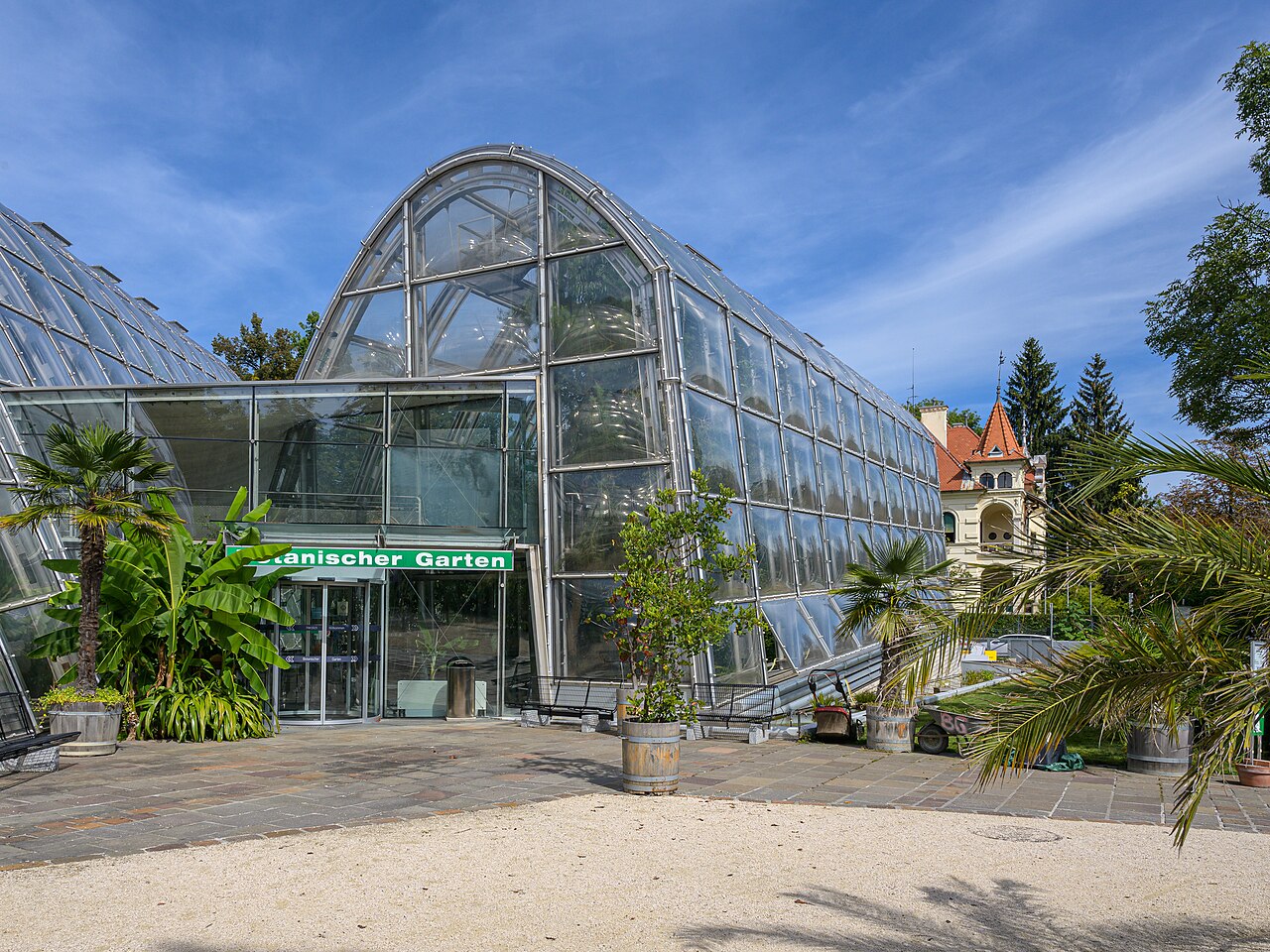
Laid out in 1888–1889 on Schubertstraße, the University of Graz Botanical Garden holds two generations of glasshouses. Volker Giencke, winner of the 1982 competition, designed the houses that opened in June 1995: intersecting parabolic cylinders of aluminium arches and curved acrylic panels that shelter four climates, from tropical to succulent. Beside them stands the 1889 glasshouse supplied by Ignaz Gridl's Viennese ironworks, listed in 2008 and restored in 2020–2021 for research, teaching and university events.
Affiliate links — booking through Verrière helps fund our research, at no extra cost to you.
History
1 min
The Graz botanic garden goes back to 1811, when Archduke Johann included it in his plans for the Joanneum and gave it three tasks: teaching, the 'art of plant care' and the spread of useful plants. First laid out in the Joanneumsgarten, between today's State Library and the Alte Galerie, it held some 8,000 species by 1843, according to a count by Professor Franz Xaver Unger.
Urban growth in the area between Neutorgasse and Raubergasse later forced a move. Land on Schubertstraße was bought in 1874, the scheme was approved in 1887, and the new garden was built and planted in 1888–1889, with the professor of systematic botany Gottlieb Haberlandt as its first director. The glasshouse put up in 1889 by Ignaz Gridl's Viennese ironworks, a firm that built across the Austrian monarchy, is one of the oldest surviving buildings of the university.
In 1982 the architect Volker Giencke won the competition for new glasshouses; work began in 1989 and they opened on 25 June 1995. The old glasshouse, in use until then, was listed as a monument in 2008 but stood empty until 2020. Its owner, the federal property company Bundesimmobiliengesellschaft, had it restored from June 2020 at a cost of 3.8 million euros, 720,000 of which came from the City of Graz and the State of Styria; it was officially reopened in September 2021.
Architecture and engineering
1 min
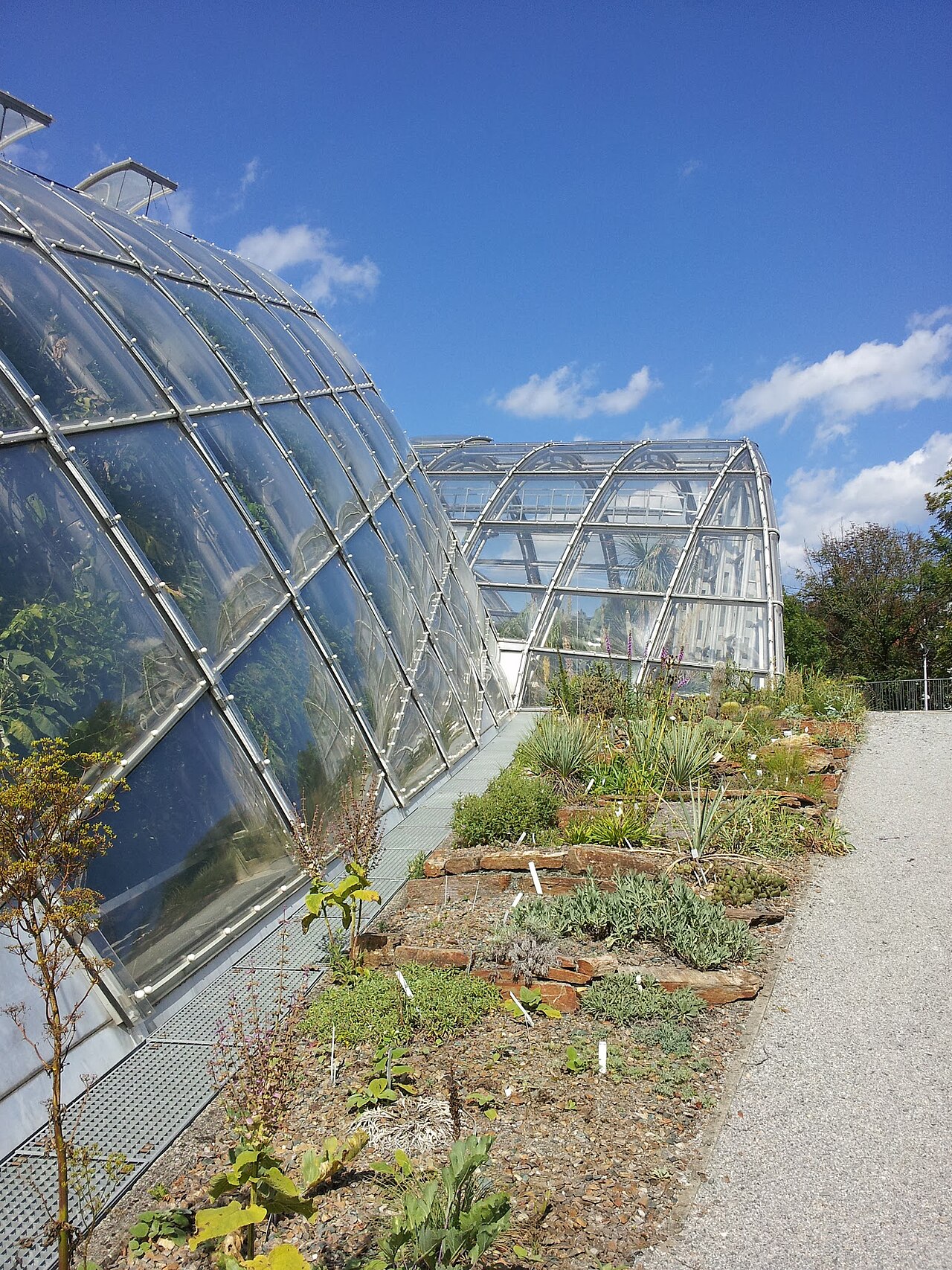
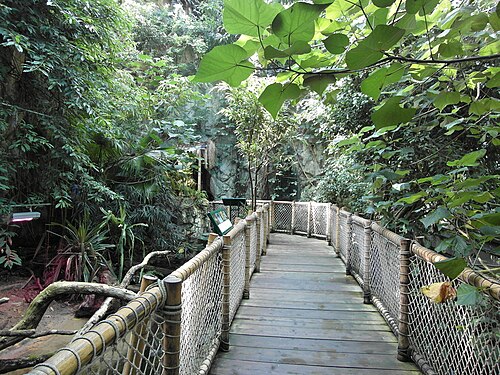
Giencke, an architect known for his work in glass, turned away from the domed palm-house model. His design consists of three slanting parabolic cylinders that intersect: the frame is made of parabolic aluminium arches and the skin of curved acrylic panels, which the Austria-Forum entry credits with a light-utilisation rate of 98 per cent. Four climate zones are simulated inside, ranging from 8 to 24 °C and from 50 to 80 per cent humidity; built-in hot-water heating and a cooling system regulate conditions, and timber walkways and bridges carry visitors through the planting.
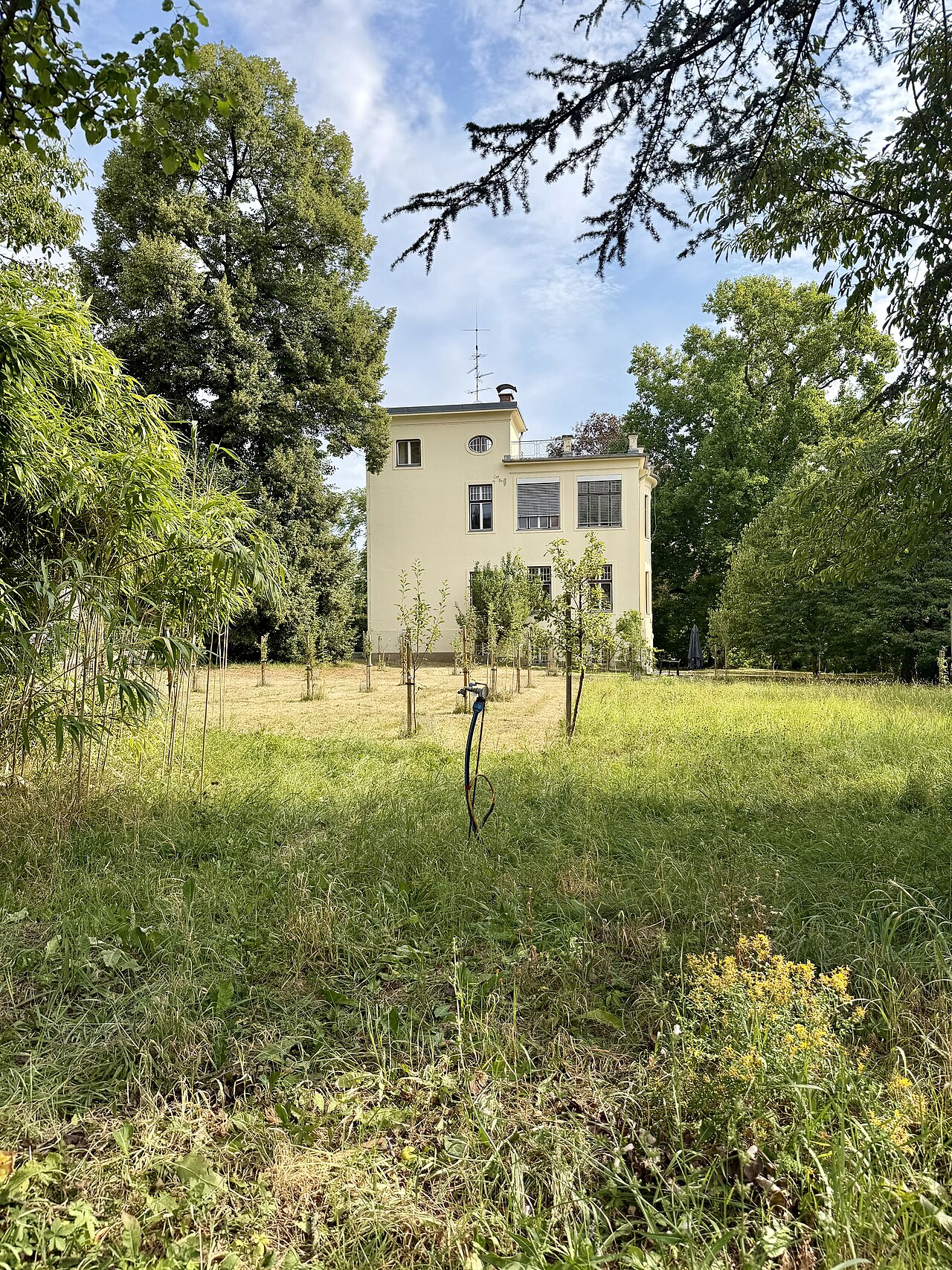
The historic glasshouse follows a different logic: a pared-down piece of engineering in which research mattered more than display. It is divided into five sections, with the palm or tropical house as the centrepiece in the middle. During the restoration its steelwork was repainted in the original green of 1889. Some 530 m² are now available for scientific and public use: the central house serves as a step-free lecture and meeting hall, while the wings are used for propagation and experimental plants.
Plant collections
1 min
Each of the four 1995 houses represents a climate. The tropical or warm house holds useful tropical plants, orchids and mangrove species. The cold house is given over to Mediterranean vegetation, citrus and eucalyptus included. The temperate house shows plants from South America and Australia, and the succulent house gathers cacti and other drought-adapted species.
Outdoors, the garden offers an alpine garden, Mediterranean and Eurasian plantings, beds of medicinal plants and an arboretum of old trees. Land bought in 1985 south-west of the botany institute added a pond, a fern mound and a collection of the rose family (Rosaceae), and a farm garden was created in 2006 on the former grounds of the Postvilla. In the restored historic glasshouse, the two wings now hold the propagation stock and experimental plants of the university's botanists.
Visiting
1 min
The garden lies in the Geidorf district, in the villa quarter of Graz, with its entrance on Schubertstraße. Giencke's houses are explored along the walkways, moving from one climate to the next; an hour is enough to see them together with the outdoor garden, longer for the alpine garden and the arboretum. In winter, when the beds outside are dormant, the heated houses hold most of the interest, while spring and summer favour the open-air collections. The historic glasshouse, reopened in 2021, is mainly used for lectures, classes, university events and science outreach for school groups.
47.08° N, 15.46° E
Greenhouses nearby
More greenhouses — Austria
All greenhouses — Austria →
Do you have a good photo of this greenhouse? Suggest it for this page →
Sources (6)
- uni-graz.at/de/neuigkeiten/neuer-glanz-1/
- uni-graz.at/en/news/neuer-glanz/
- de.wikipedia.org/wiki/Botanischer_Garten_der_Universit%C3%A4t_Graz
- austria-forum.org/af/Heimatlexikon/Botanischer_Garten_Graz
- steirischemuseen.at/m/Museum/345/Botanischer%20Garten%20Graz
- steiermark.com/en/Region-Graz/Vacation-planning/Trip-destination/Botanical-Garden_isd_2668