Burggarten Palmenhaus
Vienna

Sources checked September 2026
- Year
- 1902–1906
- Architect
- Friedrich Ohmann
- Style
- Art nouveau (Jugendstil) iron-and-glass structure
- Dimensions
- ≈180 m long, 28 m high, ≈2,050 m²
- Status
- Open to the public
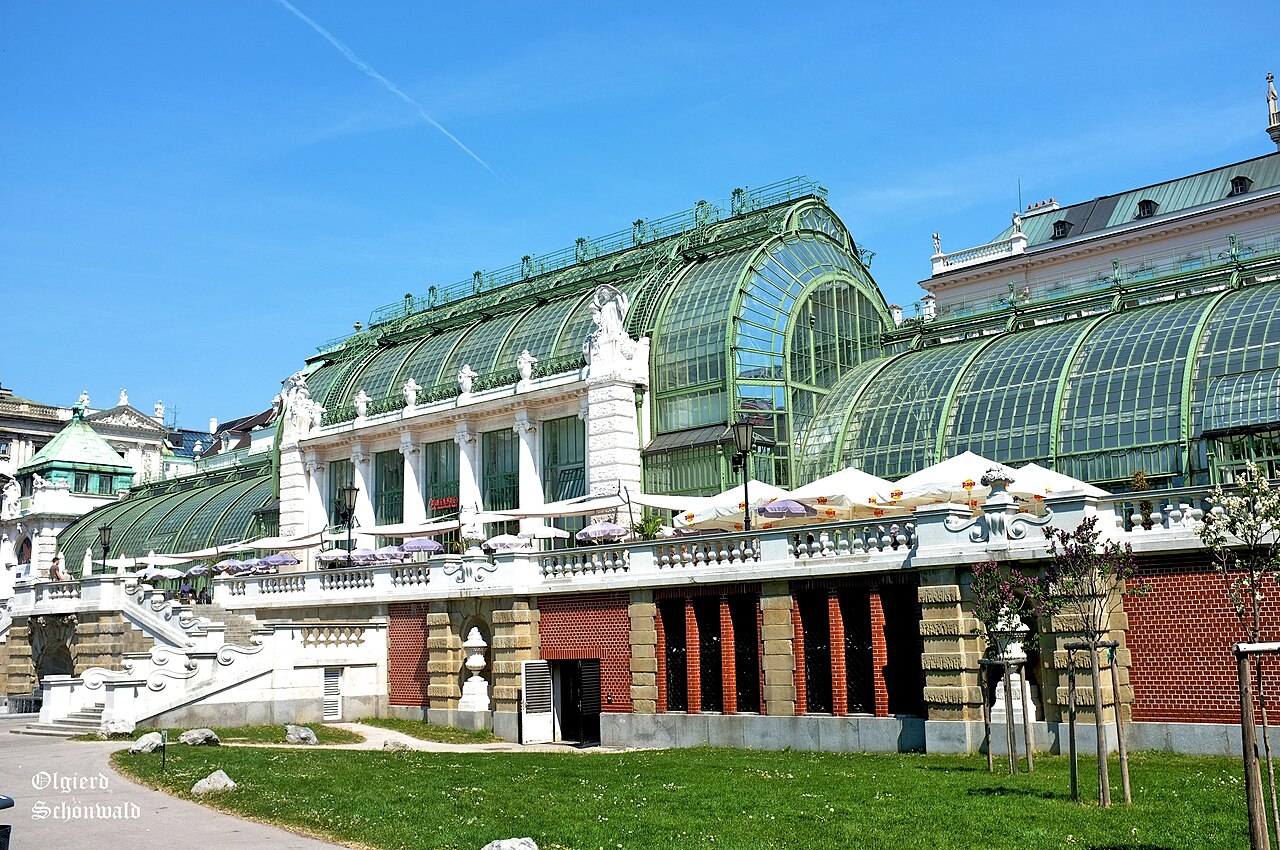
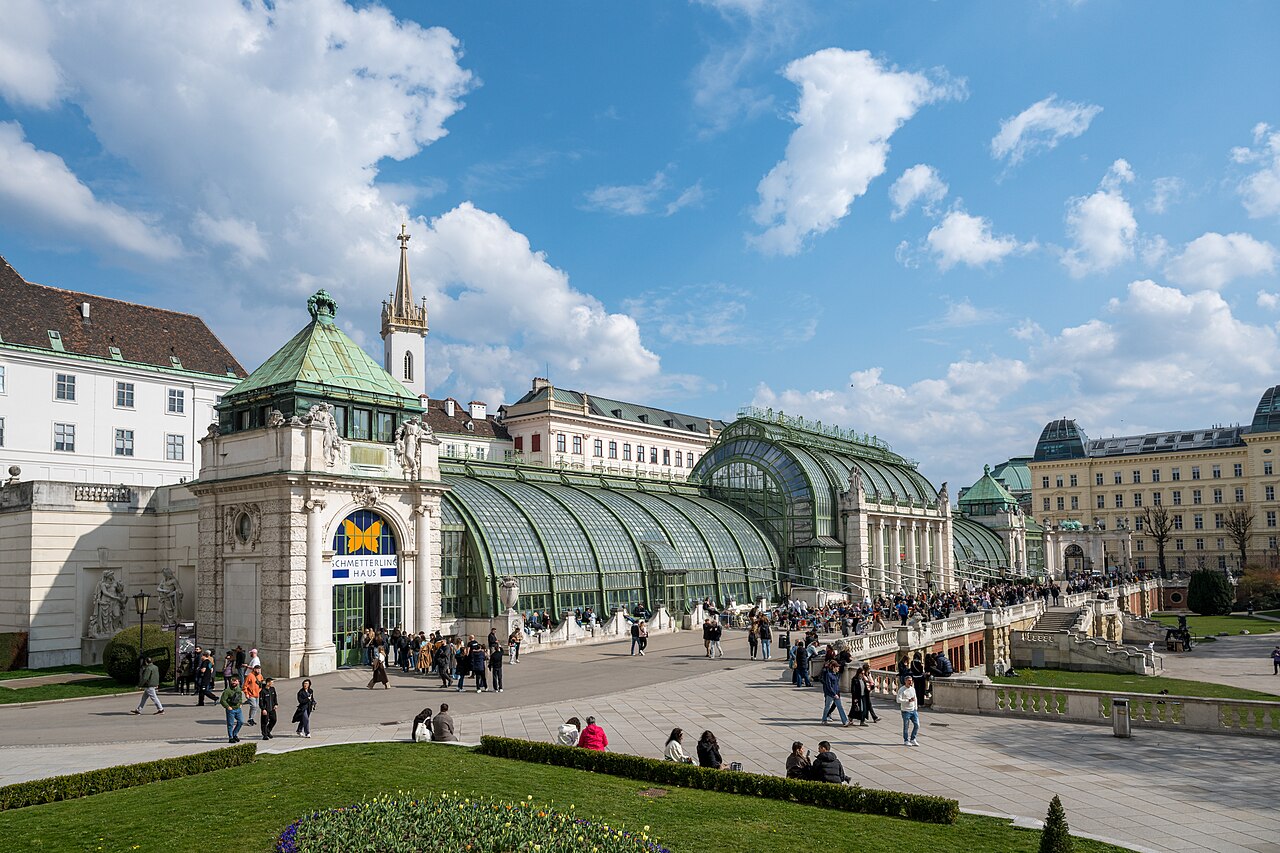
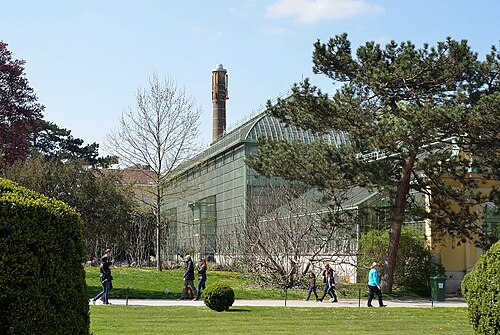
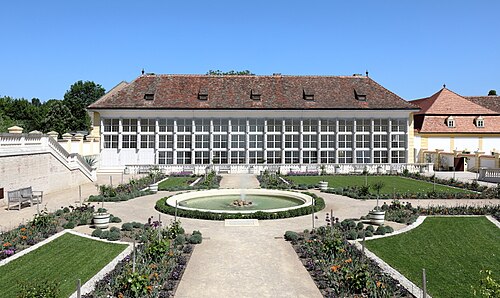
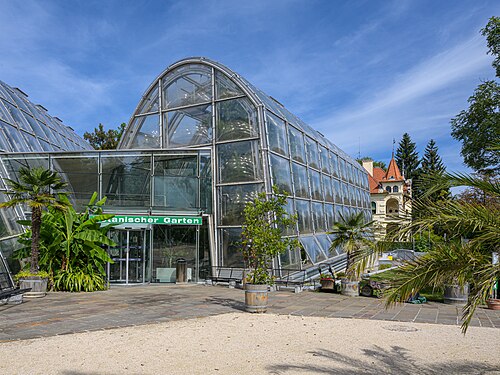
Built between 1901 and 1905 by court architect Friedrich Ohmann on the site of an older classical glasshouse, it runs 180 metres along the edge of Vienna's Burggarten. Closed on safety grounds in 1988, it was restored and reopened in 1998 after works costing around 13 million euros. The building is now in three parts: a restaurant in the central section, a butterfly house in the left wing and a glasshouse run by the Austrian Federal Gardens in the right wing.
Affiliate links — booking through Verrière helps fund our research, at no extra cost to you.
History
The Burggarten grew up on Vienna's fortifications after French troops blew them up in 1809. From 1818 Emperor Franz I, himself a trained gardener, had a private court garden laid out behind the Augustinian bastion, designed by the architect Ludwig Gabriel von Remy and the court gardener Franz Antoine the Elder. Between 1823 and 1826 Remy built a large classical glasshouse there, backing onto the rampart wall and closely related to the Orangery at Schönbrunn. By 1834 the imperial collection exceeded 17,000 plants, including species from Australia and the Cape, pelargoniums in particular, as well as palms, bromeliads and aroids.
The expansion of the Hofburg led to the demolition of this glasshouse around 1900. The court architect Friedrich Ohmann designed the new Palm House, built between 1902 and 1906 according to the Austrian Federal Gardens; the Federal Gardens marked its 120th anniversary in 2026. After the fall of the monarchy the garden opened to the public in 1919, and until 1938 the Palm House served as headquarters and exhibition space for the artists' association Kunstgemeinschaft.
Having become unsafe, the building was closed in 1988. A full restoration from 1996 to 1998, costing around 13 million euros, allowed it to reopen in 1998, with its space newly divided between a restaurant, a butterfly house and a Federal Gardens glasshouse.
Architecture and engineering
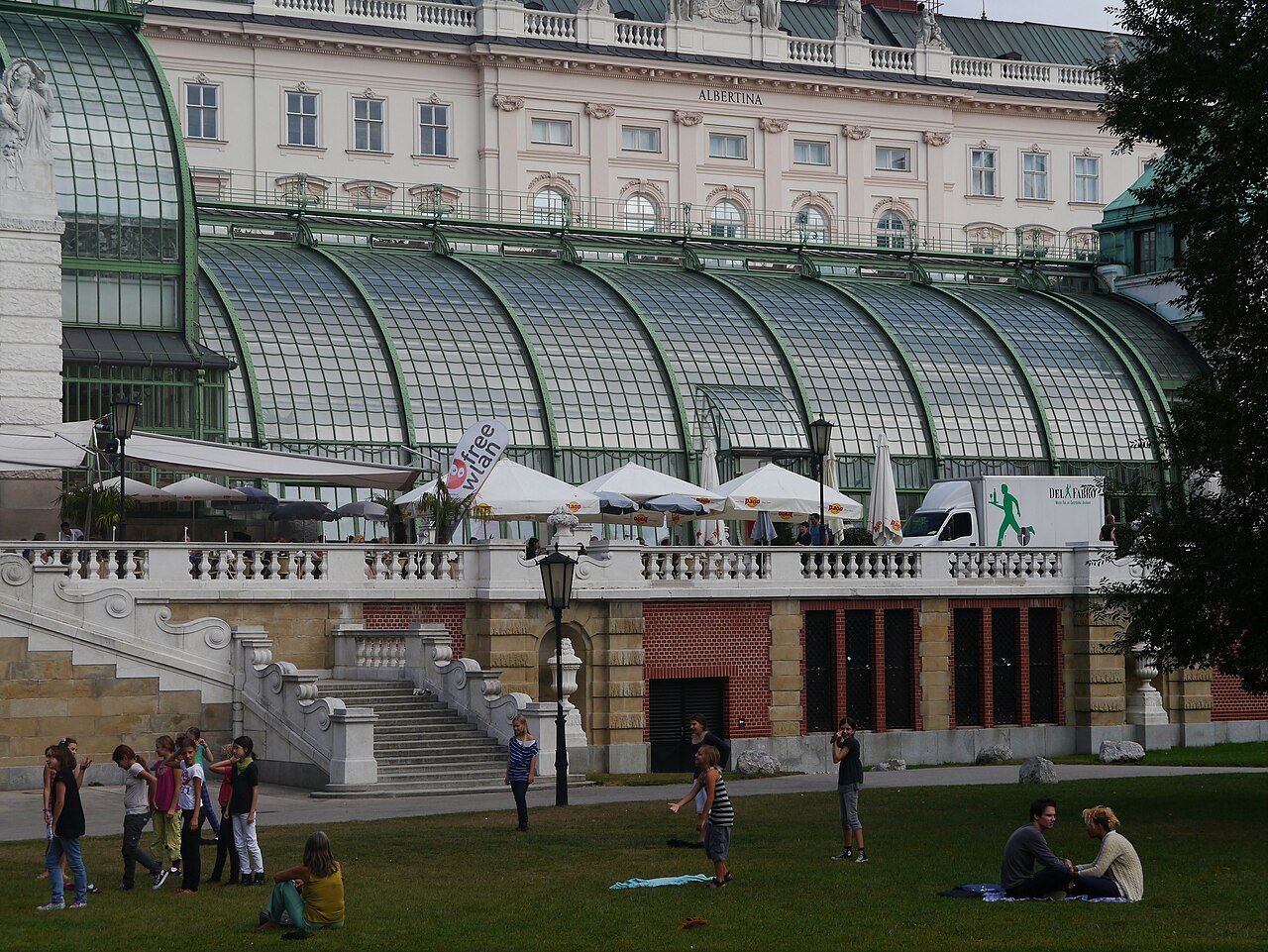
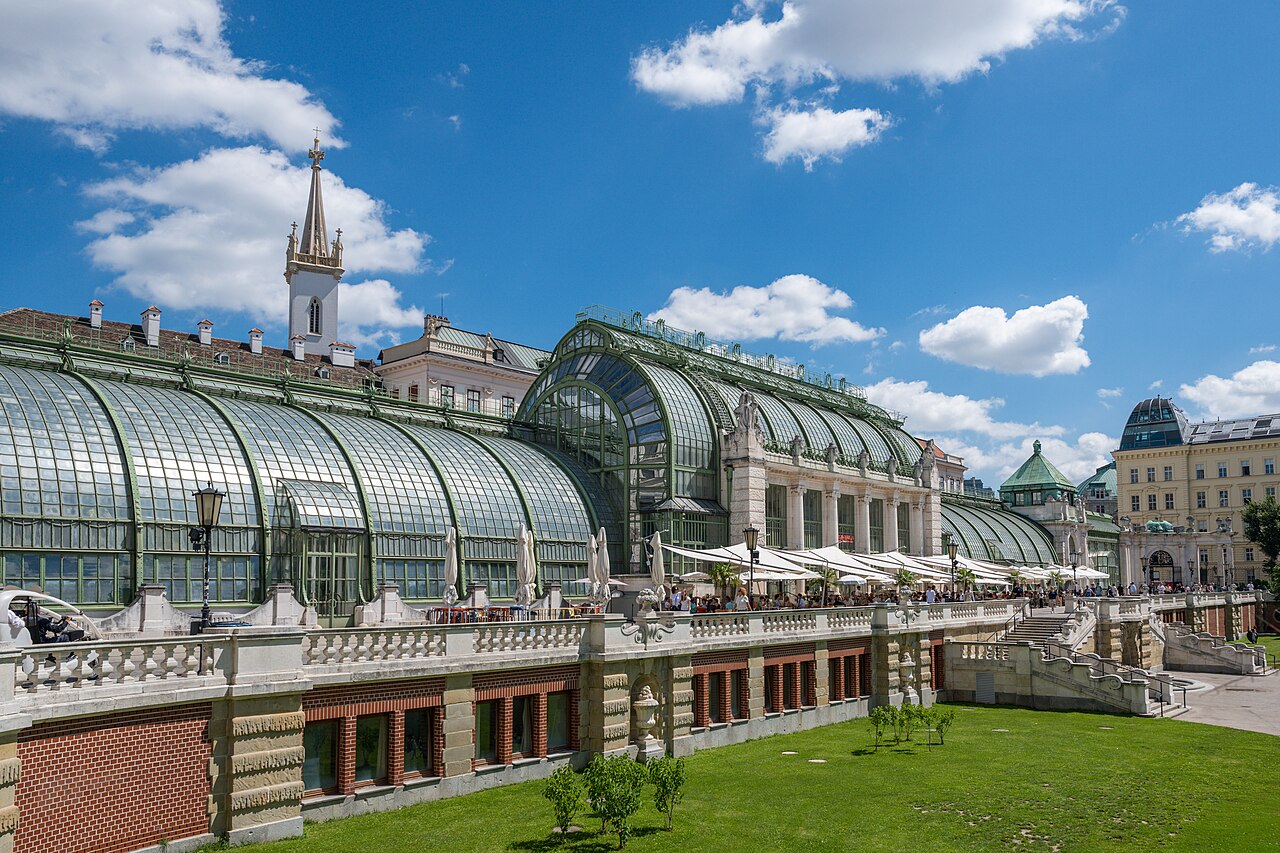
The Palm House is an iron-and-glass structure influenced by the Vienna Secession, stretching along the former Augustinian bastion and overlooking the garden from a raised terrace. It is 128 metres long, with a floor area of about 2,050 square metres.
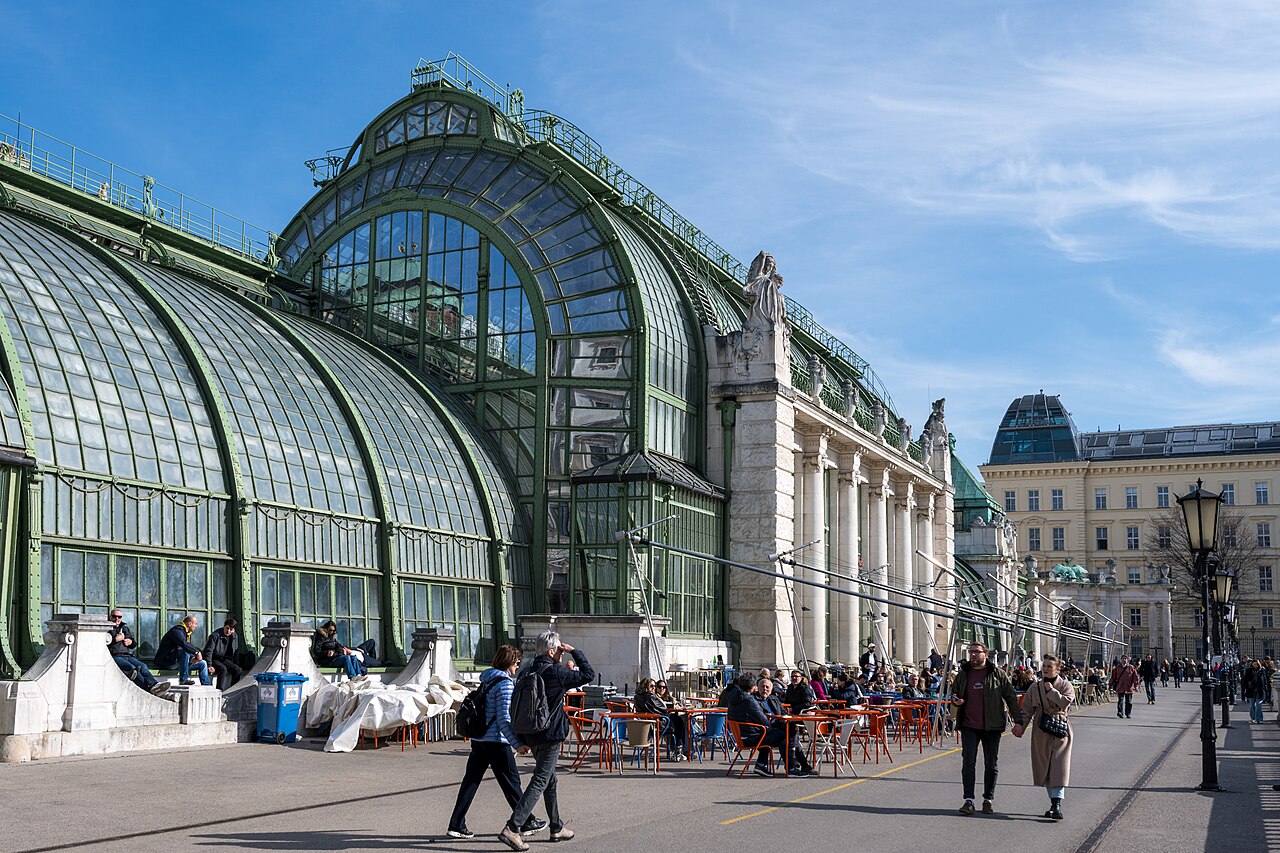
The design pairs two long glazed wings with a taller central pavilion that carries most of the ornament. The sculptor Josef Václav Myslbek made its vases, wreath-bearing female figures and putti; Edmund Hellmer and Rudolf Weyr are also credited with sculptural work.
The Federal Gardens stress the functional marriage of architecture and horticulture here: the iron frame and glazing give sensitive plants stable light and climate conditions. The original ornament was preserved during the restoration of the 1990s.
Plant collections
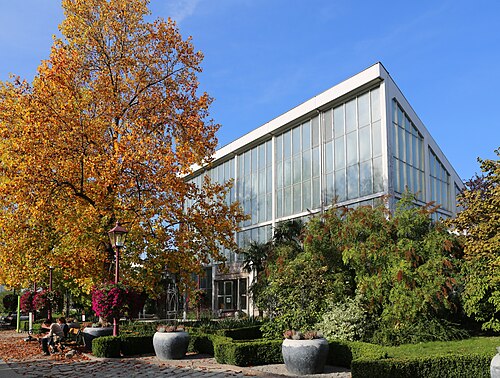
The building now serves three purposes. In the section run by the Austrian Federal Gardens, container and ornamental plants are grown, all from the gardens' own nurseries; they include fishtail palms around 70 years old and historic fig trees.
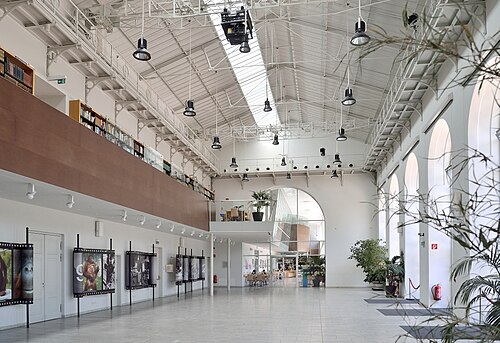
The butterfly house, founded in 1990 in the Sonnenuhrhaus at Schönbrunn on the initiative of the entrepreneur Stephen Fried, moved into one wing of the Palm House in 1997 according to its operators. Across some 280 square metres, kept at around 26°C and 80 per cent humidity, live about forty butterfly species, including the Atlas moth and the paper kite or white tree nymph (Idea leuconoe). The plants are chosen for egg-laying and to feed the caterpillars: hibiscus, lantana, plumbago, bananas, passion flowers and milkweeds. The central pavilion houses a restaurant.
Visiting
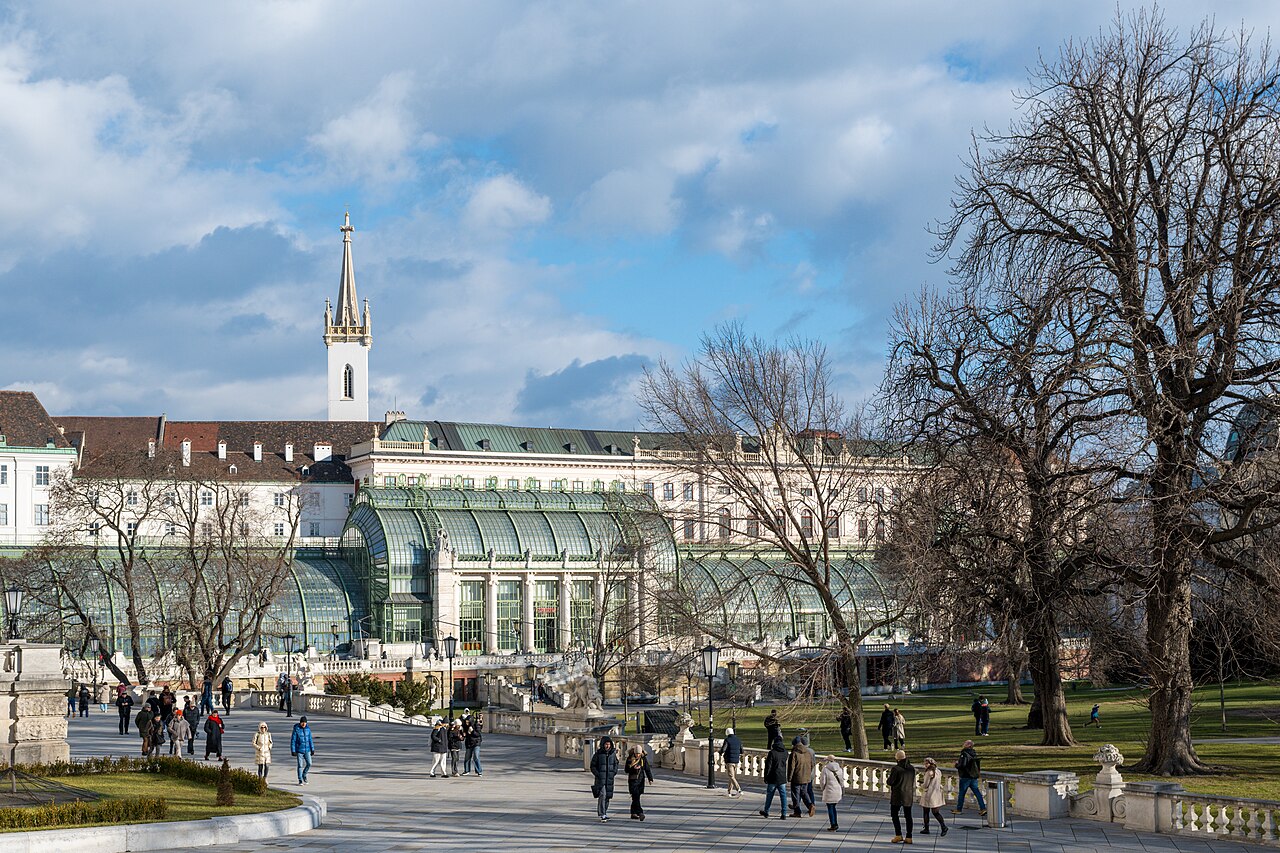
The Palm House lines the Burggarten, a public garden between the Hofburg, the Albertina and the Ringstrasse in the heart of Vienna. The restaurant terrace looks over lawns on which sitting has been allowed only since 2007, after more than half a century of prohibition. Allow around half an hour for the butterfly house. A walk through the garden leads on to Viktor Tilgner's Mozart monument, moved here in 1953, the statue of Franz Joseph I and Vienna's oldest equestrian monument, Balthasar Ferdinand Moll's figure of Emperor Franz Stephan.
48.20° N, 16.37° E
Greenhouses nearby
Architecture nearby
More greenhouses — Austria
Do you have a good photo of this greenhouse? Suggest it for this page →
Sources (7)
- bundesgaerten.at/service/news/hofburggaerten/2026/120-jahre-palmenhaus.html
- schmetterlinghaus.at/Schmetterlinghaus
- austria-forum.org/af/AustriaWiki/Palmenhaus_(Wien)
- austria-forum.org/af/AustriaWiki/Burggarten_(Wien)
- en.wikipedia.org/wiki/Palmenhaus_(Burggarten)
- schauvorbei.at/ausflugsziele/schmetterlingshaus-natuerliche-eleganz-erleben/
- openstreetmap.org/way/28798683
Affiliate links — booking through Verrière helps fund our research, at no extra cost to you.