Palmenhaus Schönbrunn (Great Palm House)
Vienna, Schönbrunn Palace Park

Sources checked September 2026
- Year
- 1880–1882
- Architect
- Franz Xaver Segenschmid
- Style
- Wrought iron, cast iron and glass, modelled on the Kew Palm House
- Dimensions
- 111 × 28 × 25 m; 2,500 m² floor area, 4,900 m² of glass
- Status
- Open to the public year-round
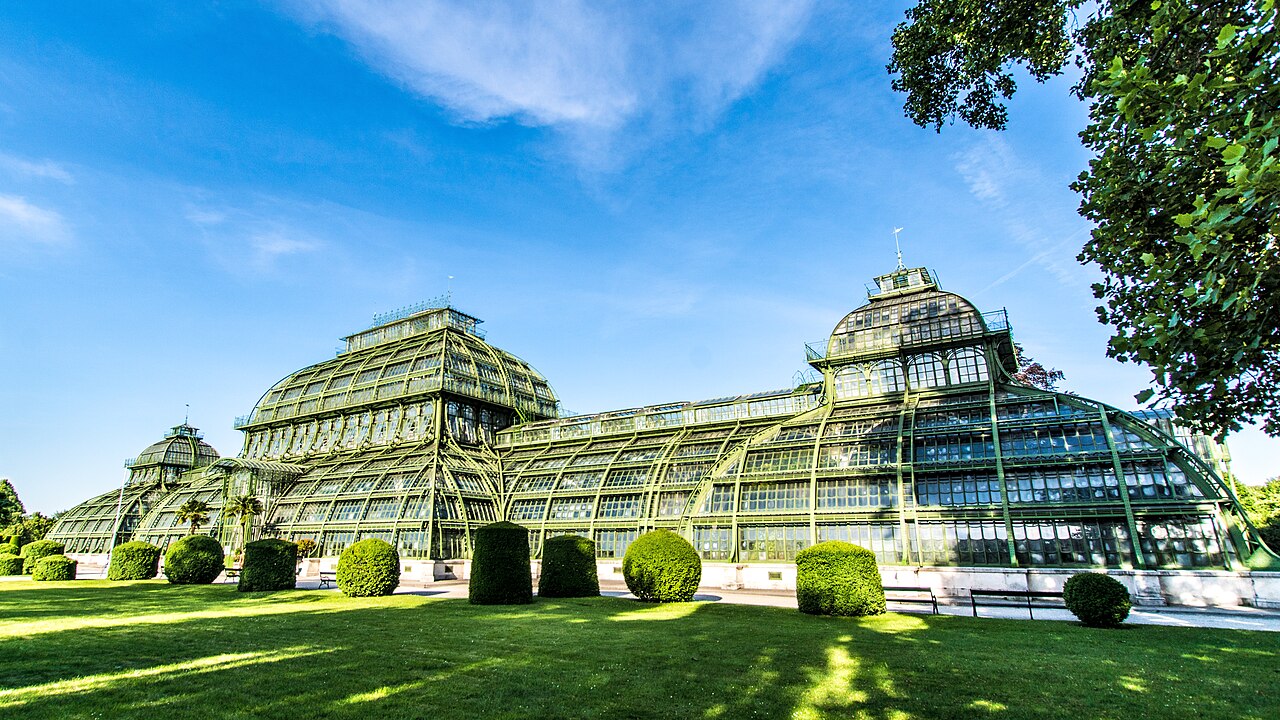
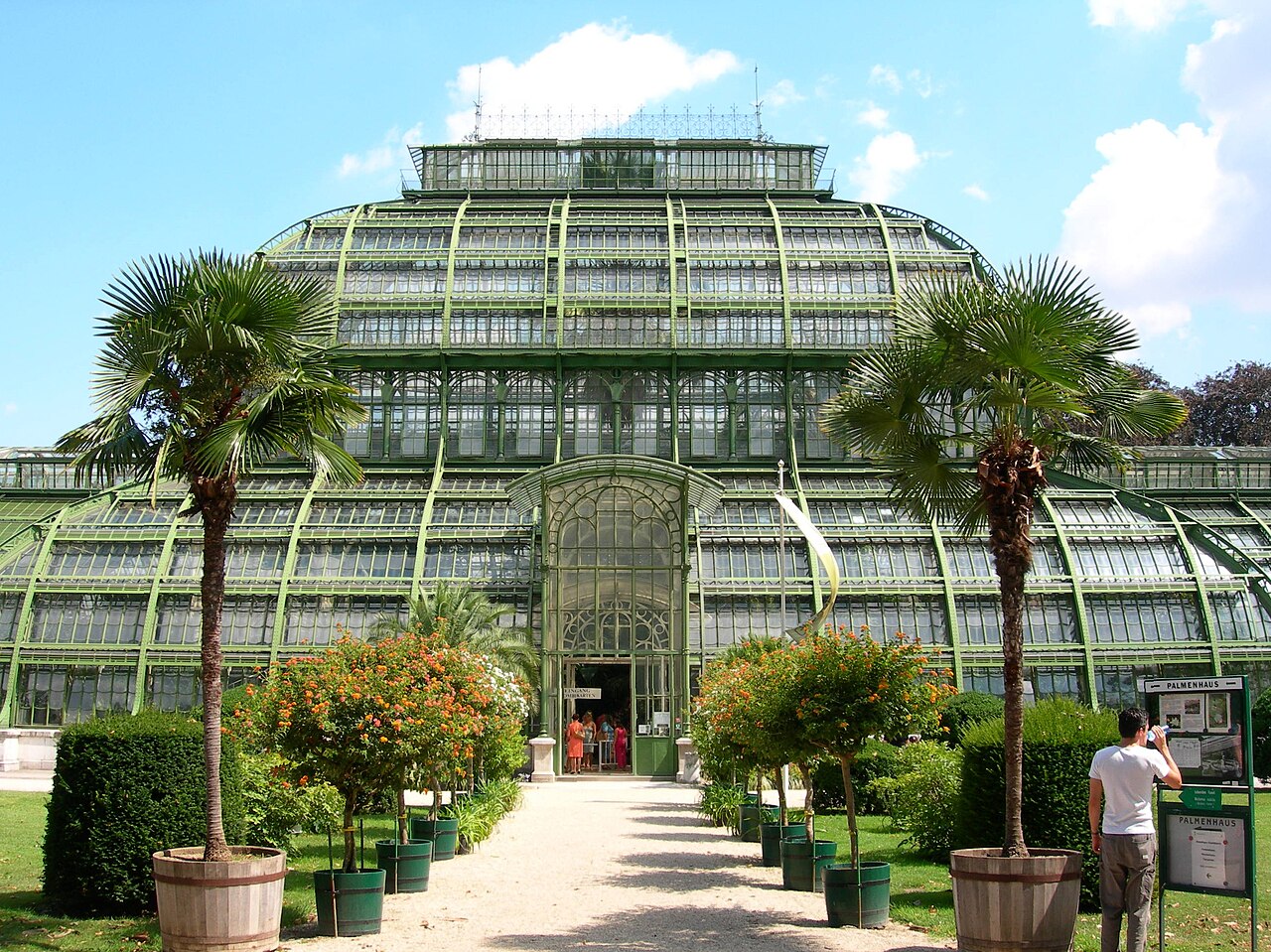
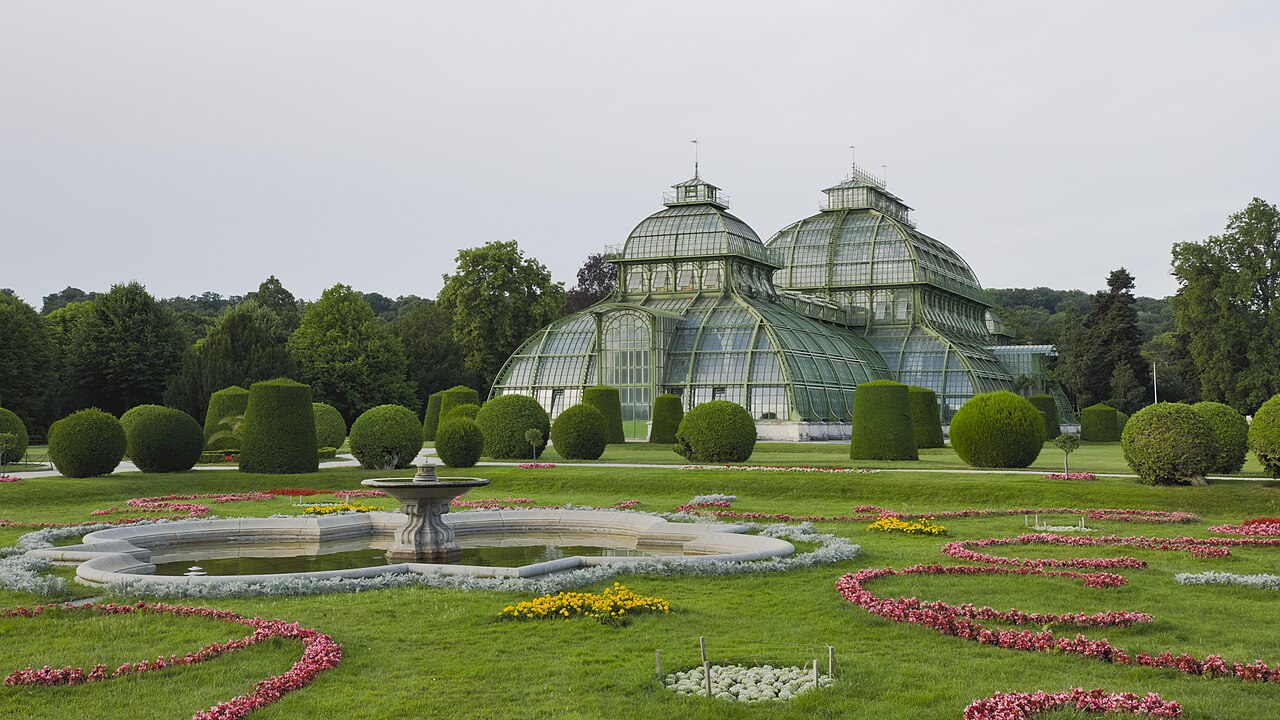
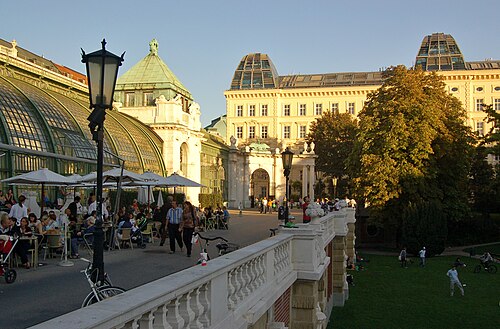
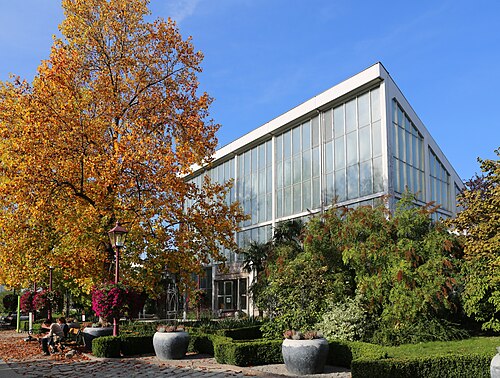
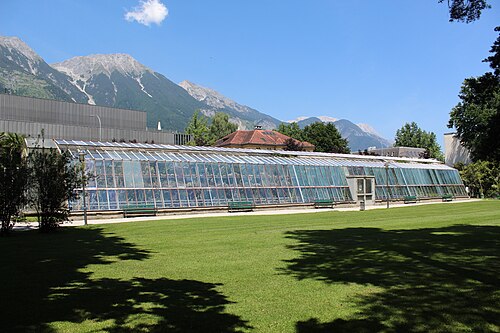
Commissioned by Franz Joseph I and designed by the court architect Franz Xaver Segenschmid on the model of the Palm House at Kew, the Schönbrunn Palmenhaus was built from 1880 and visited by the emperor on 17 June 1882. It is 111 metres long and 25 metres high, and its roughly 45,000 panes shelter three climates, from a cool house to a tropical house. Its glazing was blown out by bombs in February 1945 and replaced by 1953; closed in 1976, the building was restored in 1986-1990 and again in 2011-2014. Every winter since 1883 it has staged a show of azaleas and camellias.
Affiliate links — booking through Verrière helps fund our research, at no extra cost to you.
Practical info
- Tickets
- Palm House: adult €9, pupils and apprentices up to 18 or people with disabilities (from 50%) €7; groups of 10+ €8 / €6. Combined Palm House + Desert House: €13.50 adult, €10.50 reduced. Annual pass adult €39 (prices listed in October 2026).
- Opening hours
- Open all year: 10am–5pm from 1 October to 30 April (last entry 4.30pm). On 24 December it closes at 3pm (last entry 2.30pm).
- Getting there
- Schlosspark Schönbrunn, 1130 Wien. The palace's official page gives: U4 to "Schönbrunn", trams 10 and 60 or bus 10A to "Schloss Schönbrunn". The Schönbrunn bus and car park is open 24 hours a day.
Frequently asked questions
Which combined tickets are there?
Palm House + Desert House: €13.50 adult. Palm House + zoo: €33.50 adult, sold only at the Palm House ticket desk. All three together: €38 adult (prices listed in October 2026).
Is the Palm House open in winter?
Yes, it is open all year: from 1 October to 30 April, 10am–5pm (last entry 4.30pm). The park gates open daily at 6.30am and close at 5.30pm from November to February.
Do the three pavilions have the same climate?
No: a warm pavilion in the south (minimum 18 °C), a temperate one in the centre (minimum 12 °C) and a cold one in the north.
Can I visit as a group?
Yes: group rate from 10 people (€8 adult, €6 pupils and apprentices up to 18). Guided group tours are available on request from the Austrian Federal Gardens.
History
Schönbrunn's botanical garden dates from the mid-eighteenth century: in 1753 Emperor Francis I acquired land at Hietzing, where Adrian van Steckhoven and Richard van der Schot built a hothouse and glasshouses, and the "Dutch garden" was laid out from 1754. Enlarged under Joseph II among others, by the late nineteenth century it had become a jumble of buildings, several of them dilapidated. The court then wished, for the first time, to gather its entire collection in a single showpiece glasshouse.
In summer 1878 the court garden inspector Adolf Vetter and Franz Segenschmid of the court building office toured the new glass palaces of Germany, France and England, including the Palm House at Kew, which became the direct model. Contracts were signed from January 1880; Sigmund Wagner carried out the structural calculations and Ignaz Gridl delivered the ironwork from July 1880. On 17 June 1882 Franz Joseph visited the still-empty building, a visit later counted as the inauguration, and the plants were moved in over the summer.
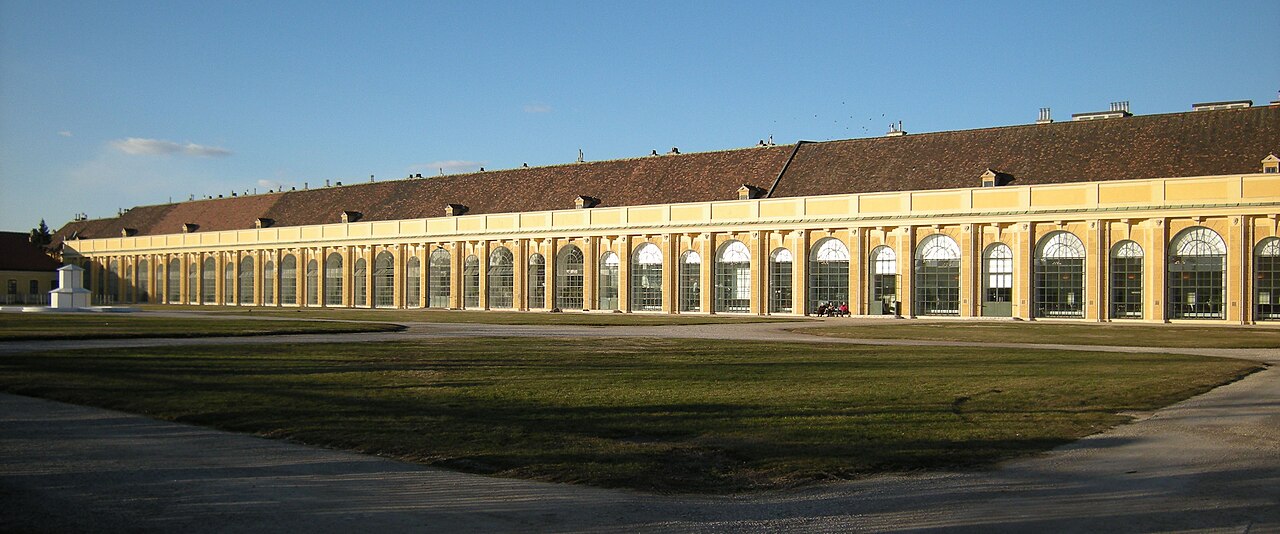
On 19 February 1945, American bombs fell on the park: the palm house was not hit, but the blasts shattered almost all its glazing, and many plants froze despite being moved to the orangery. Repairs required 12,000 m² of glass and five railway wagons of putty, and the house reopened in January 1953. In 1976, after the collapse of Vienna's Reichsbrücke, it failed a structural inspection and closed. Restored in 1986-1990 and again in 2011-2014, it has been run since 1918 by the Austrian Federal Gardens (Bundesgärten).
Architecture and engineering
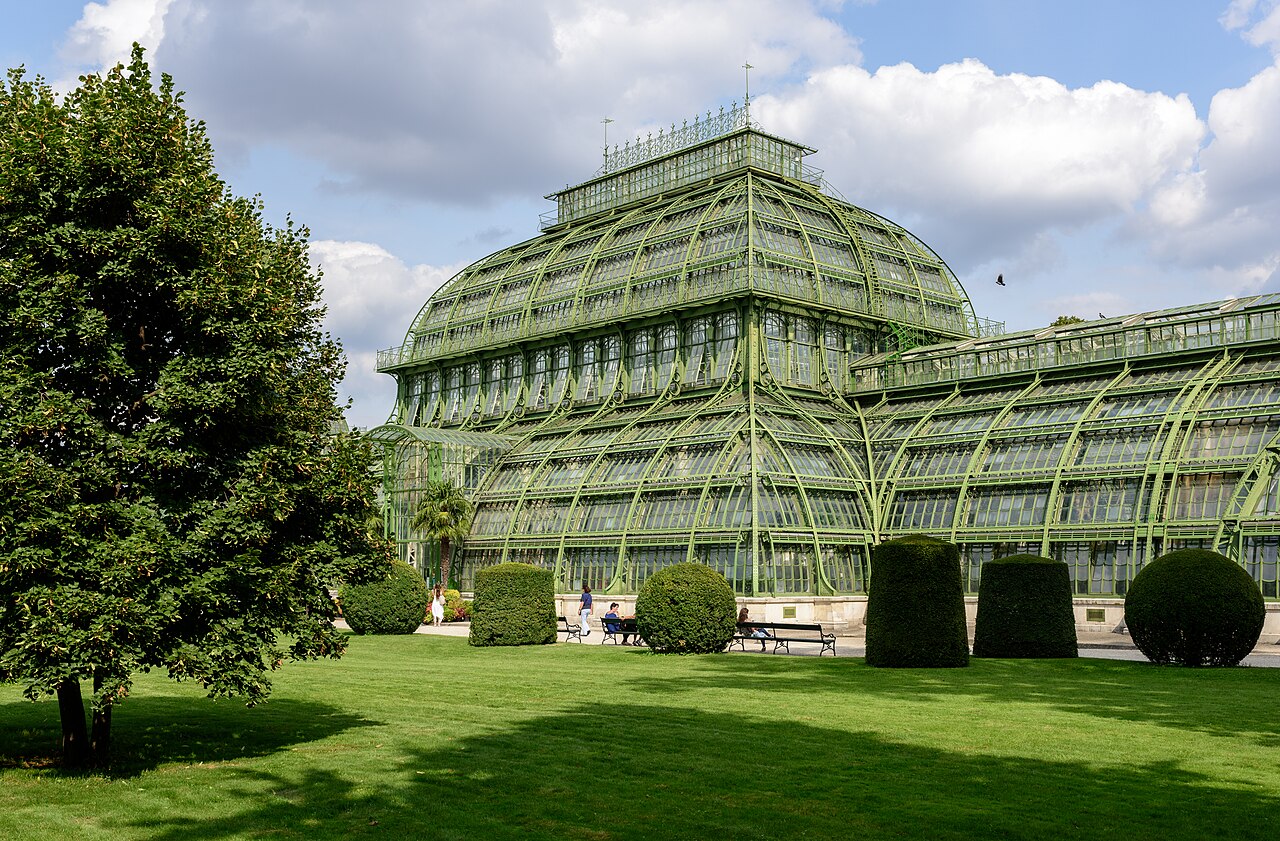
At 111 metres long (113 according to the palace website), up to 28 metres wide and 25 metres high at the central pavilion, the Palmenhaus covers 2,500 m² of ground, against the 3,500 m² first planned. Its prefabricated parts combine some 600 tonnes of wrought iron and 120 tonnes of cast iron, and its 4,900 m² of glazing consist of about 45,000 panes.
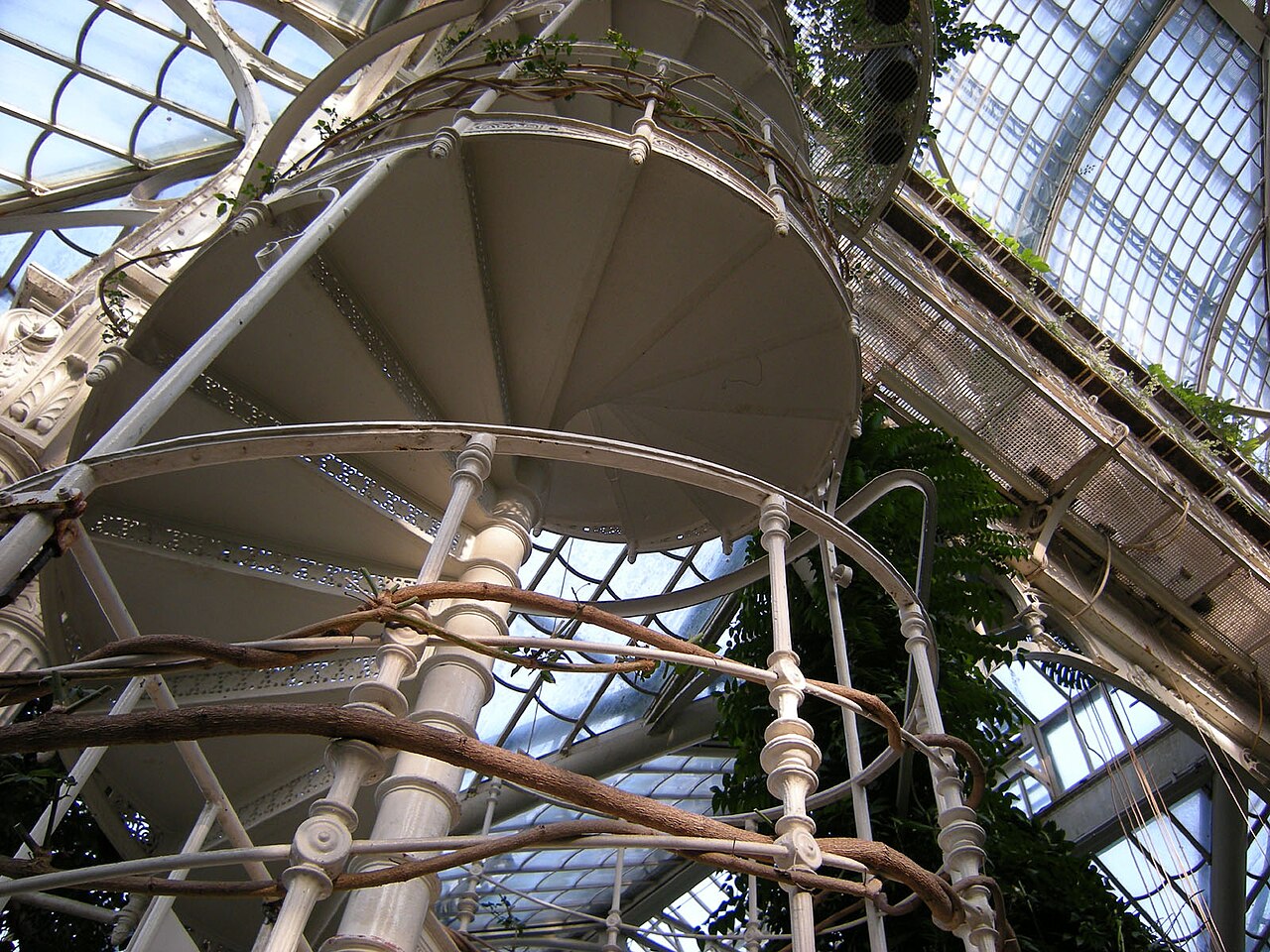
The scheme follows Kew, but Segenschmid added square corner pavilions to the wings, echoing the forms of the central pavilion and linked to it by covered passages. The frame rests on a low stone parapet: the wrought-iron lattice girders stay outside, with the glass wall hung from them, while inside cast-iron columns carry the ring of beams. The overlapping, scale-like glazing, originally double, was replaced in 1986-1990 by insulating units in the original pane format, laid like shingles on curved aluminium glazing bars.
Three climates follow one another: a cool house to the north (minimum 6 °C), a temperate central pavilion (12 °C) and a tropical house to the south (18 °C). The original boiler house to the south held three coal-fired boilers whose steam also heated the nearby zoo and the reserve glasshouses; some twenty years later it was moved to the Maxingstraße. Rainwater cisterns, misting and underfloor heating now complete the equipment.
Plant collections
The layout of 1882 survives. The cool house was centred on a large Araucaria columnaris, surrounded by tree ferns, acacias, proteas, banksias, camellias, azaleas and bulbs; the temperate pavilion on a Livistona chinensis among palms, cycads and tree ferns; and the tropical house held the aroid collection assembled by the court garden director Heinrich Wilhelm Schott, along with tropical useful plants.
The Federal Gardens now speak of well over 5,000 tropical and subtropical plants. Highlights include a 200-year-old date palm in the central hall, a Wollemia in the cool house and, in the warm house, a Seychelles nut palm grown from a nut presented at the 1990 reopening. An olive tree of about 350 years, given by Spain at the 1974 Vienna garden show, and the "Mirna palm", planted in April 2008 to replace a Livistona chinensis of about 170 years, are among its famous specimens; the Victoria flowered in August 2001, for the first time in more than forty years.
Since 1883 an azalea and camellia show has been held every year from January to March, using plants from reserve glasshouses closed to the public.
Visiting
The Palmenhaus stands in the western part of Schönbrunn Park, on the site of the former Dutch botanical garden; palace and gardens have been a UNESCO World Heritage Site since 1996. A visit runs through the three pavilions in sequence, from the coolest to the warmest.
Open all year, it hosts several temporary shows annually: azaleas and camellias from January to March, pumpkins in autumn (October-November in 2026). Combined tickets pair it with the Wüstenhaus, the desert house in the nearby Sonnenuhrhaus, and with Schönbrunn Zoo close by; guided group tours are available on request, and the old palm house of 1828 stands a short walk away.
48.18° N, 16.30° E
Greenhouses nearby
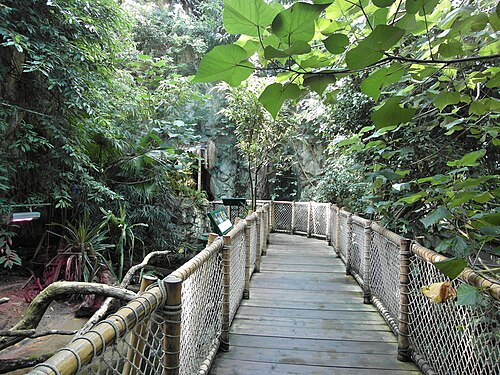
Architecture nearby
More greenhouses — Austria
Do you have a good photo of this greenhouse? Suggest it for this page →
Sources (7)
- bundesgaerten.at/schlosspark-schoenbrunn/das-grosse-palmenhaus.html
- bundesgaerten.at/gruene-schatzkammer-blog/palmenhaus.html
- schoenbrunn.at/en/about-schoenbrunn/gardens/tour-through-the-park/palm-house
- de.wikipedia.org/wiki/Palmenhaus_(Wien-Sch%C3%B6nbrunn)
- bundesgaerten.at/service/kalender/schoenbrunn/2026-herbstausstellung-im-grossen-palmenhaus
- wikidata.org/wiki/Q874600
- openstreetmap.org/way/22893606
Affiliate links — booking through Verrière helps fund our research, at no extra cost to you.