Wüstenhaus Schönbrunn (Desert House, former Sundial House)
Vienna, Schönbrunn Palace Park
Entry updated on October 3, 2026
- Year
- 1904
- Architect
- Alfons Custodis
- Style
- Jugendstil (Art Nouveau); glazed roof and south front
- Status
- Open to the public; desert house since 2003 (Vienna Zoo and Austrian Federal Gardens)
Built in 1904 in Schönbrunn Park by Alfons Custodis for Emperor Franz Joseph I's plant collections, the Sonnenuhrhaus, or Sundial House, overwintered Australian and South African plants until 1989 and then became a butterfly house. Closed in 1998 because of its poor condition, the Art Nouveau glasshouse was renovated from 2000 and reopened in 2003 as a desert house run jointly by the zoo and the Federal Gardens. A trail leads through arid landscapes from Central America to Madagascar, home to succulents, Welwitschia and naked mole rats.
Affiliate links — booking through Verrière helps fund our research, at no extra cost to you.
History
1 min
The Sonnenuhrhaus was built in 1904 in the park of Schönbrunn Palace, to designs by Alfons Custodis, to house the valuable plant collections of Emperor Franz Joseph I; it takes its name from the sundial set in the garden to the south. It replaced an older glasshouse that no longer met the plants' needs and first received the large 'New Holland' collection, acquired by the imperial court in 1848.
Until 1989 the building served as a glasshouse and winter shelter for Australian and South African plants. According to Wikipedia it also took in the plants of the neighbouring Palmenhaus after the bombing of 1945, and again while that house was being renovated between 1986 and 1990. The glasshouse then became a butterfly house, the first in Austria according to the same source, and remained popular with visitors to the park until it closed in 1998, its structure eaten away by rust.
Renovation began in the autumn of 2000. The desert house was developed by a joint working group, ARGE Wüstenhaus, formed by Tiergarten Schönbrunn and the Austrian Federal Gardens (Österreichische Bundesgärten). It opened in 2003 according to the zoo and the Federal Gardens, in 2004 according to English Wikipedia. It now receives about 130,000 visitors a year.
Architecture and engineering
1 min
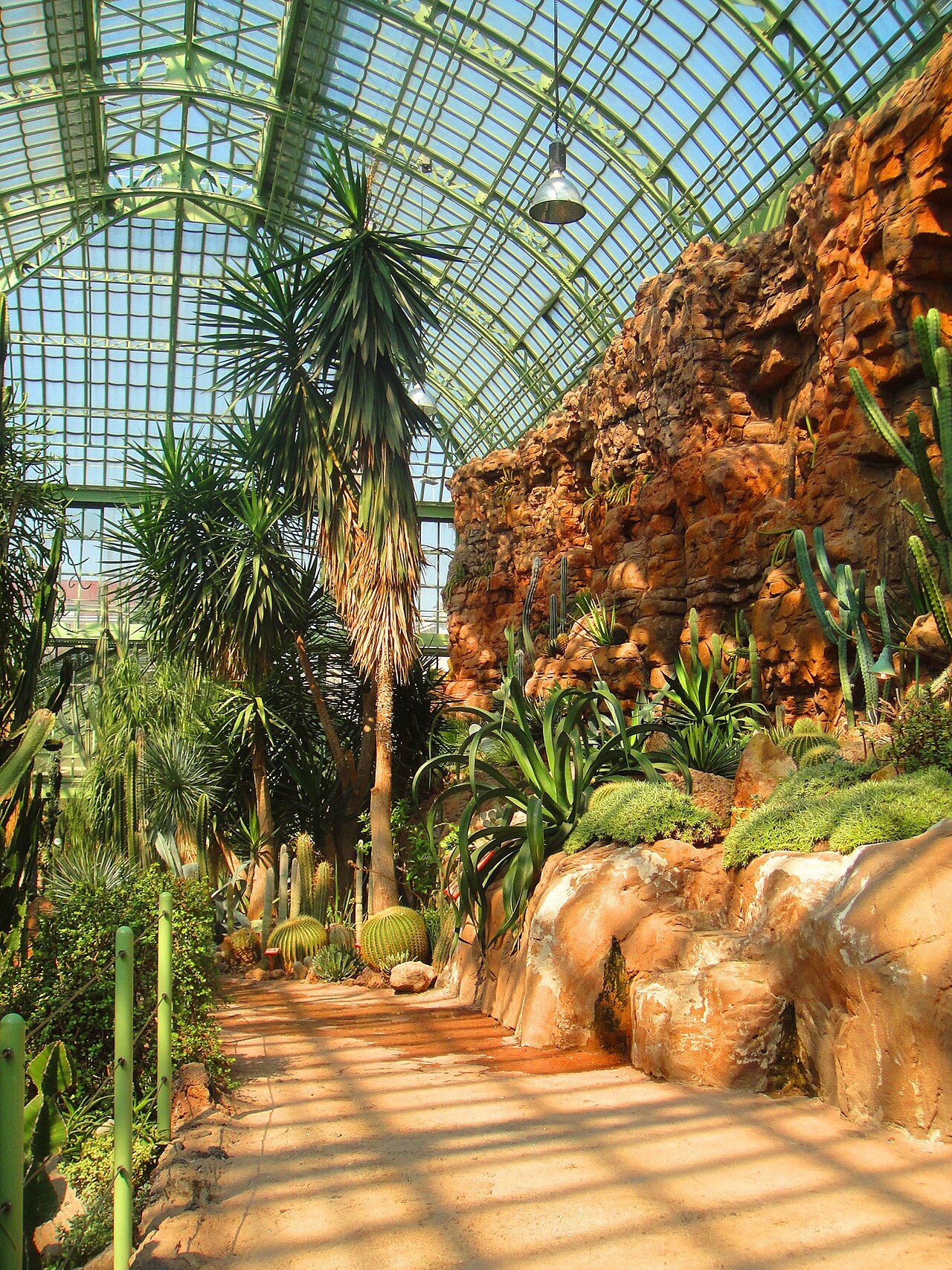
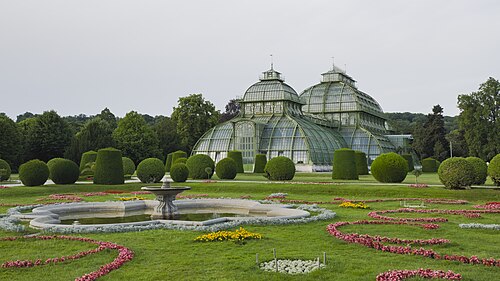
The Sonnenuhrhaus belongs to the Jugendstil, Vienna's version of Art Nouveau. Its roof and south front are fully glazed, while the north front is solid masonry, so that the whole house faces the sun. Inside, it is divided into three lengthwise aisles, with two annexes.
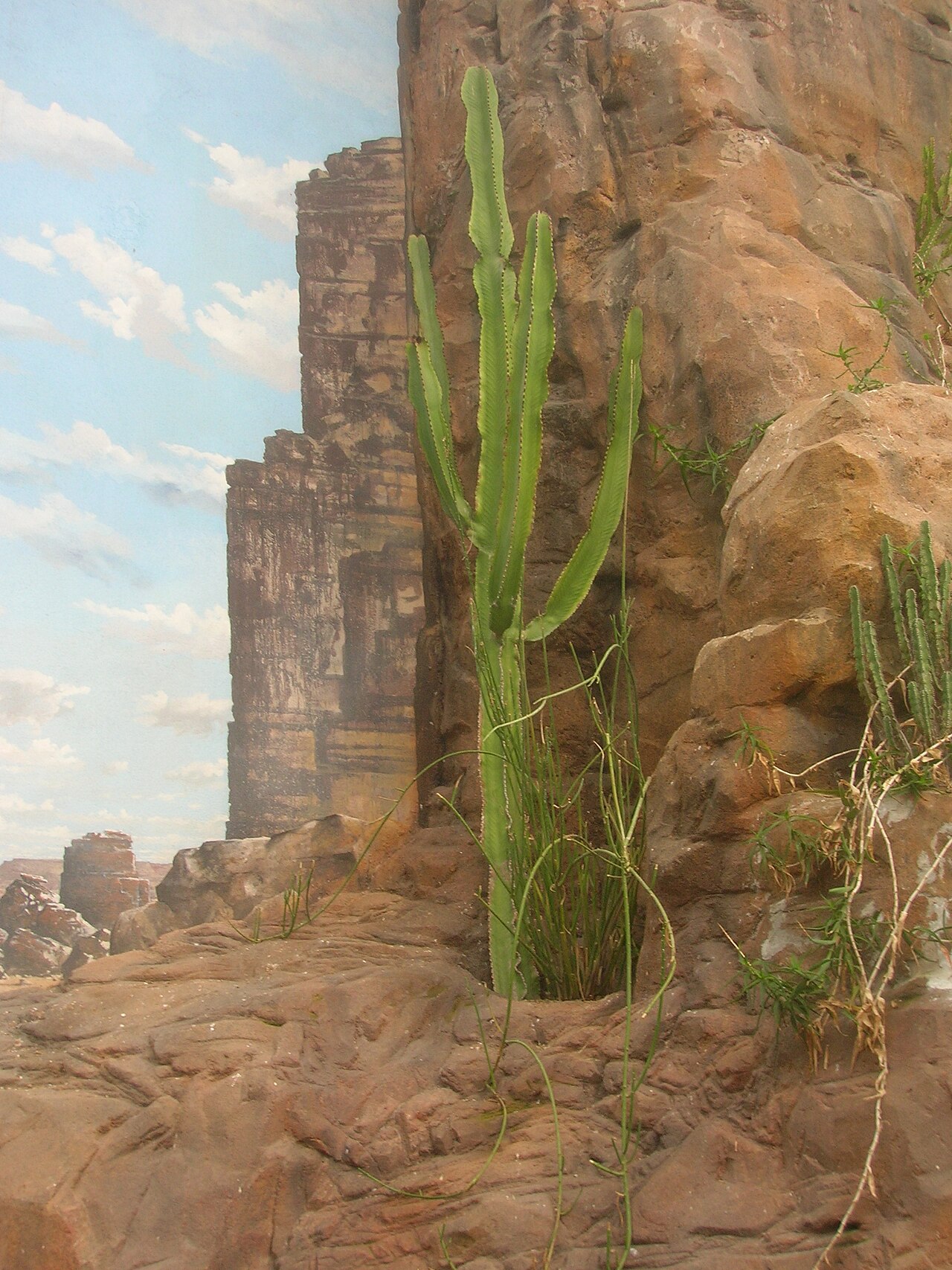
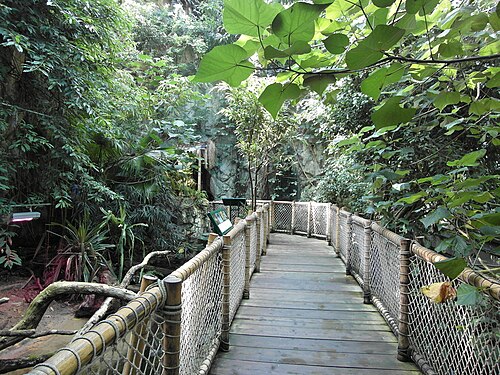
The conversion set a sequence of recreated desert landscapes beneath the glass roof, linked by a discovery trail that runs from Central America to Madagascar. Its most unusual feature is a 70-metre labyrinth of glass tubes in which a colony of about fifty naked mole rats moves about: their comings and goings and their social organisation can be watched through the walls. Pools hold fish from arid environments, and a 270 m² area for Seychelles giant tortoises opened in the summer of 2024.
Plant collections
1 min
The plant displays concentrate on cacti and other succulents. Welwitschia mirabilis, discovered in 1859 by the Austrian explorer Friedrich Welwitsch and found in the wild only in the Namib Desert, is represented by two plants, one male and one female. The Fockea capensis is presented as the oldest potted succulent in the world: in cultivation since the late 18th century, it was shown at the 1889 Paris World Exhibition and, according to the zoo, remained the only known specimen until 1906. A Pereskia, a cactus with a rose-like look, completes the collection.
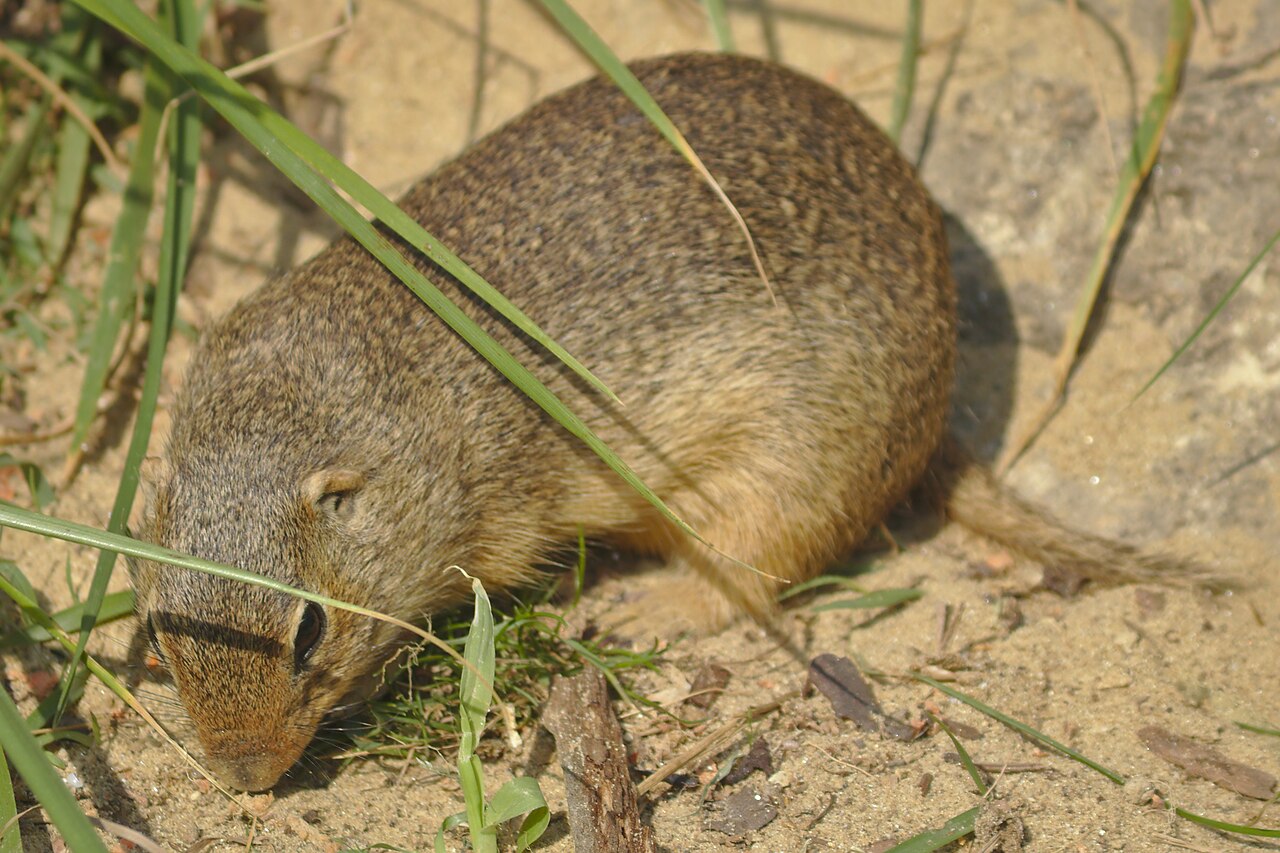
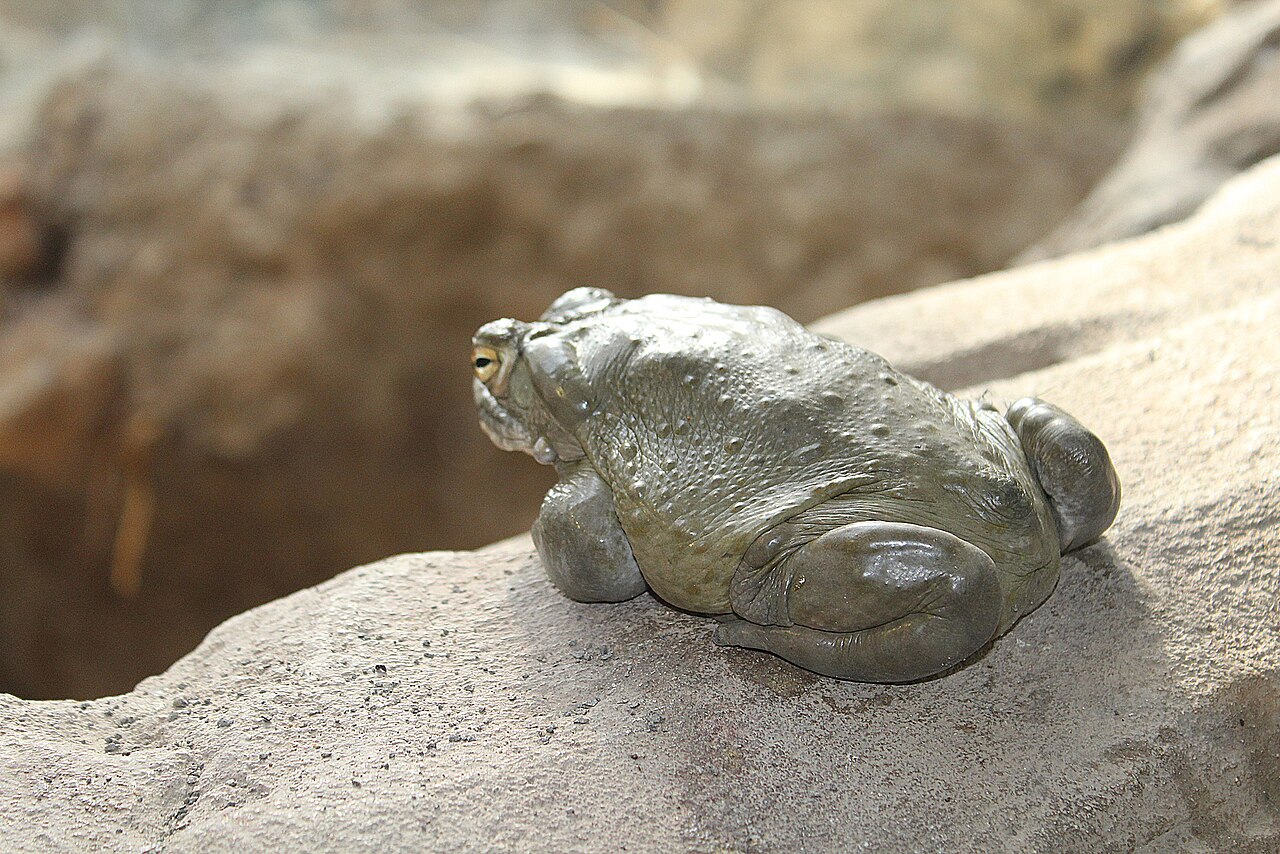
The animals include naked mole rats, short-eared elephant shrews, black-tailed rattlesnakes, Gila monsters, Zagros newts, scorpion-tailed geckos, hardun agamas and tortoises, as well as blind cave fish and Garra rufa, the 'doctor fish' of Turkey, Syria and Jordan. Whip spiders and an African bird, the amethyst starling, are also among the residents.
Visiting
1 min
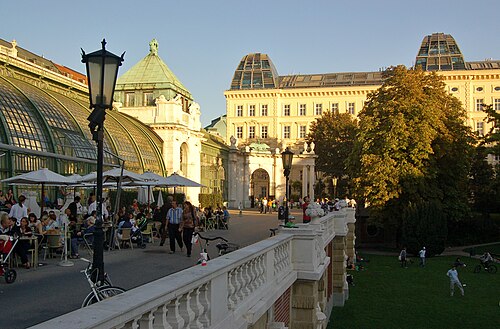
The Wüstenhaus stands in Schönbrunn Park, outside the main zoo grounds, near the Hietzing entrance and opposite the Palmenhaus, the great palm house. It is visited separately from the zoo; forty-five minutes to an hour is enough to see it at a relaxed pace. Its dry warmth makes it a welcome stop in winter, when the park is bare. The visit combines easily with the neighbouring Palmenhaus, the zoo's Regenwaldhaus (rainforest house) and a walk through the palace gardens.
48.18° N, 16.30° E
Greenhouses nearby
More greenhouses — Austria
All greenhouses — Austria →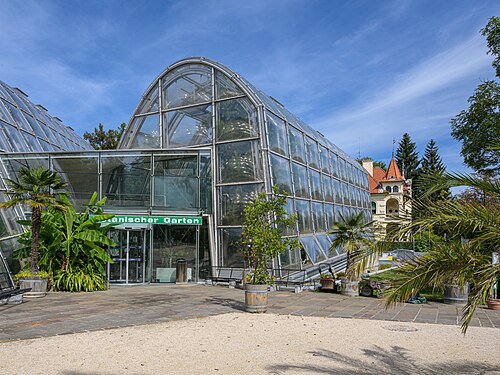
Do you have a good photo of this greenhouse? Suggest it for this page →