Glasshouses of the Botanical Garden of Johannes Gutenberg University Mainz
Mainz, Rhineland-Palatinate

Entry updated on October 5, 2026
- Year
- 1948-1954
- Architect
- Unknown
- Style
- Post-war glasshouse range with contemporary desert houses (2025)
- Dimensions
- About 20 glasshouses; two new desert houses costing €3.1 million (2025)
- Status
- Open to the public (phased renovation of the glasshouses under way)
The glasshouses of the University of Mainz botanical garden were built mostly from 1948 onwards, while the garden was being laid out on the campus between 1946 and 1955. Their central hall, the 'Verbinder' of 1954, is still the tallest. They display tropical growth forms, ferns, aquatic plants, cycads and tropical useful plants. In April 2025 two modern houses for desert plants, funded by the state at a cost of 3.1 million euros, opened as the first step in renovating the whole complex.
Affiliate links — booking through Verrière helps fund our research, at no extra cost to you.
History
1 min
The botanical garden of Johannes Gutenberg University was laid out between 1946 and 1955 on former farmland and an old military training ground. The glasshouses grew at the same pace: a first house went up in 1948, two second-hand houses were acquired in 1952, and in 1954 the 'Verbinder' was built, which remains the tallest glasshouse in the garden today. These buildings formed the core of an extensive complex, and according to the garden most of its glasshouses still date from that founding period.
The houses have been open to students and visitors since 1992. The succulent house was redesigned in 1997 and a new tropical house was built in 1999. In June 2014 an Agave salmiana more than two metres across flowered there, the first bloom of a large agave species since the garden was founded.
A full, phased renovation of some twenty glasshouses began with two modern houses for desert plants. Paid for entirely by the state at a cost of 3.1 million euros, they were inaugurated on 11 April 2025 and opened to the public two days later.

Architecture and engineering
1 min
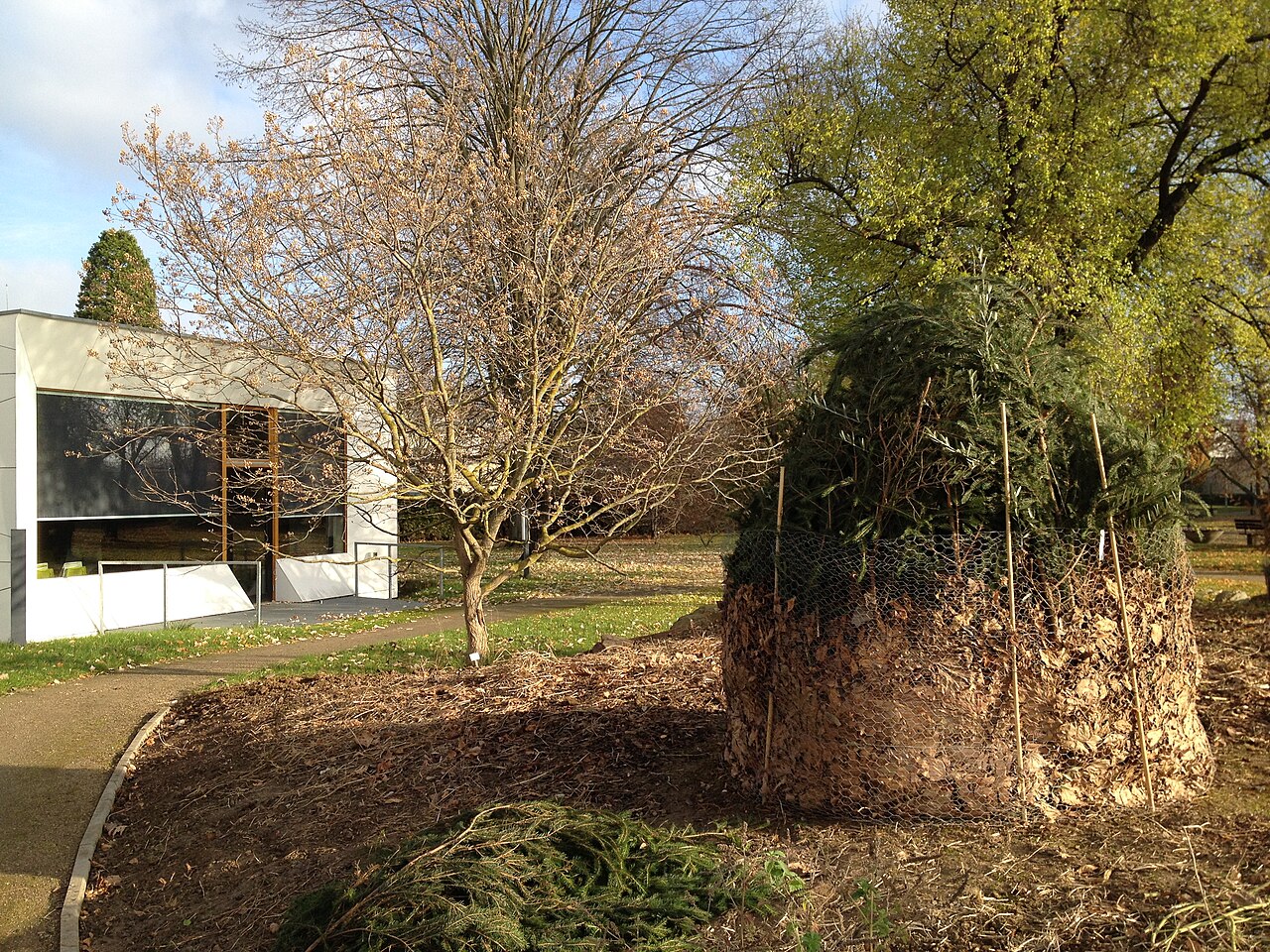
The complex occupies a separate part of the garden with its own entrance, next to the Institute of Special Botany. It is organised around the 'Verbinder' (house 13), the tallest house, which links a series of side houses. Those on the left are half sunk into the ground, while the public houses on the right are somewhat larger. The cycad house is a temperate house kept at 15 to 18 °C.
The two desert houses opened in 2025 replace structures from the 1950s. They have what the university describes as ecological climate control, heating built into the facades and adjustable ventilation flaps, aiming at far better energy efficiency and a more attractive display of the plants. The renovation programme also includes an underground rainwater cistern of 2,400 cubic metres and new research glasshouses.
Plant collections
1 min
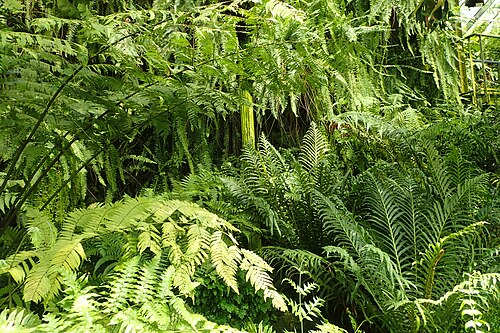
The garden grows some 8,500 species in all. The Verbinder presents tropical growth forms: lianas, epiphytes, small trees, tropical crop plants and changing orchid displays. The fern house holds a small collection of tropical ferns and mosses, and the aquatic house includes Phyllanthus fluitans from northern South America and floating ferns of the genus Salvinia. House 16, devoted to the tropical forest understorey, brings together large-leaved aroids, heliconias, climbers and epiphytes, along with Nymphaea caerulea.
The cycad house also shelters Welwitschia mirabilis, and the tropical useful plants include coffee and cacao. Dryland plants are arranged by region: the New World, Africa and the Canaries, and the thorn savannas of south-western Madagascar. The new desert houses hold more than 300 species, including large cacti and succulents acquired in the Canary Islands and a huge Argentine cactus moved from the old house.
Visiting
1 min
The glasshouses stand in their own enclosure within the garden, on the university campus, and entry is free. An hour is enough to see all the houses, more if the visit takes in the 10-hectare outdoor garden with its arboretum, alpine garden and sections devoted to steppe plants and the regional flora of the Mainzer Sand. The glasshouses keep shorter hours than the outdoor garden. The garden occasionally holds evening events among the glasshouses, such as the 'Tropennacht' nights of 2003 and 2008.
49.99° N, 8.24° E
Greenhouses nearby
More greenhouses — Germany
Do you have a good photo of this greenhouse? Suggest it for this page →
Sources (7)
- botgarten.uni-mainz.de/gewaechshaeuser/
- botgarten.uni-mainz.de/verbinder-mit-nebenhaeusern/
- botgarten.uni-mainz.de/sukkulentenhaus/
- presse.uni-mainz.de/eroeffnung-der-neuen-gewaechshaeuser-fuer-wuestenpflanzen-im-botanisch
- de.wikipedia.org/wiki/Botanischer_Garten_Mainz
- en.wikipedia.org/wiki/Botanischer_Garten_der_Johannes_Gutenberg-Universit%C3%A4t_Mainz
- openstreetmap.org/way/43329945