Loki Schmidt Glasshouses (Loki-Schmidt-Gewächshäuser), University of Rostock Botanical Garden
Rostock, Mecklenburg-Western Pomerania
Entry updated on October 5, 2026
- Year
- 2009–2011
- Architect
- Unknown
- Style
- Contemporary glass glasshouses
- Dimensions
- Tropical house of 400 m²
- Status
- Open to the public at restricted times
For decades the University of Rostock's botanical garden kept its glasshouses on its original site in the Doberaner Straße, where in their last years they were closed to visitors because of their poor condition. A first phase of new glasshouses, named after the garden's patron Loki Schmidt, came into use in early 2009 on the Hamburger Straße grounds laid out in 1935–1939. The 400 m² tropical house, kept at 25–30 °C, gathers crop plants, aquatic plants, montane rainforest flora and epiphytes, while a succulent collection and a further glasshouse completed in 2011 round out the complex.
Affiliate links — booking through Verrière helps fund our research, at no extra cost to you.
History
1 min
The story of Rostock's botanical garden is one of repeated false starts. According to German Wikipedia, several attempts at founding a garden failed before the botanist Karl Ritter von Goebel established a lasting one in 1885; the university's own history page dates the opening of the first, modestly equipped garden to 1884. This first site lay in the Doberaner Straße.
Between 1935 and 1939 the landscape architects Arno Lehmann and Erich Rulsch laid out new grounds of 7.8 hectares in the Hamburger Straße, in the Hansaviertel district. Their plans included representative buildings and extensive glasshouses, yet the display glasshouses long remained on the old site. The university says they operated until shortly after 2000, while Wikipedia states that they were still in use until 2009, though closed to visitors in their last years because of their condition.
Their successors are the Loki Schmidt Glasshouses on the Hamburger Straße grounds. A first phase came into use in early 2009 and was inaugurated on 15 May 2009 in the presence of Loki Schmidt, whom the university honours for her commitment to the garden, to biodiversity and to species protection. A second new glasshouse, intended for work and propagation, was handed over in early 2011. The sources consulted do not name an architect.
Architecture and engineering
1 min
The complex consists of single-storey, fully glazed glasshouses. In the OpenStreetMap database the main building is recorded as a glass structure, roof included, about ten metres high.
The tropical house covers 400 m². It is kept between 25 and 30 °C with relative humidity above 80 per cent. The garden explains that it deliberately does not smooth out the climate: natural swings in temperature and humidity are reproduced because they trigger growth and flowering in many plants, orchids in particular.
The interior is organised into four main zones (tropical crop plants, aquatic plants, montane rainforest plants and epiphytes), with smaller areas around a waterfall and for carnivorous plants and bromeliads. The succulent collection is temporarily housed right next to the tropical house, and the glasshouse of 2011 completes the group.
Plant collections
1 min
Across all its sections the botanical garden cultivates nearly 7,000 plant species, according to German Wikipedia. Under glass, the tropical house concentrates on the crop plants of the tropics, together with aquatic plants, the flora of humid montane forests, epiphytes, orchids, bromeliads and carnivorous plants.
The succulent collection brings together species from the subtropical deserts and semi-deserts of the Old and New Worlds: cacti, euphorbias, agaves, aloes, yuccas and dragon trees. The garden uses it to illustrate convergence, the independent appearance of strikingly similar growth forms in different plant families and continents exposed to comparable conditions.
The glasshouse handed over in 2011, designed first for work and propagation, currently shows plants from Mediterranean climates.
Visiting
1 min
The glasshouses stand in the botanical garden on the Hamburger Straße, in the Hansaviertel. The 7.8-hectare garden combines a rock garden, an arboretum of some 2,900 woody species including dawn redwoods, a Japanese garden with a thatched Low German house and a rhododendron collection, and a dammed stream, the Kayenmühlengraben, used to present wet meadow, bog and pond habitats.
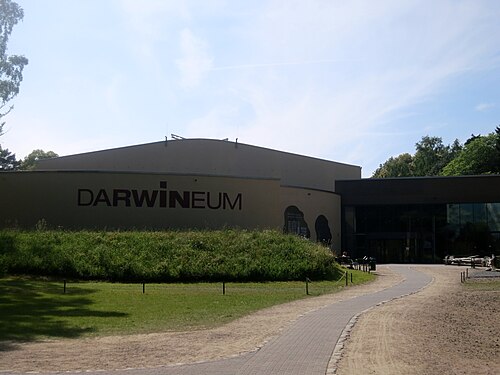
The glasshouses open only at set times and the garden keeps restricted hours from December to February; guided tours and events are held regularly. Rostock Zoo and its Darwineum lie about two kilometres away.
54.09° N, 12.10° E
Greenhouses nearby
More greenhouses — Germany
Do you have a good photo of this greenhouse? Suggest it for this page →
Sources (6)
- garten.uni-rostock.de/der-garten/gewaechshaeuser/tropengewaechshaus/
- garten.uni-rostock.de/ueber-uns/geschichte-des-botanischen-gartens/
- garten.uni-rostock.de/der-garten/gewaechshaeuser/sukkulentengewaechshaus/
- garten.uni-rostock.de/
- de.wikipedia.org/wiki/Botanischer_Garten_(Rostock)
- openstreetmap.org/way/75461284