Talcott Greenhouse (Mount Holyoke College)
South Hadley, Massachusetts
Entry updated on October 3, 2026
- Year
- 1896–1899
- Style
- Victorian-era greenhouse complex
- Dimensions
- ≈560 m² (6,000 sq ft)
- Status
- Open to the public year-round
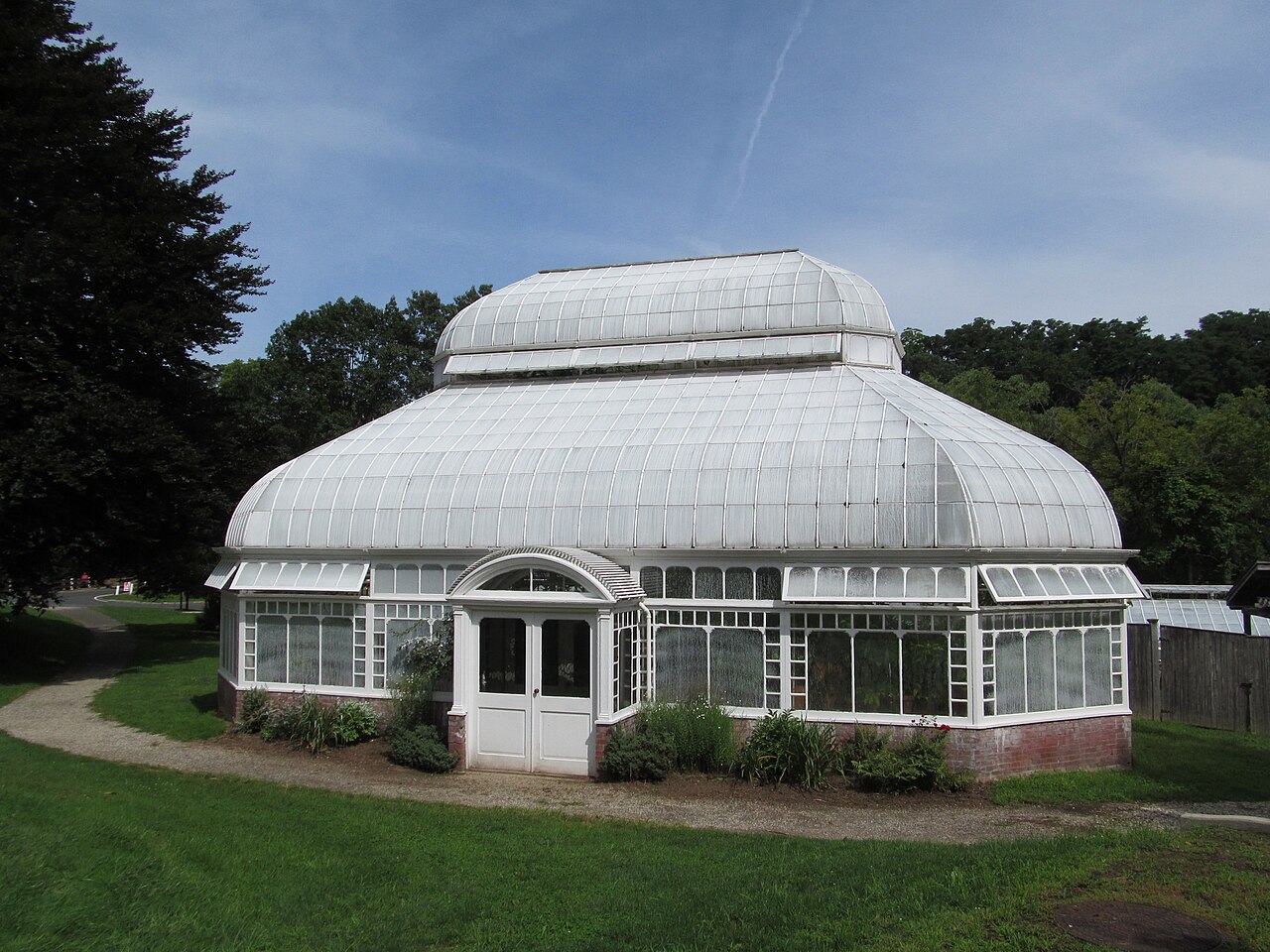
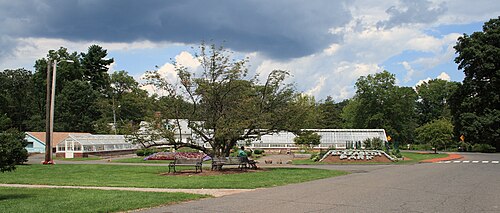
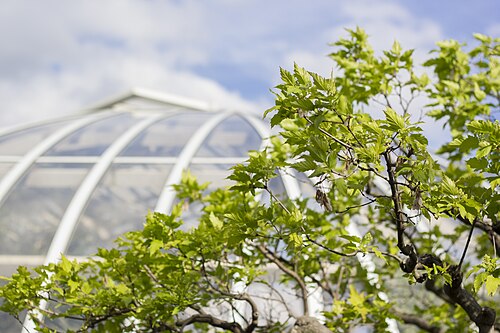
This Victorian-era greenhouse complex was rebuilt from late 1896 onwards, after a fire destroyed Mount Holyoke College's original greenhouse: the show house and head house came first, followed in 1898–1899 by a west wing funded by James Talcott. Covering about 6,000 square feet (roughly 560 m²), it devotes three-quarters of its space to a permanent collection of tropical, subtropical and temperate plants (orchids, cacti, ferns, begonias, bromeliads, aquatic plants) and the rest to research and propagation.
Affiliate links — booking through Verrière helps fund our research, at no extra cost to you.
History
1 min
Mount Holyoke College in South Hadley has long grown plants for teaching: according to Wikipedia, its grounds were first designated a botanical garden in 1878. The college's original greenhouse was destroyed in the fire of 1896, and rebuilding began late that same year, parallel to Lower Lake Road, starting with the show house and the head house.
The west wing followed in 1898–1899, funded by James Talcott; the college archives mention a $10,000 fund and date the completion of what was first called the Talcott Arboretum to 1899. It soon held a notable collection of tropical palms and other plants, obtained from Europe before laws restricting plant imports came into force.
During the twentieth century the greenhouses took part in the region's horticultural life: in the late 1940s the college's displays won the annual University of Massachusetts flower show three years running. Mount Holyoke later launched its own spring flower show in the early 1970s (from 1971 according to Wikipedia, by 1974 according to the college archives). In 1998 the arboretum's centenary was celebrated at the show with a large cake-shaped floral arrangement.
After a hundred years of almost continuous use, the complex underwent much-needed renovations in the 1990s.
Architecture and engineering
1 min
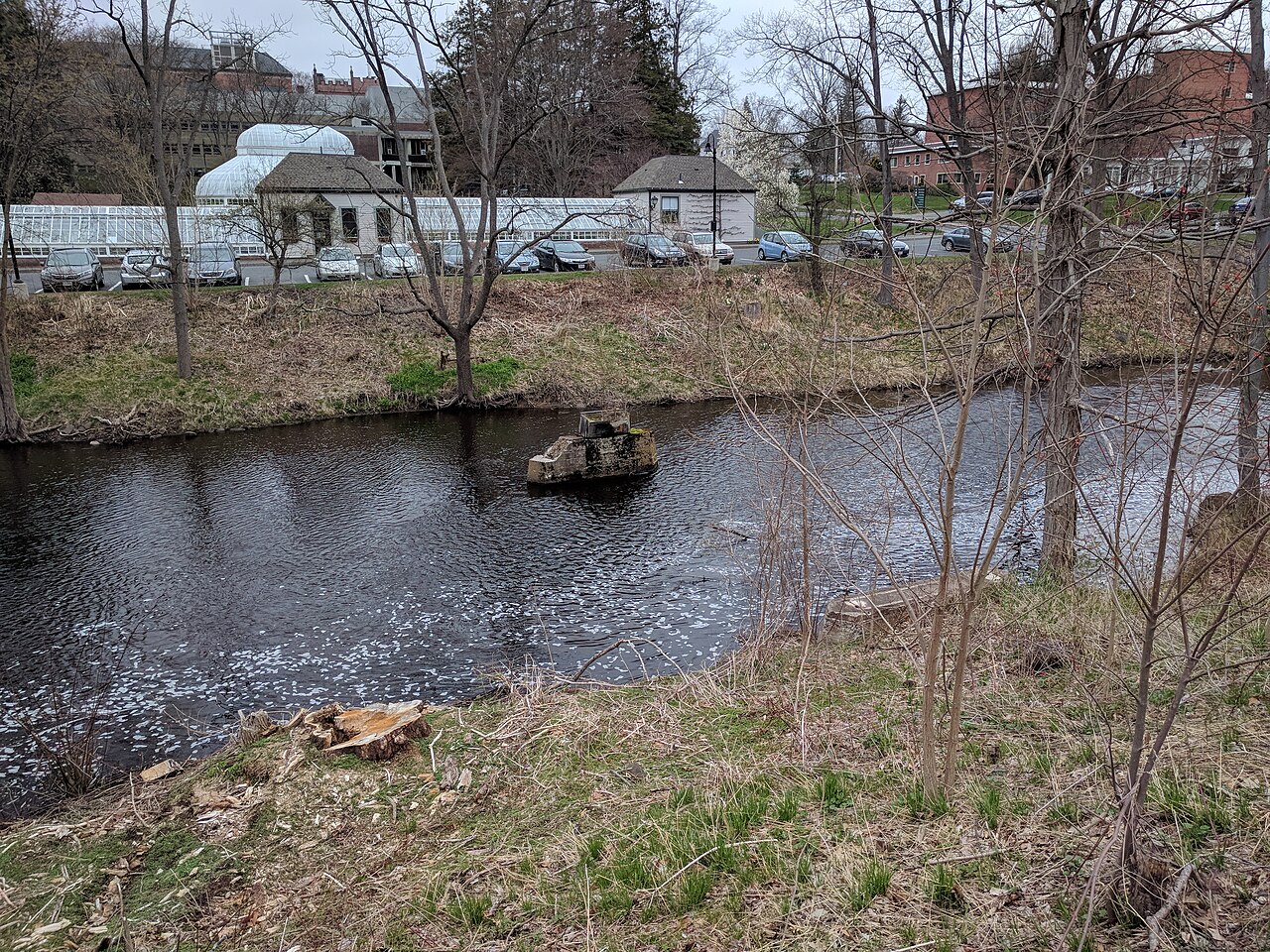
The Talcott Greenhouse is a Victorian-era complex of about 6,000 square feet, or roughly 560 m². It was built in two campaigns: the show house and head house, raised from late 1896 along Lower Lake Road, and the west wing, added in 1898–1899 thanks to James Talcott's gift.
The sources consulted name neither the architect nor the builder, and do not describe the frame of the glasshouses. They are more explicit about how the space is used: about three-quarters of the floor area holds the permanent collection, arranged in warm, temperate, tropical and subtropical settings, while the remaining quarter is set aside for research, propagation and plant production.
After a century of almost continuous use, the building was renovated in the 1990s. Outside, the Drue Matthews Garden of alpine and rock-garden plants occupies the southern end of the greenhouse, and the surrounding gardens border the college's Art Building.
Plant collections
1 min
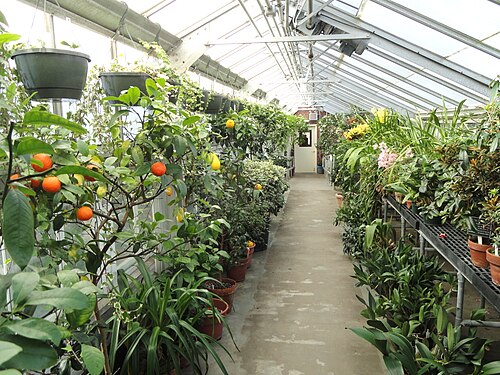
The Mount Holyoke College Botanic Garden's living collection includes more than 2,000 different kinds of plants from six continents, spread between the greenhouses and the outdoor gardens. Under glass, the permanent collection brings together tropical, subtropical and temperate plants: orchids, cacti and other succulents, ferns, begonias, bromeliads and aquatic plants, among others.
The plants serve first and foremost as teaching material for the college's courses, which explains the share of the floor area kept for research and propagation. The greenhouse also sustains campus traditions such as the 'Firstie Plants' handed out to first-year students.
The high point of the year is the spring flower show, held every March since the early 1970s, a display that announces the end of winter.
Visiting
1 min
The greenhouse stands on the Mount Holyoke College campus in South Hadley, beside the Art Building and along Lower Lake Road. It is open to visitors year-round; allow about an hour for the glasshouse rooms and the adjoining gardens.
The best time to come is March, during the annual flower show, which offers a foretaste of spring at the end of the New England winter. Outside, the visit continues with the Drue Matthews Garden of alpine plants, the Class of 1904 Garden of herbaceous perennials and the Virginia Craig Rhododendron Garden along the north side of the Art Building.
42.26° N, 72.57° W
Greenhouses nearby
More greenhouses — United States
Do you have a good photo of this greenhouse? Suggest it for this page →