Waterlily House, Kew Gardens
Kew, London (Richmond upon Thames)
Entry updated on October 3, 2026
- Year
- 1852 · under restoration since 2025
- Architect
- Decimus Burton (built by Richard Turner)
- Style
- Victorian rectangular cast-iron and glass house with a pitched roof
- Dimensions
- Circular pond over 10 m across
- Status
- Closed for restoration since 3 November 2025; reopening announced for 2027
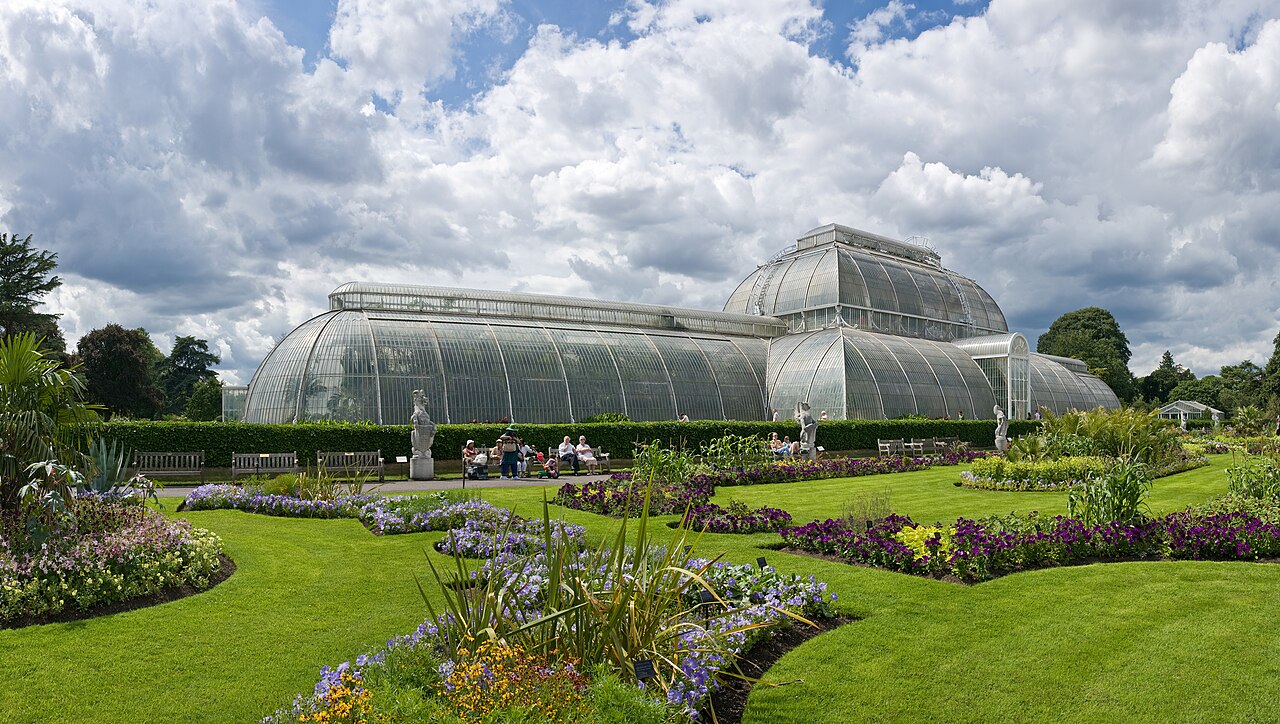
Opened in 1852 as a companion to the Palm House, the Waterlily House was designed by Decimus Burton and built by Richard Turner to display the recently introduced giant waterlily, Victoria amazonica. This rectangular cast-iron and glass building, with a pitched roof carried on slender columns, was then the widest single-span glasshouse in the world. Listed Grade II, it holds a circular pond more than 10 m across where giant waterlilies and sacred lotus grow. Closed for restoration since November 2025, it is due to reopen in 2027.
Affiliate links — booking through Verrière helps fund our research, at no extra cost to you.
History
1 min
In the mid nineteenth century the giant waterlily was one of the natural wonders that captivated Victorian England. Waterlilies of this kind had been found in Bolivia as early as 1801; in 1837, the first year of Queen Victoria's reign, Robert Schomburgk came across Victoria amazonica in British Guiana, and the plant was named after the queen. Kew resolved to give it a purpose-built house as a companion to the neighbouring Palm House.
Opened in 1852, the Waterlily House is credited by Kew to Decimus Burton, whom the official listing calls its probable designer, and was built by Richard Turner. When it opened, no glasshouse in the world covered such a wide space in a single span. The building was listed Grade II on 25 May 1983.
In the twenty-first century Kew found that both the Palm House and the Waterlily House were showing serious signs of deterioration and that, without urgent work, the buildings and the tropical plants they shelter were at risk. Their renovation aims to make them the first heritage net-zero glasshouses of their kind. The Waterlily House closed on 3 November 2025, and its reopening is announced for spring 2027.
Architecture and engineering
1 min
The official listing describes a rectangular cast-iron and glass building under a pitched roof, with a lower porch in front. Scrolled ironwork spans the full width of the roof and rests on slender cast-iron columns. It was this single-span covering that made the Waterlily House the widest glasshouse of its kind in the world in 1852.
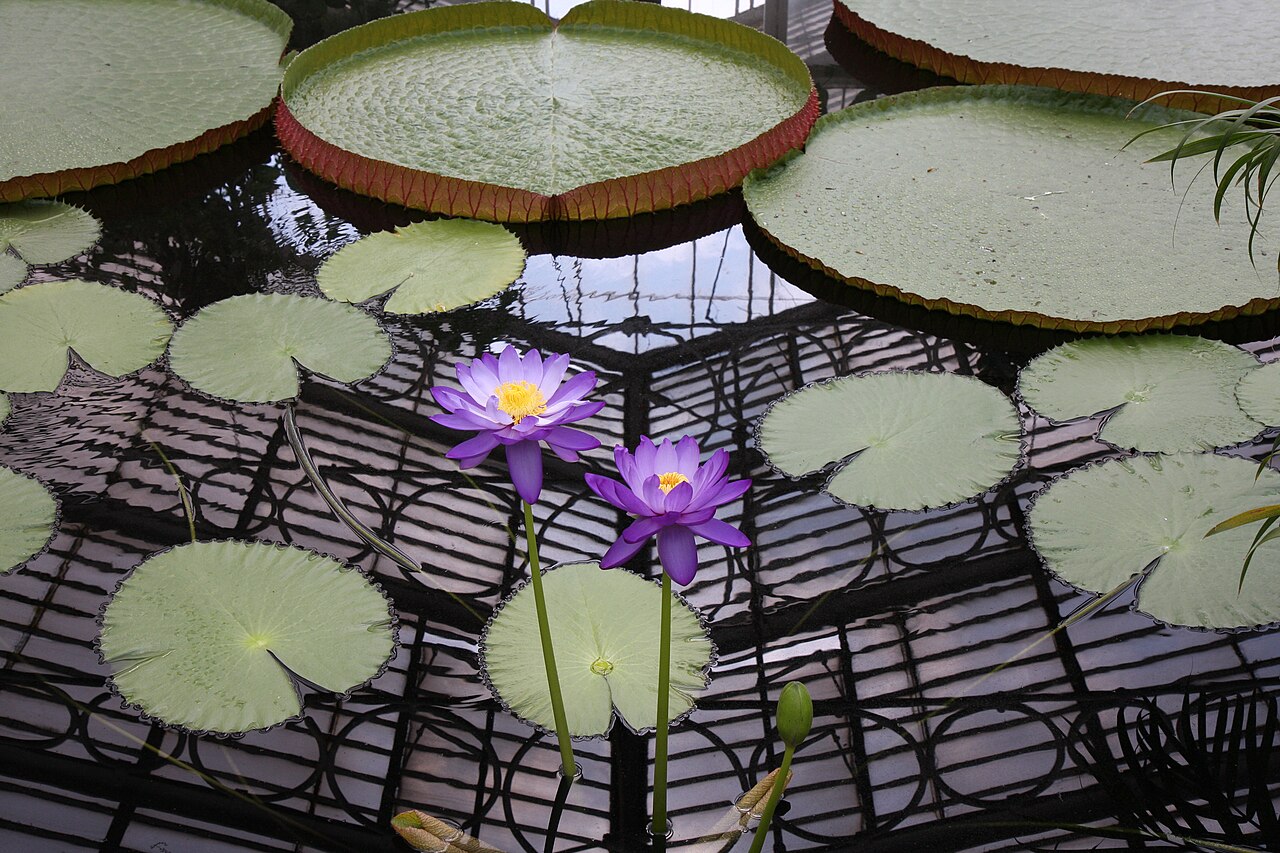
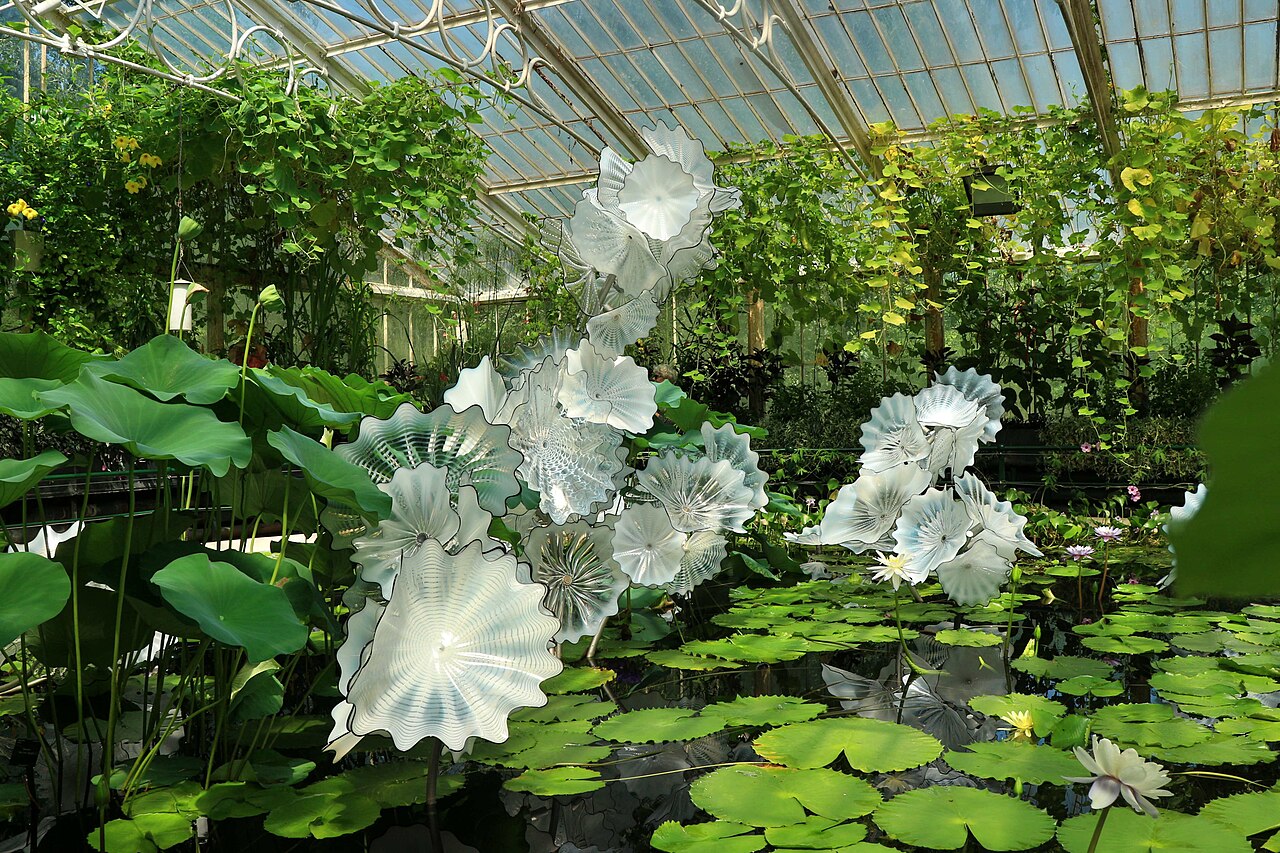
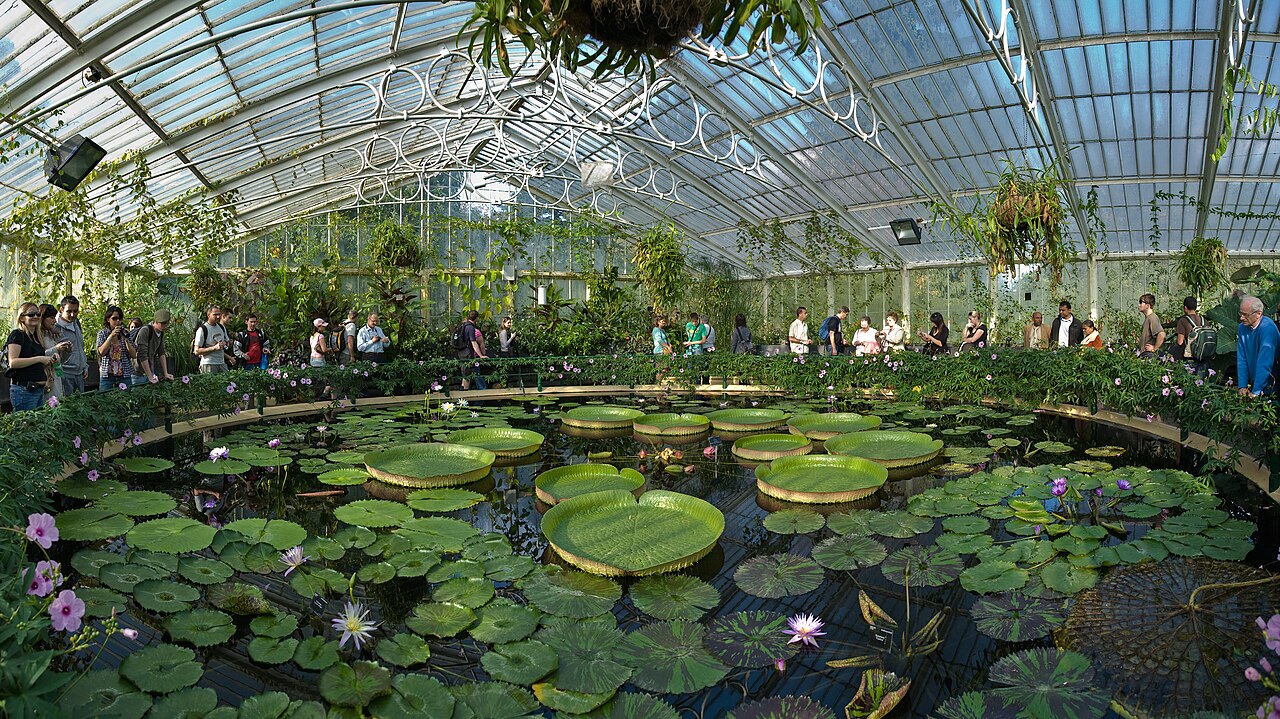
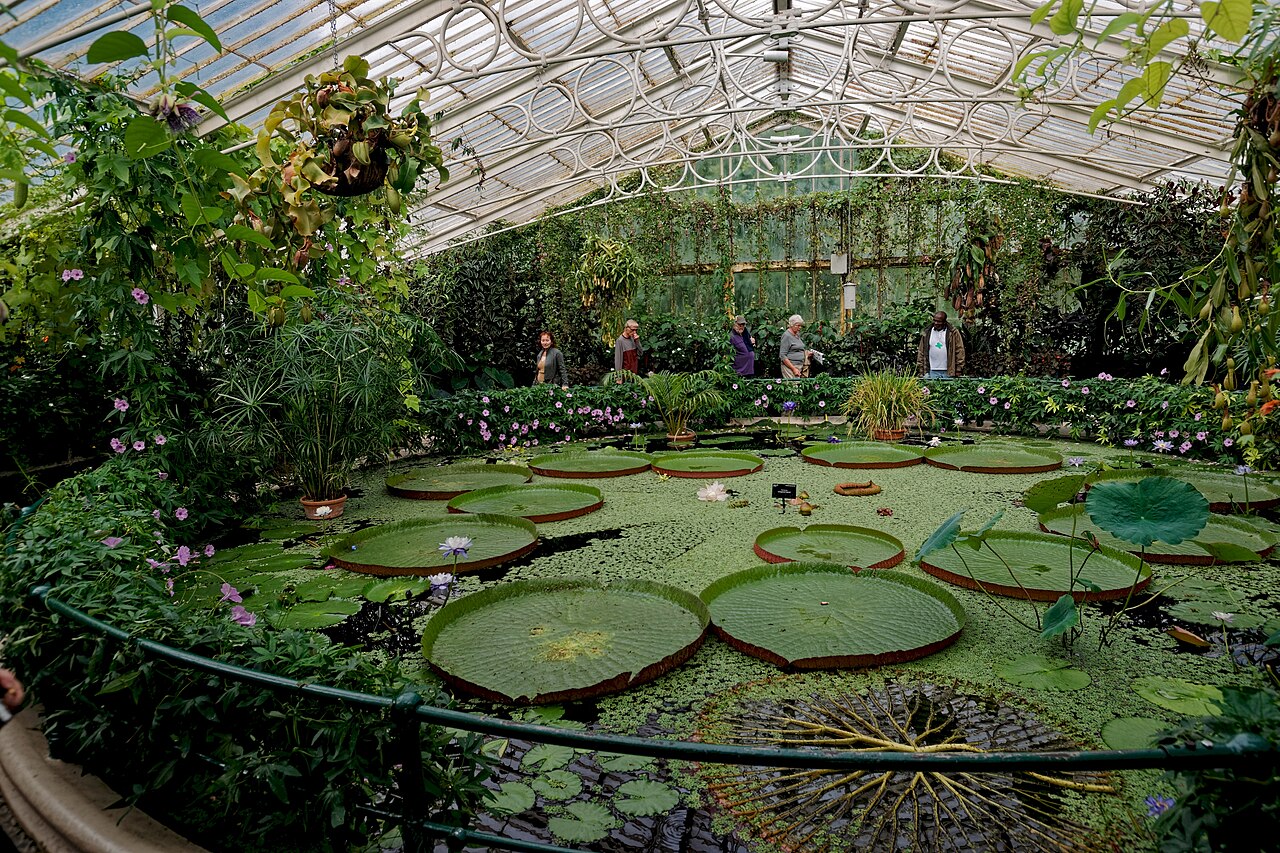
The interior is arranged around a circular pond more than 10 m in diameter, where the waterlily leaves grow to more than 3 m across. Kew describes it as a tropical glasshouse. The renovation programme run alongside that of the Palm House is intended to let this listed building operate at net zero carbon.
Plant collections
1 min
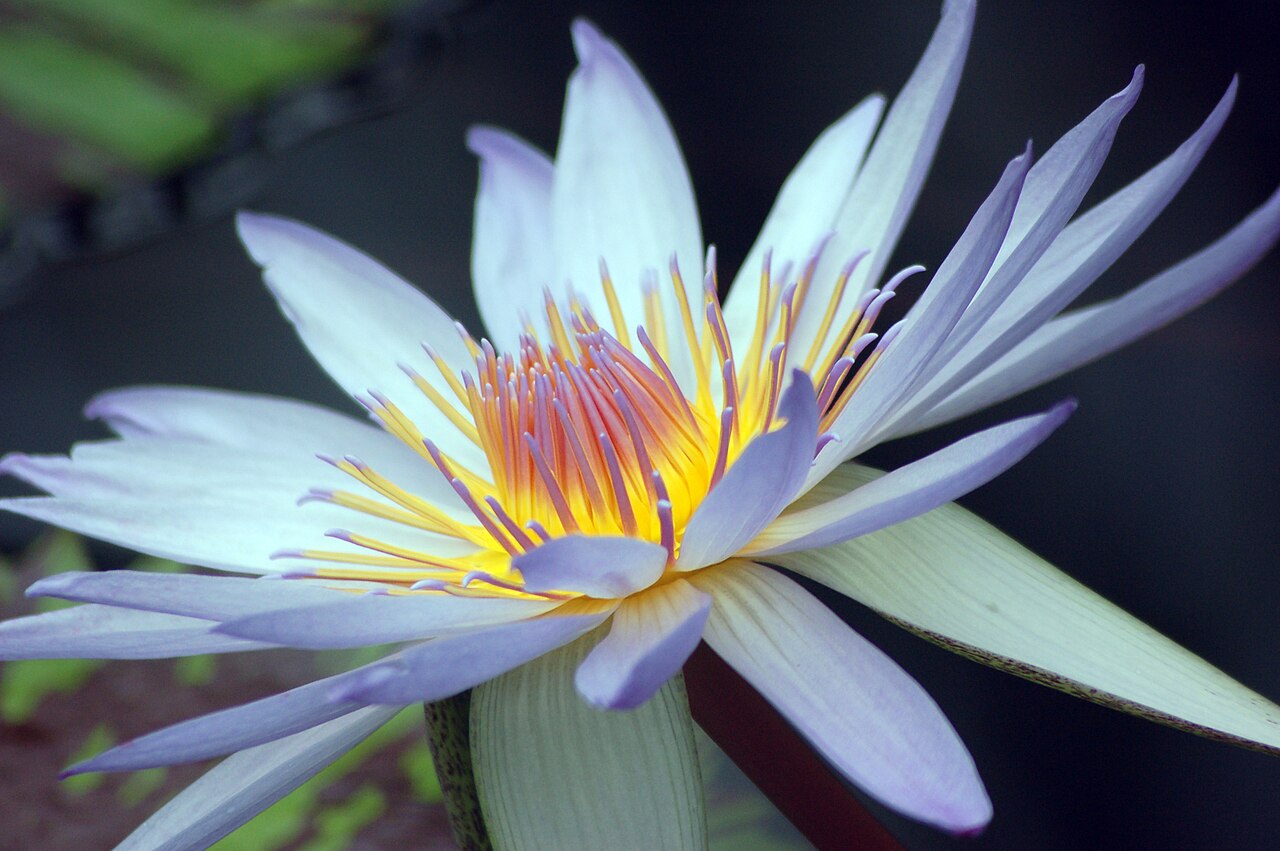
The house was built for Victoria amazonica, the largest of all waterlilies, whose huge circular leaves can bear the weight of a child. The collection has since widened: Kew grows the Santa Cruz waterlily (Victoria cruziana) here from seed every year, along with other waterlily species, the sacred lotus (Nelumbo nucifera) and a range of tropical aquatic plants.
The genus Victoria remains a subject of research at Kew: a giant waterlily grown in the gardens was recognised there as a species new to science, Victoria boliviana, which is now displayed in the wet tropical zone of the Princess of Wales Conservatory.
Visiting
1 min
The Waterlily House stands close to the Palm House at the heart of the Royal Botanic Gardens, Kew. Closed since 3 November 2025 for restoration, it is due to reopen in spring 2027. In normal years Kew closes it over the winter, so it is best seen in the warmer months. A quarter of an hour is enough to circle its pond; the visit continues naturally to the Palm House, the Princess of Wales Conservatory and the Temperate House, or across the Thames to the Great Conservatory at Syon Park.
51.48° N, 0.29° W
Greenhouses nearby
More greenhouses — United Kingdom
Do you have a good photo of this greenhouse? Suggest it for this page →