Temperate House
Kew, London

Sources checked October 2026
- Year
- Opened: 1863 (central block), 1899 (wings)
- Architect
- Decimus Burton
- Style
- Victorian wrought iron
- Dimensions
- ≈191 m long, twice the length of the Palm House
- Status
- Open to the public
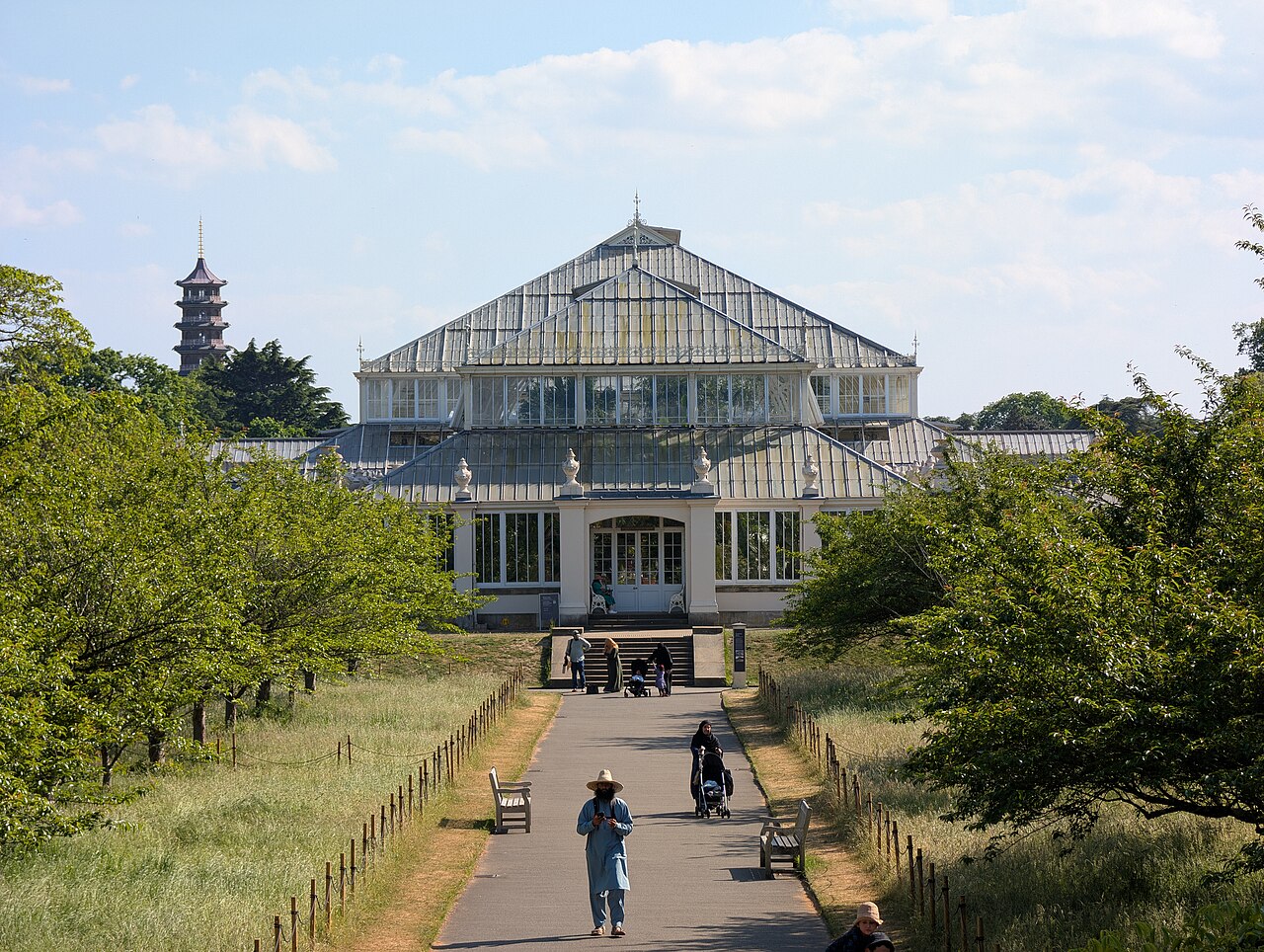
Designed by Decimus Burton, who also designed the Palm House, the Temperate House took nearly forty years to complete for lack of funding. It is today the largest Victorian greenhouse still standing in the world, restored between 2013 and 2018 during a five-year project. It shelters temperate-climate species that are now extinct or critically endangered in the wild.
Affiliate links — booking through Verrière helps fund our research, at no extra cost to you.
History
The Temperate House grew out of a practical problem. From 1855 onwards, Kew's first director, William Hooker, used his annual reports to press for a shelter for the conifers, trees and shrubs from Australia and New Zealand that were suffering through English winters. In 1859 Parliament granted £10,000, far short of the £25,000 requested, after Joseph Paxton argued the smaller sum would do. Decimus Burton, who had already worked on the Palm House, designed the building down to the potting benches and heating pipes. Cubitt and Co, chosen from eleven bidders, began work in 1859 according to Kew and in 1860 according to the Historic England listing.
The central block and its two octagons opened in May 1863, but the planned wings were left unbuilt for almost thirty years. In 1891 director William Thiselton-Dyer called the unfinished structure a chronic eyesore, and the government finally paid for the two wings, built between 1894 and 1899. Neither William Hooker nor Burton, who died in 1881, lived to see it complete.
After an earlier renovation in the 1970s and early 1980s, the Grade I listed building (listed in 1950) closed in 2013 for a five-year restoration led by conservation architects Donald Insall Associates. The project cost around £41 million, funded mainly by the Heritage Lottery Fund, Defra and private donors, and the glasshouse reopened on 5 May 2018.
Architecture and engineering
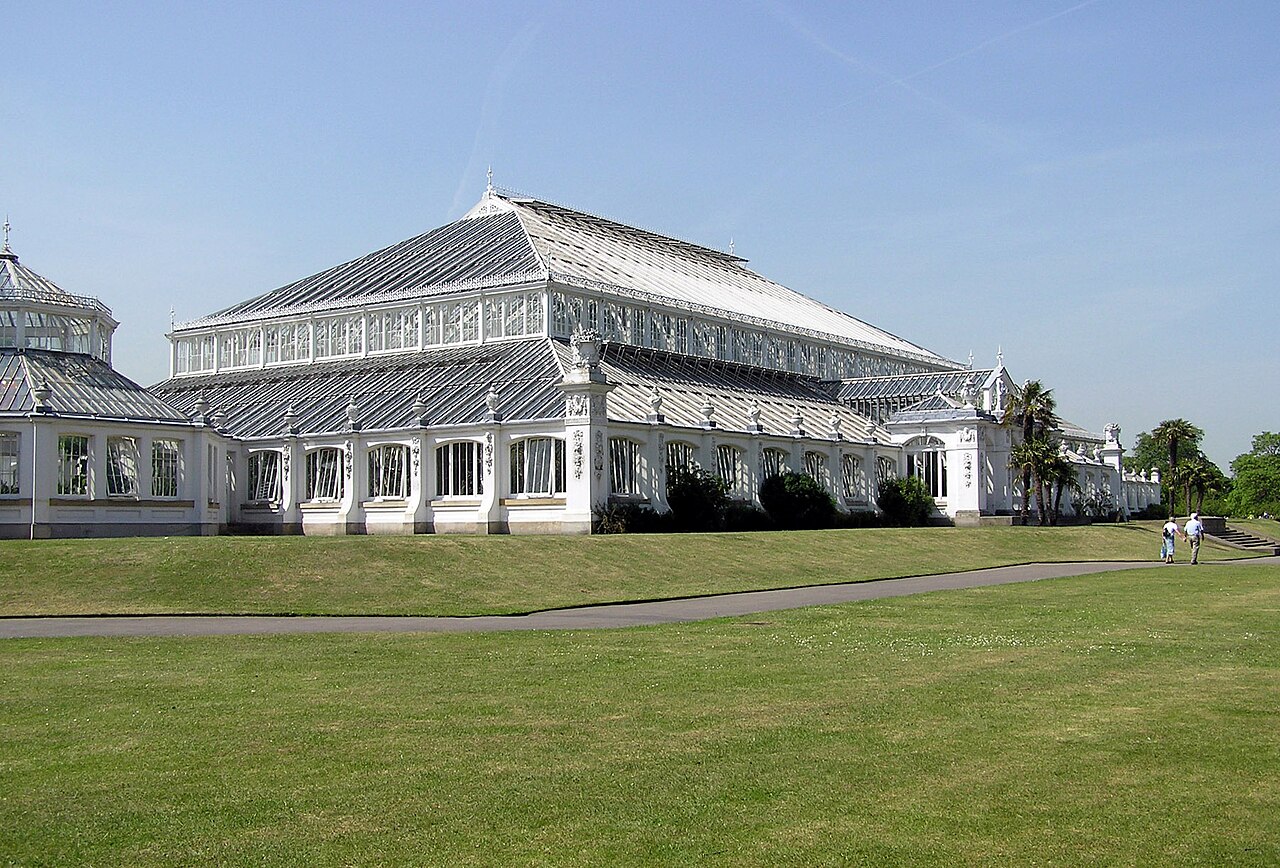
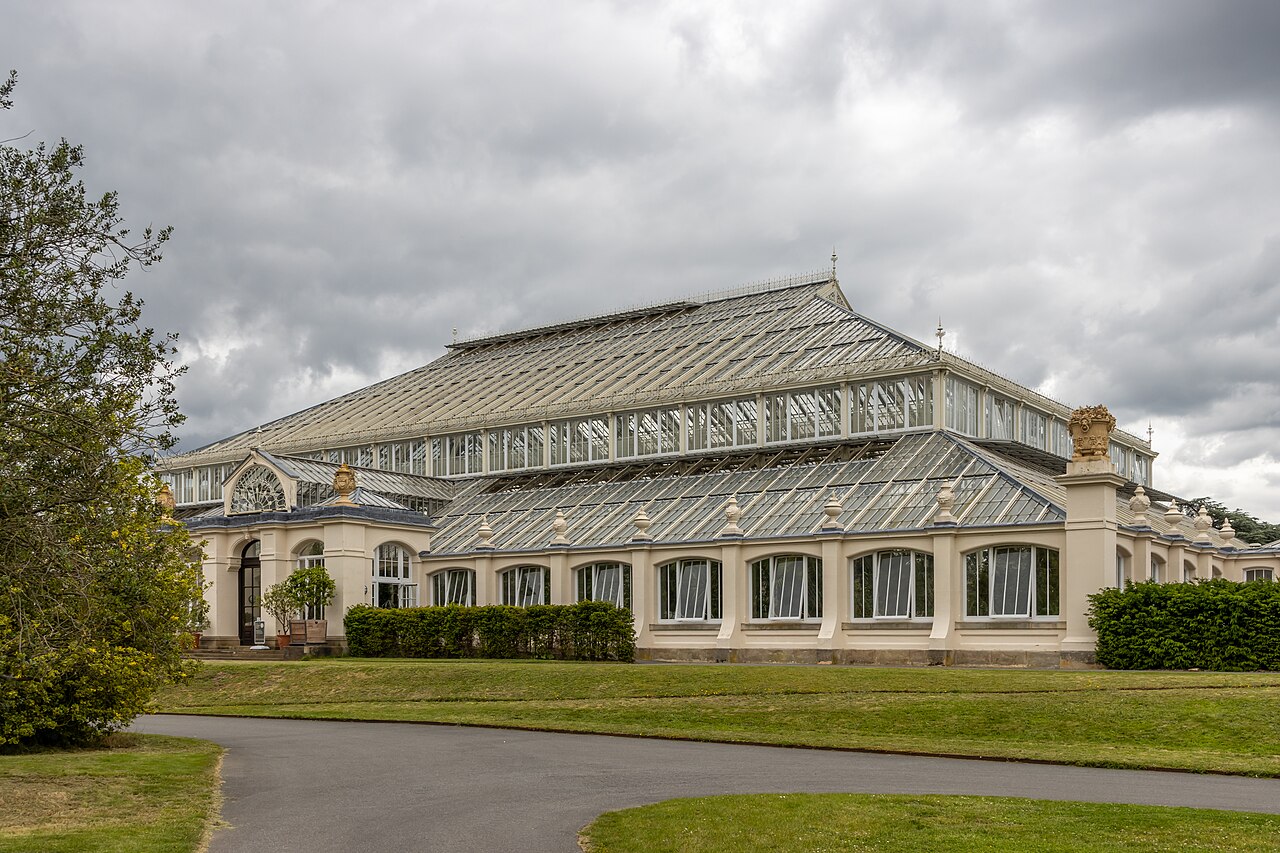
The Temperate House is made up of three connected conservatories of iron, glass and stucco, stretching about 628 feet (roughly 191 metres). The central section is a large rectangular hall with a pitched glass roof, clerestory and aisles, rising to about 19 metres, with an internal gallery at canopy level. Octagonal pavilions at either end lead to the rectangular wings added in the 1890s. The floor area is about 4,880 square metres, which Kew describes as twice the size of the Palm House. The exterior combines stucco piers, segmental arches topped with urns, and a triple entrance with statues and a pediment.
The 2013–2018 restoration dealt with 69,000 elements, each removed, cleaned, repaired or replaced, and 15,000 panes of glass. Paint analysis found up to thirteen historic layers. The work added cathodic protection against corrosion of the metal frame, overhauled the glazing and vent mechanisms, and installed a biomass boiler, while the building's original sculpture was also conserved. Burton had first glazed the house with green-tinted glass, later replaced because plants did poorly beneath it.
Plant collections
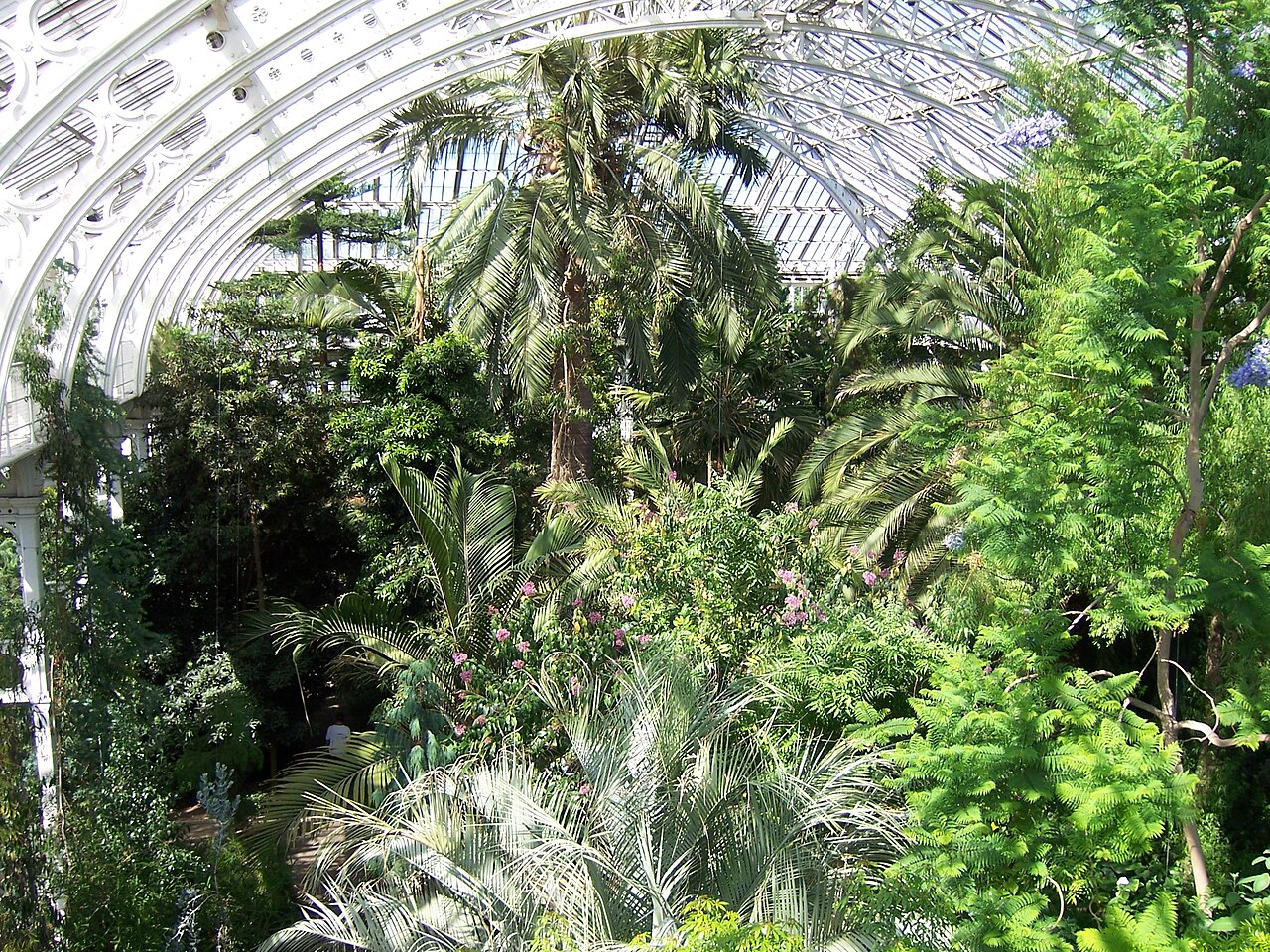
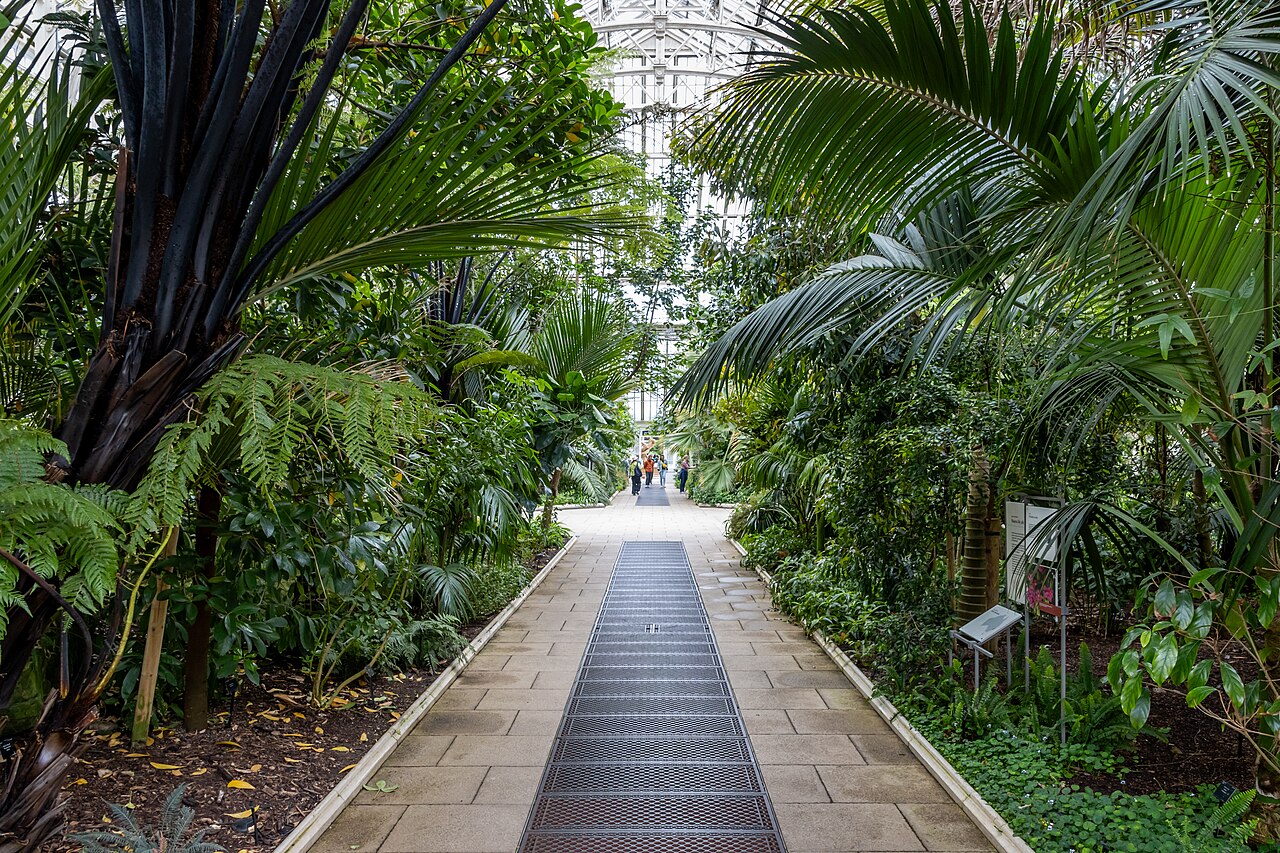
The house is kept at a minimum of about 10°C for temperate plants that cannot survive frost. Planting is arranged by region, covering Africa, Asia, Australasia and the Americas, with particular emphasis on threatened island floras from St Helena, the Pitcairn Islands and the Juan Fernández Islands. At the 2018 reopening Kew spoke of some 10,000 plants in 1,500 species; its current page gives a figure of around 1,200 species.
Notable plants include Encephalartos woodii, a cycad with no known wild individuals, at Kew since 1899, and a Chilean wine palm (Jubaea chilensis). There is also a South African tree pincushion (Leucospermum conocarpodendron) grown from seed collected in 1803, New Zealand's kaka beak (Clianthus maximus), Dombeya mauritiana from Mauritius, once thought extinct in the wild, and the Himalayan yew Taxus wallichiana.
Visiting
The Temperate House stands in the southern part of Kew Gardens, and Lion Gate is the nearest entrance. Step-free access is on the western side. The upper gallery, reached by stairs, gives an overview of the planting and the ironwork. An hour is enough for an unhurried walk through the regional zones. Because it is heated to a temperate level, the house makes a good winter destination when the outdoor beds are dormant. It is easily combined with the nearby Pagoda and with Burton's other great glasshouse, the Palm House, which makes an instructive comparison.
51.47° N, 0.30° W
Greenhouses nearby
Architecture nearby
More greenhouses — United Kingdom
Do you have a good photo of this greenhouse? Suggest it for this page →
Sources (7)
- kew.org/kew-gardens/whats-in-the-gardens/temperate-house
- kew.org/read-and-watch/celebrating-the-temperate-house
- kew.org/about-us/press-media/greatest-glasshouse-in-the-world
- britishlistedbuildings.co.uk/101262590-temperate-house-kew-ward
- designingbuildings.co.uk/wiki/Restoring%20Kew's%20Temperate%20House
- en.wikipedia.org/wiki/Temperate_House,_Kew_Gardens
- historicengland.org.uk/listing/the-list/list-entry/1262590
Affiliate links — booking through Verrière helps fund our research, at no extra cost to you.