Hofgarten Palm House (Palmenhaus), Innsbruck
Innsbruck, Tyrol
Entry updated on October 5, 2026
- Year
- 1961
- Style
- Post-war modernism (Nachkriegsmoderne)
- Dimensions
- 460 m² on three levels
- Status
- Open to the public, mainly on weekdays
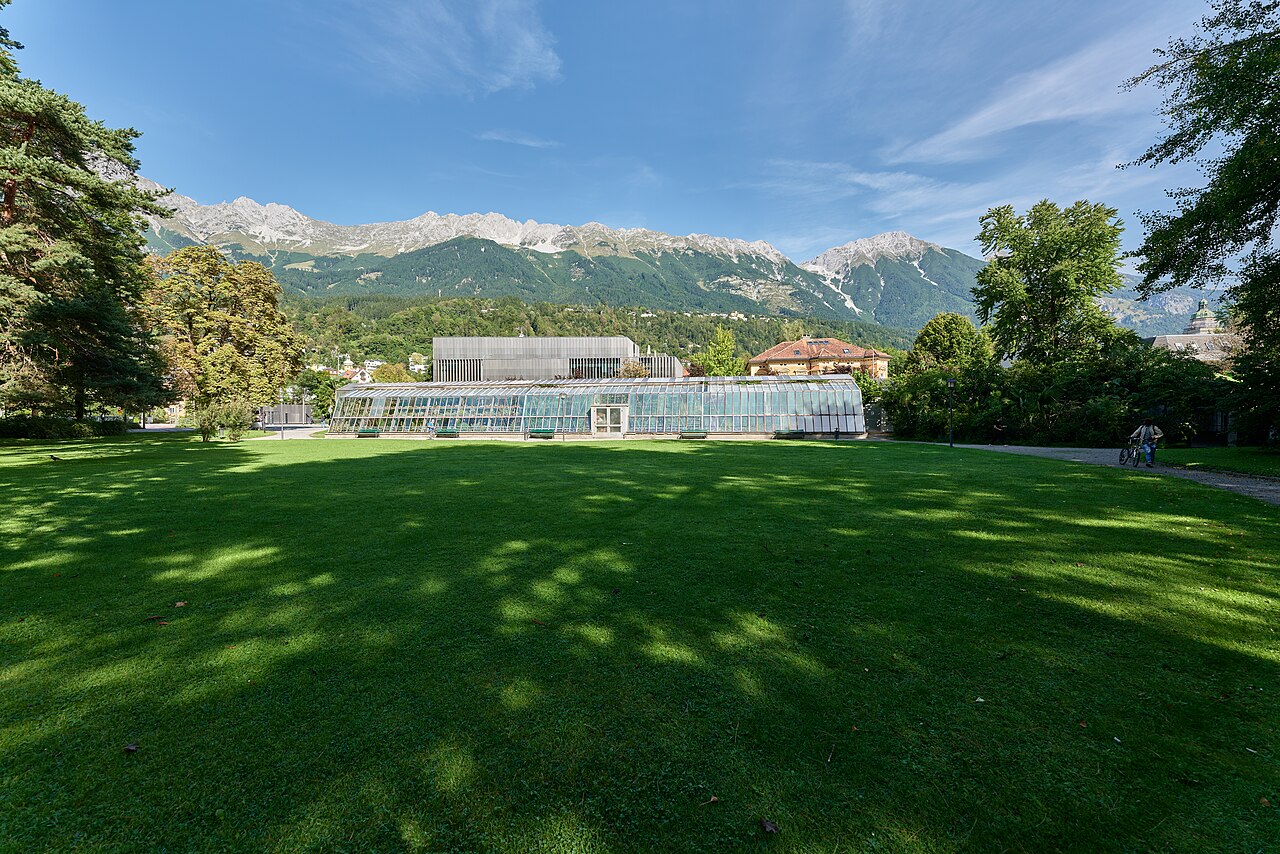
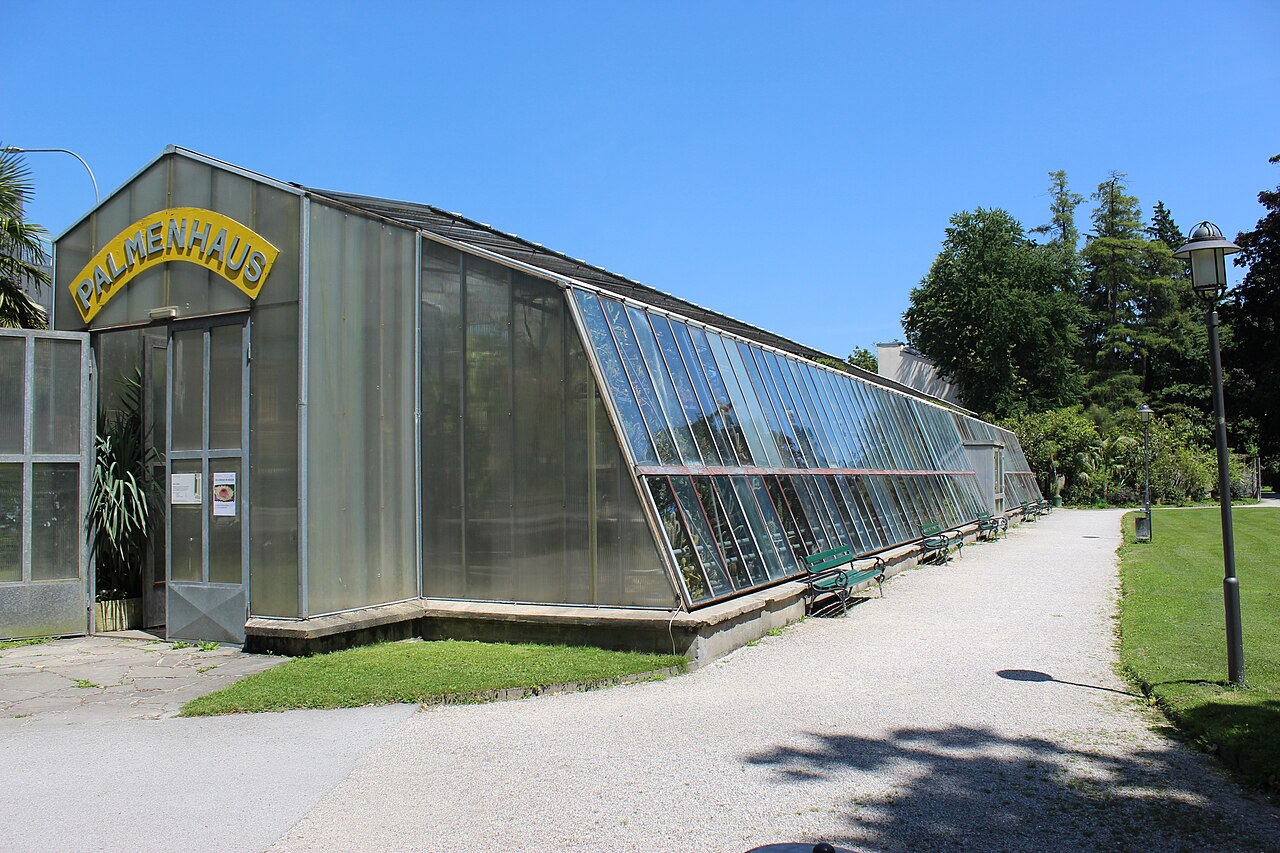
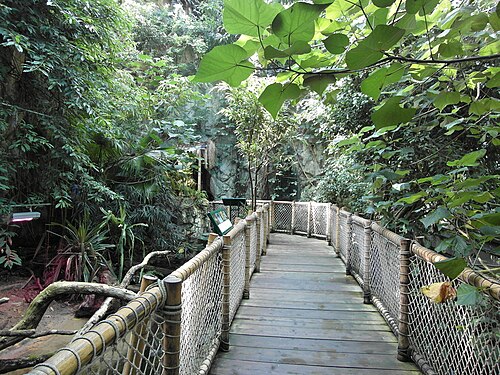
In the north-west corner of the Hofgarten, a ten-hectare park next to the Hofburg, the Austrian Federal Gardens look after a glasshouse built in 1961 in the post-war modernist style, on the site of a large cast-iron-pillared glasshouse completed in 1860 and demolished in 1960. Spread over 460 m² on three levels and three climate zones, it holds 1,759 species and up to 9,000 plants from five continents, including cacao, coffee and vanilla, as well as a giant water lily grown in a pool installed in 1964.
Affiliate links — booking through Verrière helps fund our research, at no extra cost to you.
History
1 min
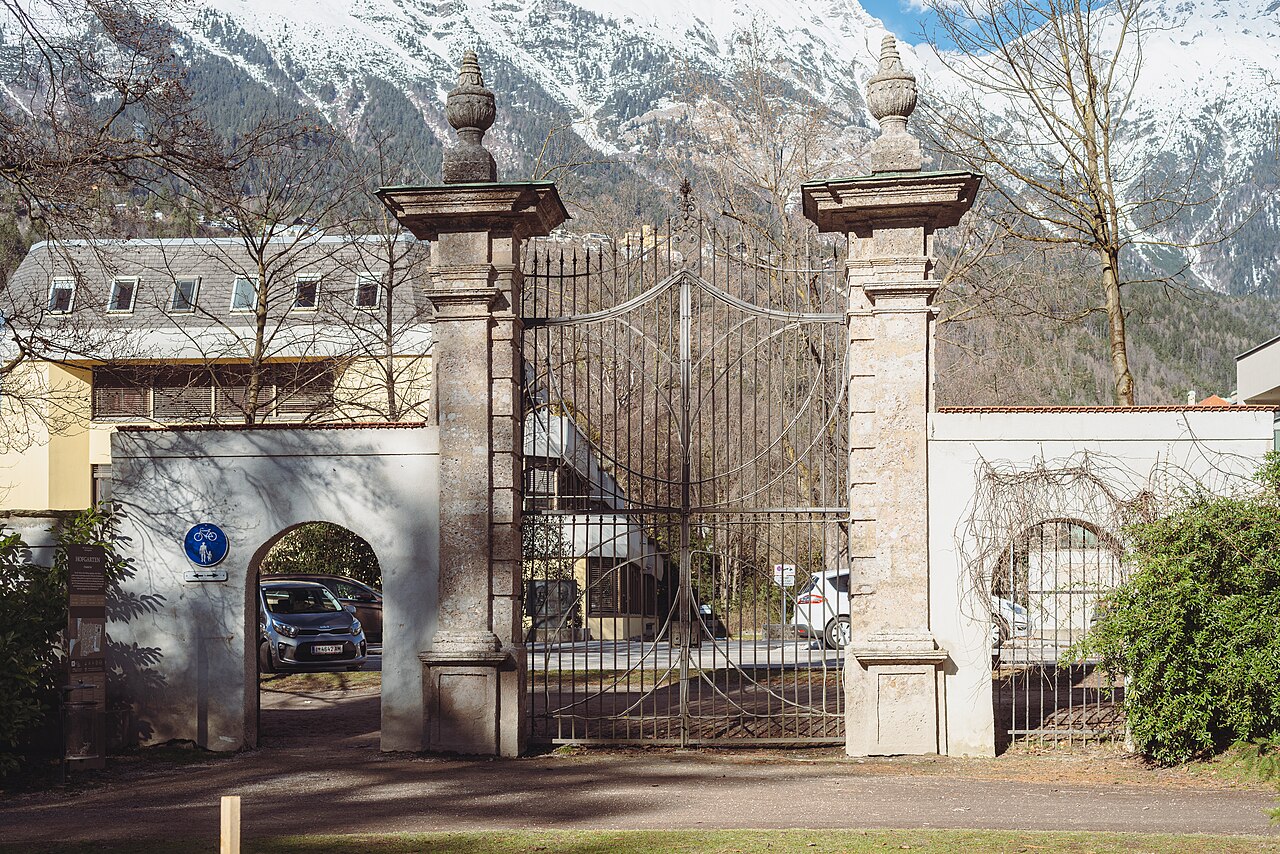
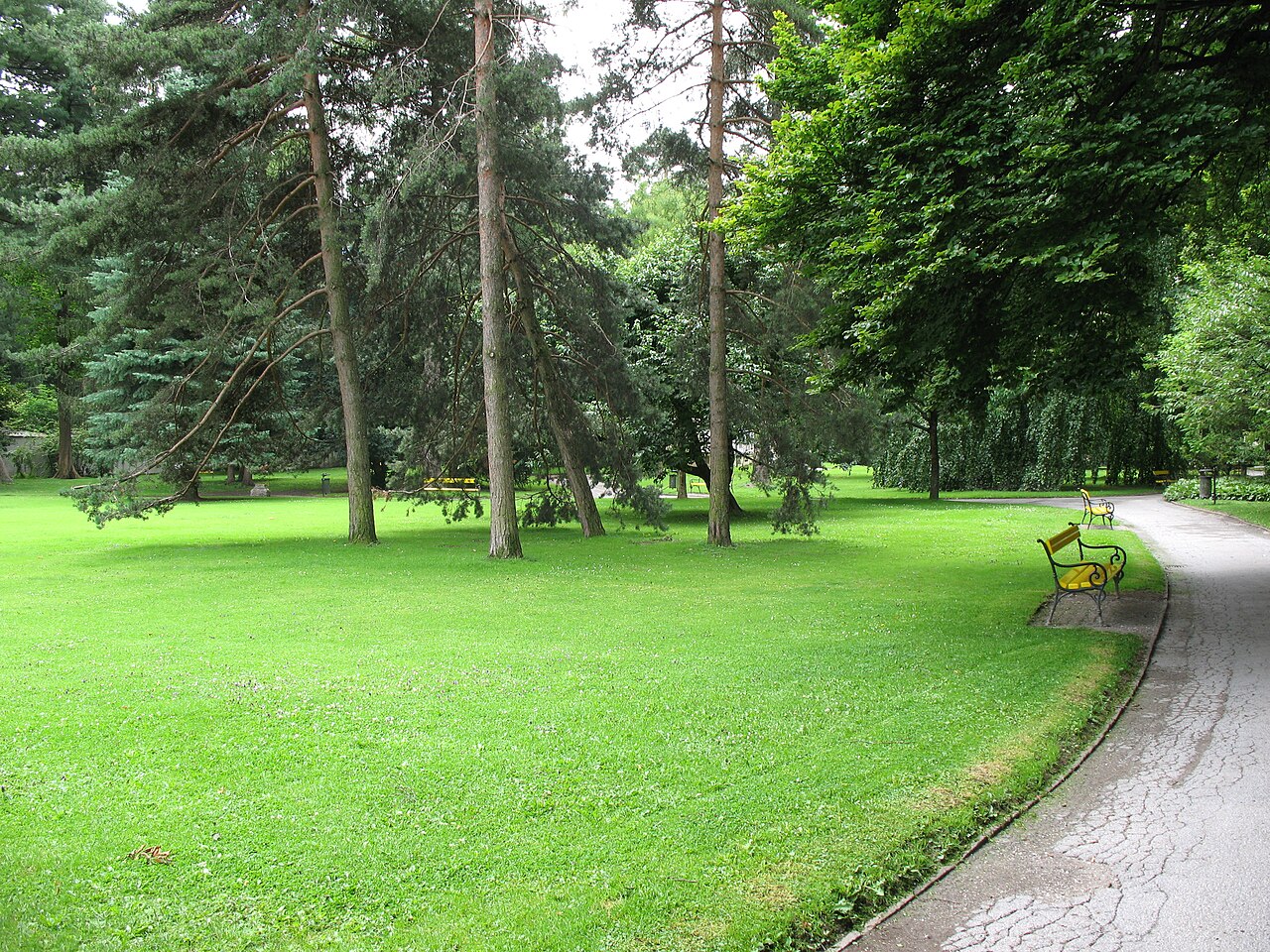
Innsbruck's Hofgarten, the court garden next to the Hofburg, has existed for about six centuries. Originally meadowland, it went through Renaissance and Baroque phases before taking on, some 150 years ago, the look of an English landscape park; this last redesign followed a scheme by Friedrich Ludwig von Sckell, carried out four decades later and with considerable freedom. As early as the 18th century a small glasshouse sheltered citrus trees within the walled gardeners' enclosure; around 1810 it gave way to a larger house with stone masonry walls and two climate zones.
On 11 April 1857 the Innsbrucker Nachrichten announced the building of a grand glasshouse with cast-iron pillars. On 12 April 1860 the Bothe für Tirol und Vorarlberg advertised the first flower show to be held in it: the building, set on the north-western boundary of the garden, comprised a cold house and a warm house.
This 19th-century glasshouse was demolished in 1960 and replaced in 1961, on the same spot, by a modern building. A pool for the giant water lily was added in 1964, and the plant has flowered there regularly since 1965. Since the founding of the Republic after the collapse of Austria-Hungary, the Hofgarten and its glasshouse have been in the care of the Austrian Federal Gardens (Österreichische Bundesgärten). The garden is a listed historic monument.
Architecture and engineering
1 min
The Hofgarten's successive glasshouses span more than two centuries of horticultural building. The 18th-century citrus house and the stone-walled building of around 1810, divided between two climates, preceded the glasshouse completed in 1860, whose glazed structure rested on cast-iron pillars and which combined a cold house with a warm house.
The 1961 building, put up on the same site, belongs to post-war modernism (Nachkriegsmoderne). It provides 460 m² on three levels and is divided into three climate zones: cold, warm and temperate. A pool for the giant water lily was installed in 1964. The glasshouse occupies the north-west corner of the Hofgarten, along Karl-Kapferer-Straße, at the edge of a ten-hectare landscape park.
Plant collections
1 min
According to the Austrian Federal Gardens, the glasshouse holds 1,759 species from 591 genera and 155 families, amounting to as many as 9,000 plants from five continents; the German Wikipedia gives a figure of about 1,700 species. Tropical useful plants are prominent, with cacao, banana, coffee and vanilla.
The collection also includes the queen of the night, a climbing cactus whose large flowers open after dark, and the giant water lily, grown in its pool since 1964 and brought into flower regularly since 1965. With its three climate zones, cold, warm and temperate, the glasshouse can accommodate cool-house plants as well as tropical species.
Visiting
1 min
The Palmenhaus stands in the north-west corner of the Hofgarten, on the edge of the old town, near the Hofburg, the Kongresshaus and the Tyrolean State Theatre. It is generally open on weekdays, and at weekends during the temporary summer exhibitions, and can be visited on one's own or with a guide. Half an hour is enough for the glasshouse; a walk through the ten-hectare park completes the visit, with plants set out by Maria Theresa herself and the 1733 pavilion, which hosts concerts and events. The lawns have been open to the public since 2014.
47.27° N, 11.40° E
Greenhouses nearby
More greenhouses — Austria
Do you have a good photo of this greenhouse? Suggest it for this page →