Großes Tropenhaus
Berlin-Dahlem Botanical Garden

Sources checked September 2026
- Year
- 1905–1907
- Architect
- Alfred Koerner
- Style
- Iron and glass
- Dimensions
- One of the largest historic tropical greenhouses in Europe
- Status
- Open to the public
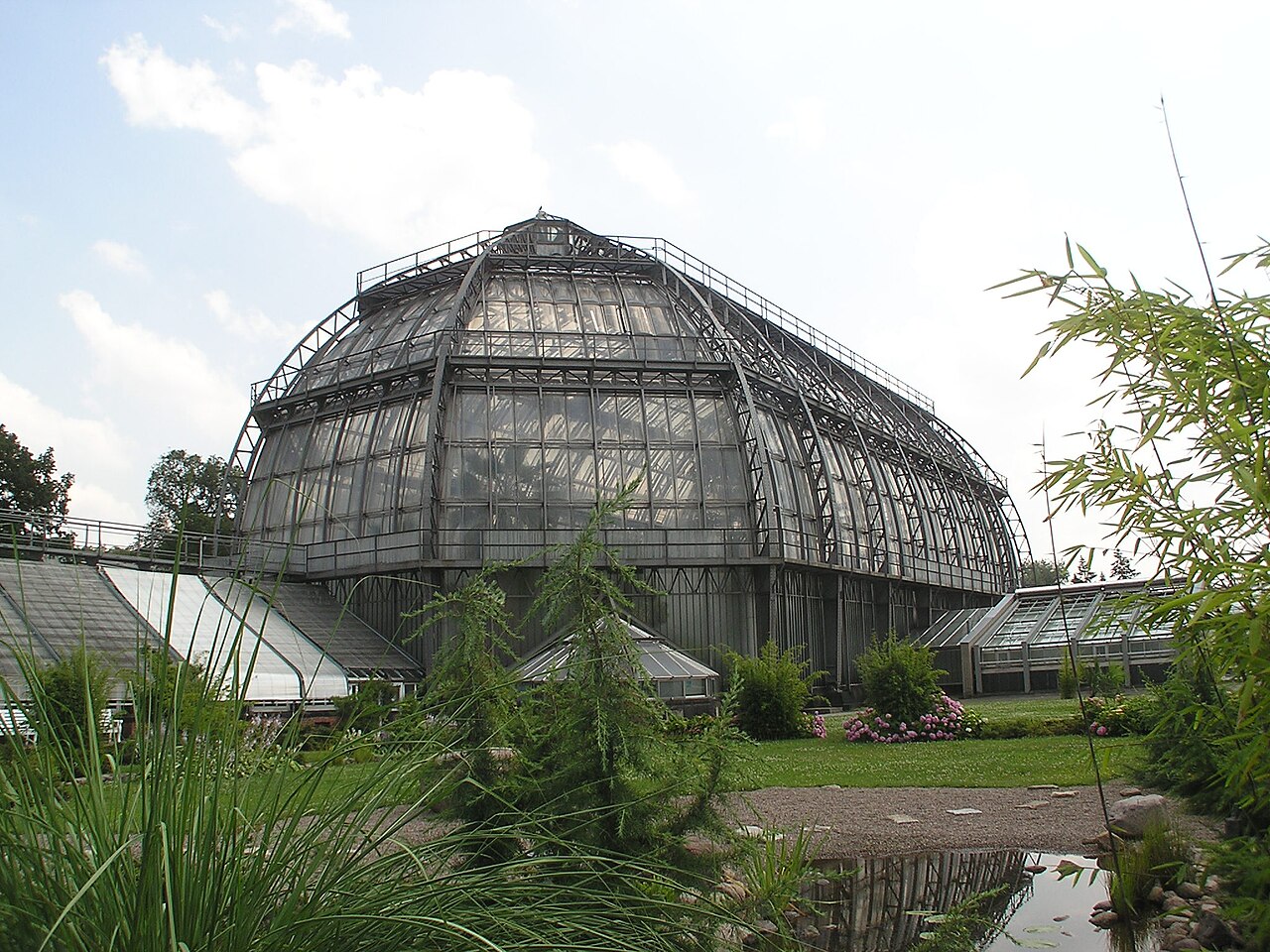
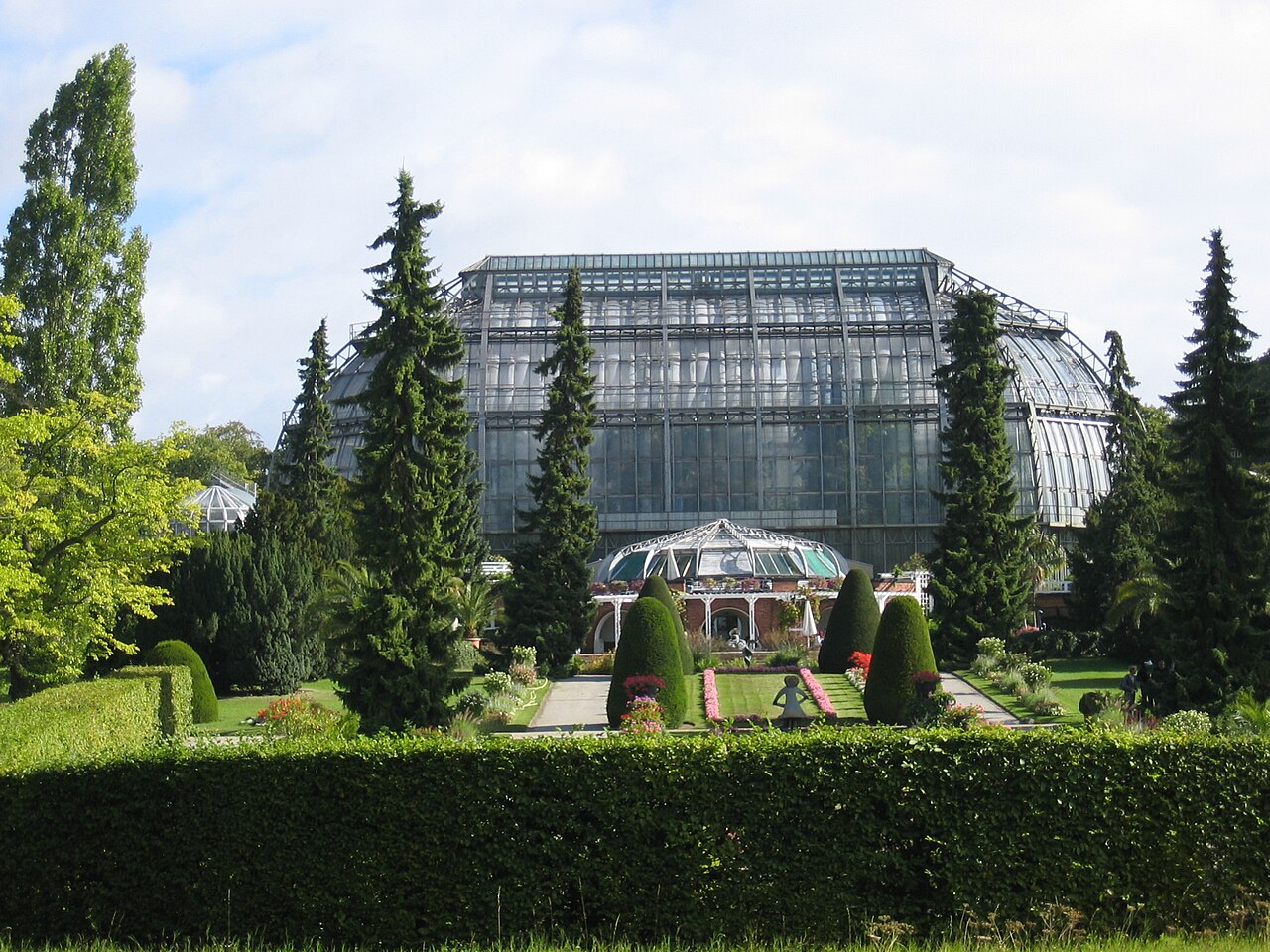
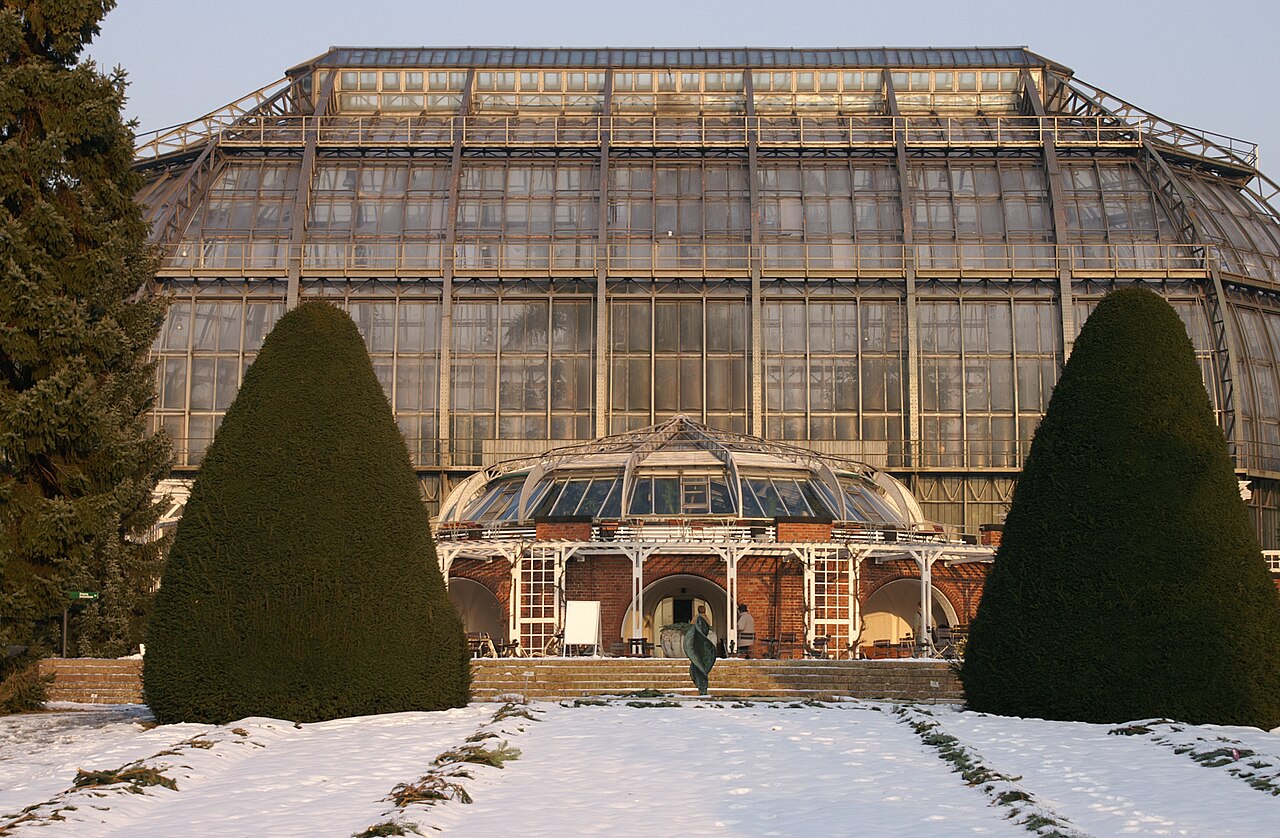
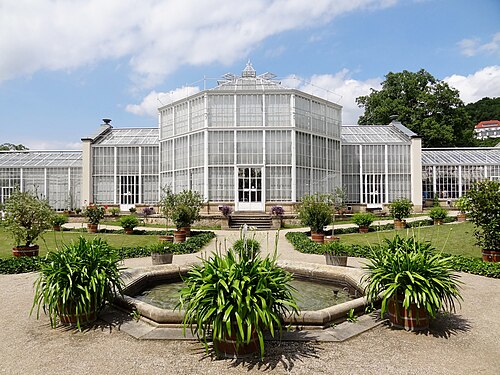
Completed in 1907 within the then-young Dahlem Botanical Garden, this immense tropical glasshouse survived the twentieth century and its bombing raids to remain one of the largest historic greenhouses still in service in Europe. It shelters a permanent equatorial microclimate where lianas, epiphytes, and tropical trees flourish beneath its original metal framework. A major energy-renovation project is now underway to reduce its heating consumption, among the highest in the garden.
Affiliate links — booking through Verrière helps fund our research, at no extra cost to you.
History
Berlin's botanical garden moved from Schöneberg to Dahlem at the turn of the twentieth century: work began in 1899 on a former potato field of about 41 hectares, the first visitors came in 1903 and the official opening took place in May 1910. At the heart of the new greenhouse complex, the royal architect Alfred Koerner built the Great Tropical House between 1905 and 1907, with the engineer Heinrich Müller-Breslau responsible for the structural calculations.
The Second World War dealt it a heavy blow. In autumn 1943 blast waves from bombs falling nearby shattered most of the glass; the frame held, but the tropical plants froze, and only a few old cycads survived. After a long wait, a five-year reconstruction began in 1963 using acrylic glazing, and the house reopened on 22 May 1968.
By the early twenty-first century, corroding steel, hazardous lighting and an energy bill amounting to roughly a third of the whole garden's consumption made a full restoration unavoidable. Carried out from 2006 to 2009 for the Freie Universität Berlin, with HAAS Architekten, the work cost between 16 and 18 million euros, with funding from the European Union, the State of Berlin and the German Lottery Foundation among others. The house reopened on 16 September 2009, and in 2010 the project won a special prize from the KlimaSchutzPartner Berlin alliance.
Architecture and engineering
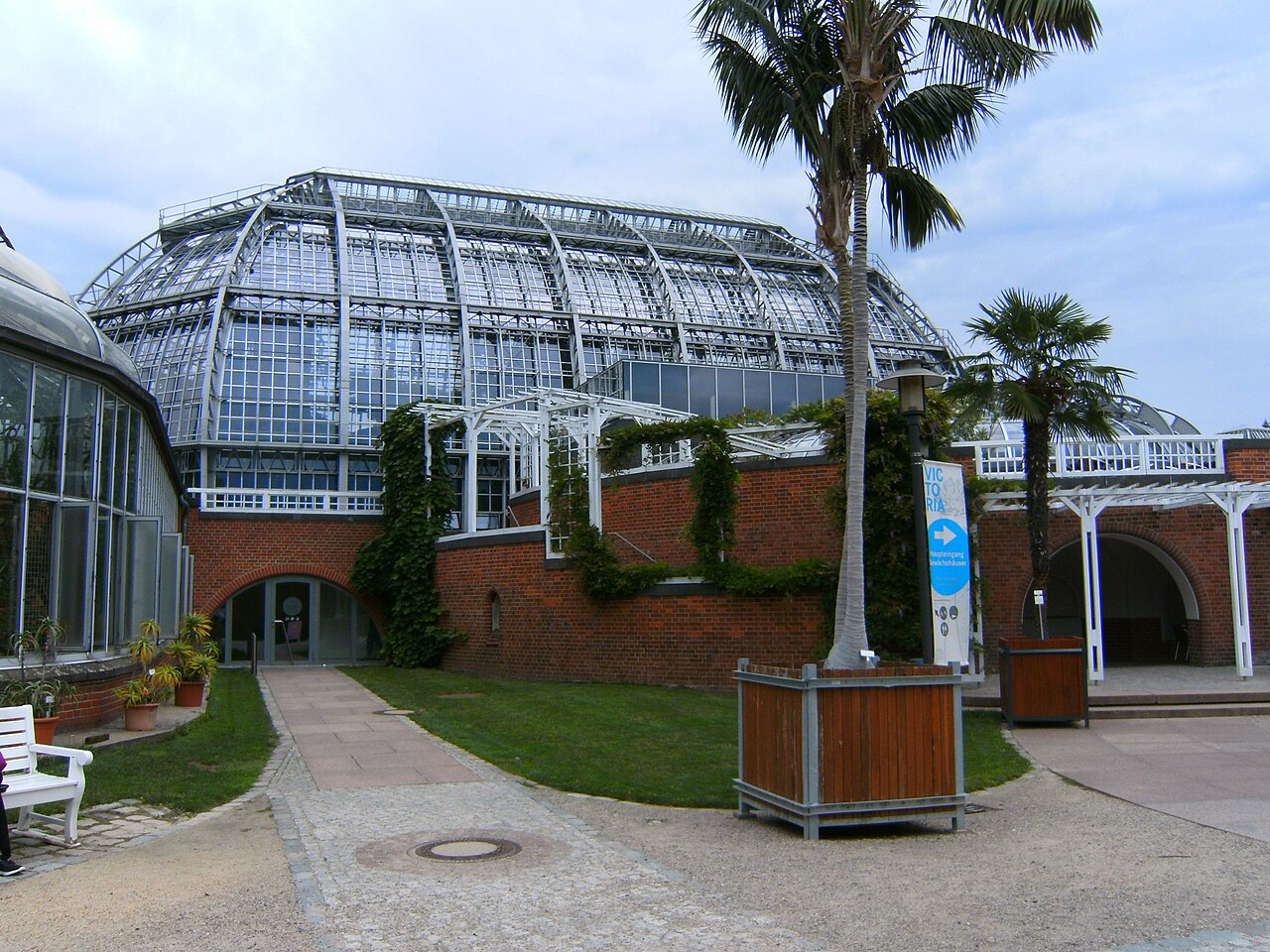
The Great Tropical House is about 60 metres long, 29 metres wide and 25 metres high, with a footprint of roughly 1,750 square metres and a volume of between 36,000 and 40,000 cubic metres. It ranks among the largest free-standing glasshouses in the world.
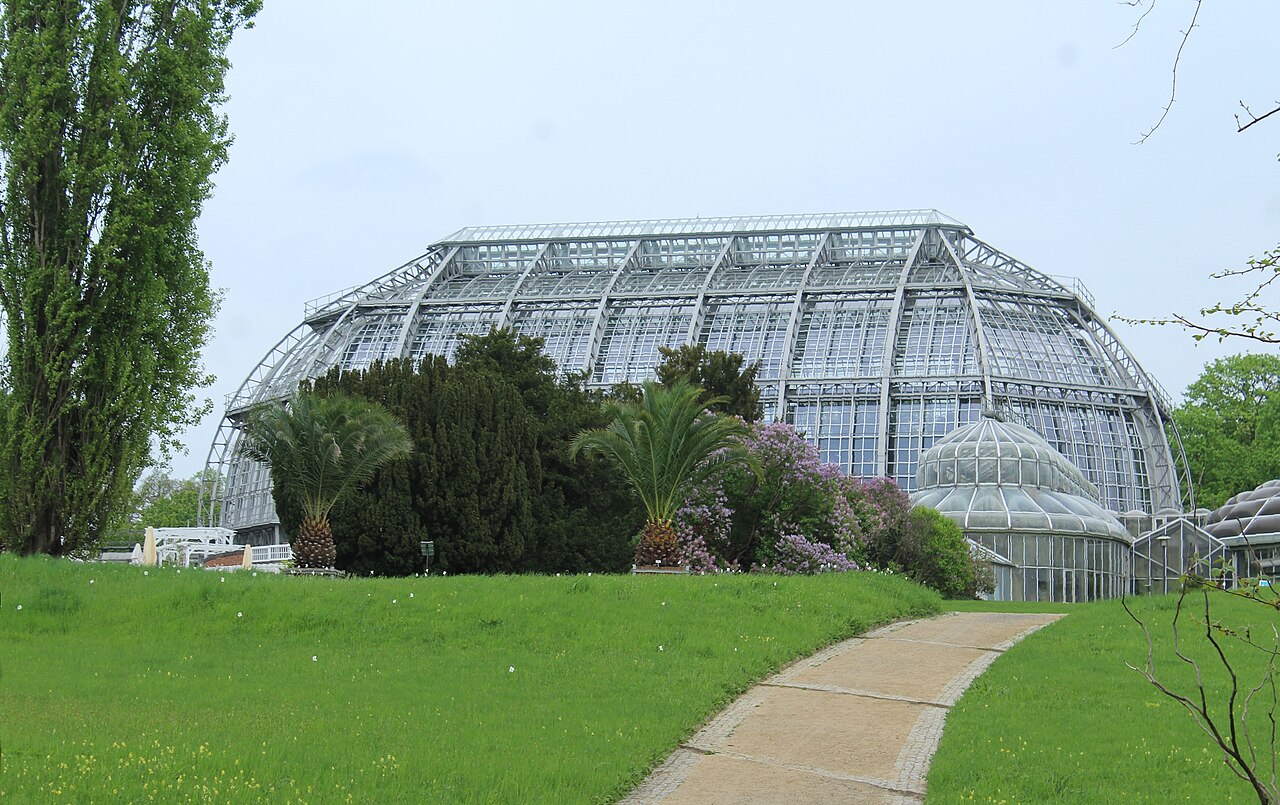
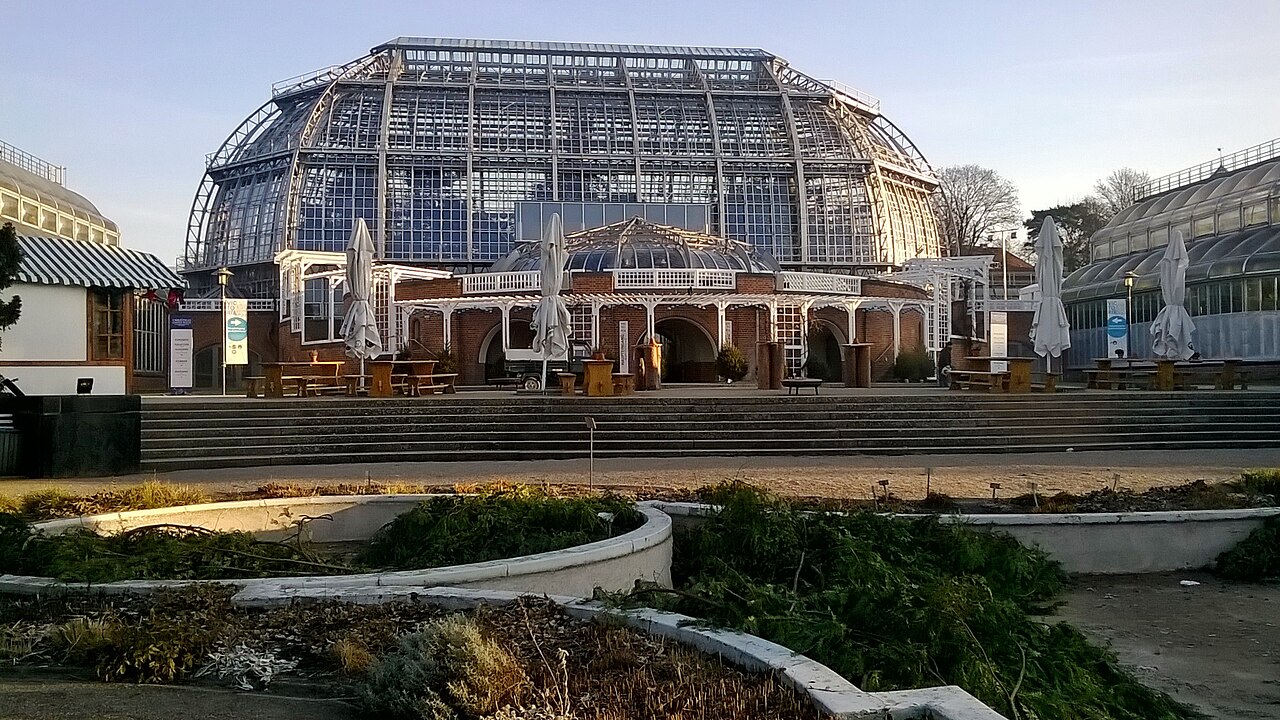
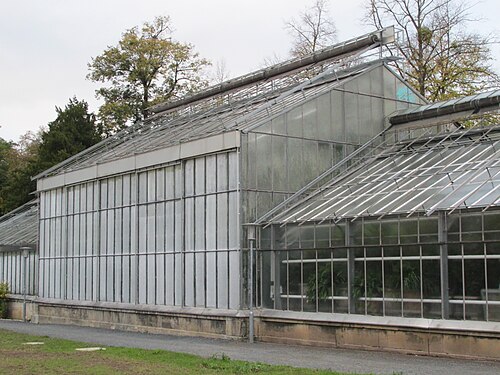
What sets it apart is the position of its frame: the three-hinged steel arches stand outside, and the glazed envelope hangs within them. The interior is therefore entirely free of columns or piers, giving the tallest trees the full height of the space. This frank display of steel links the building to the industrial architecture of early twentieth-century Berlin.
The 2006–2009 renovation cut energy use by at least half. Low-temperature heating in the façade limits condensation on the frames and glass, sorption dehumidification produces heat while keeping humidity at around 80 per cent, and two 17-metre towers fitted with latent-heat stores capture the warm air that gathers under the roof by day and release it at night.
Plant collections
The planting follows a geographical route: the Caribbean leads into Central and South America, followed by Africa, Asia and Oceania. Around 1,360 plants are grown here.
The star is a giant bamboo from Southeast Asia, Dendrocalamus giganteus, which exceeds 25 metres and can grow by tens of centimetres a day in its growing season. Other specimens stand out too, such as a screw pine (Pandanus utilis) of about 14 metres and a royal palm over 17 metres tall that was moved and replanted during the renovation. The Great Tropical House is one of fifteen glasshouses covering some 6,000 square metres, among them the Victoria House devoted to giant water lilies.
Visiting
The Great Tropical House towers over the greenhouse complex near the Königin-Luise-Platz entrance; a broad main avenue links this entrance to the one on Unter den Eichen at the far end of a garden of more than 43 hectares. Its constant warmth and humidity make it a particularly welcome stop in winter. The glasshouses deserve at least an hour, and the visit extends naturally into the neighbouring Botanical Museum, backed by a herbarium of around 3.5 million sheets, or into the outdoor themed gardens in the warmer months.
52.45° N, 13.30° E
Greenhouses nearby
Architecture nearby
More greenhouses — Germany
Do you have a good photo of this greenhouse? Suggest it for this page →
Sources (5)
- fu-berlin.de/presse/informationen/fup/2010/fup_10_137/
- de.wikipedia.org/wiki/Botanischer_Garten_und_Botanisches_Museum_Berlin
- haas-architekten.de/projekte/glashaeuser/grosses-tropenhaus-berlin
- in-berlin-brandenburg.com/Freizeit/Ausflugstipps/Parkanlagen/Botanischer-Garten/Tropenhaus
- berlin-lese.de/sehenswuerdigkeiten/oertlichkeiten/botanischer-garten-berlin/
Affiliate links — booking through Verrière helps fund our research, at no extra cost to you.