Glashaus (Tropical Glasshouse), Gardens of Trauttmansdorff Castle
Merano (Meran), South Tyrol

Entry updated on October 5, 2026
- Style
- Contemporary glasshouse with an irregular silhouette and a red rear wall
- Status
- Open to the public during the garden season
Set in the Forest Gardens of the Gardens of Trauttmansdorff Castle in Merano, the Glashaus pairs a greenhouse of tropical useful plants with a terrarium of small creatures from around the world. Its design has the building rising out of the ground towards the light: a red wall at the back acts as a protective earth bank, while the irregular outline recalls the ridges of the Texel Group, the mountains that shelter the Merano area from northern winds. Papaya, mango, coffee, sugarcane, spices and perfume plants grow alongside a colony of leafcutter ants housed in a purpose-built display case.
Affiliate links — booking through Verrière helps fund our research, at no extra cost to you.
History
1 min
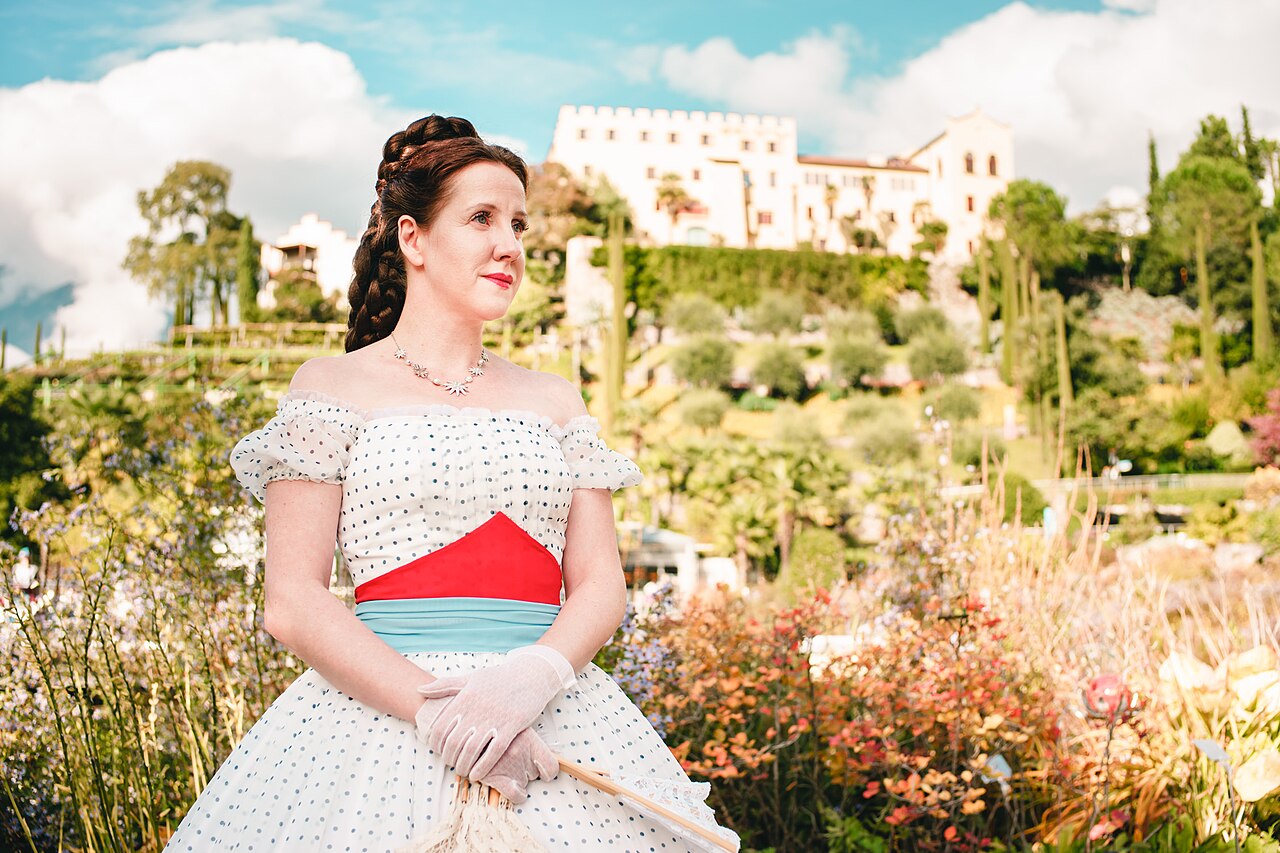
Trauttmansdorff Castle, above Merano, is first recorded around 1300 under the name Burg Neuberg. Empress Elisabeth of Austria used it as her winter residence in 1870 and again in 1889. The castle now houses the Touriseum, South Tyrol's provincial museum of tourism.
The decision to lay out botanical gardens on the estate's slopes was taken in 1989; work began six years later and lasted seven years, with an investment of around 24 million euros. The gardens opened on 16 June 2001. Owned by the South Tyrol provincial administration, they were run until the end of 2016 by the Laimburg agricultural research centre and, from 2017, by a newly created agency, the Landesdomäne. Named Italy's most beautiful garden in 2005 and International Garden of the Year in 2013, they receive about 400,000 visitors a season; more than six million people had visited by October 2017.
The Glashaus is one of the site's 'discovery stations' and is devoted to the useful plants of the tropics and to small fauna. The sources consulted give neither the year it was built nor the names of its designers.
Architecture and engineering
1 min
The official website presents the Glashaus as a building designed both for function and for a distinctive appearance. The guiding idea is a volume that seems to grow out of the earth towards the light. At the back, a red wall serves as a protective earth bank, while the irregular profile of the structure refers to the rugged skyline of the Texel Group, the range that shields the Merano area from northern winds. The Alpine setting of the gardens is thus carried into the shape of the glasshouse itself.
Inside, two worlds sit side by side: a greenhouse section for tropical useful plants and a terrarium for very small animals. One display case holds carnivorous plants; another, made to measure, shows a colony of leafcutter ants, revealing the fungus, food and waste chambers and the tunnels linking them without needlessly disturbing the insects. The building's dimensions are not published in the sources consulted.
Plant collections
1 min
The plant collection is devoted to useful species from the tropics. Fruit trees such as papaya, avocado and mango grow beside so-called pleasure crops like sugarcane and coffee, and beside spices: vanilla, cinnamon, pepper, turmeric and allspice. Perfume plants are represented by patchouli and ylang-ylang, fibre plants by cotton, kapok and screw pine, alongside plants used in Ayurvedic medicine.
A display case gathers carnivorous plants. The terrarium shows small animals from around the world; its centrepiece is the leafcutter-ant colony, whose work can be followed from one chamber of the nest to the next, from the fungus chamber to the waste chamber.
Visiting
1 min
The Glashaus stands in the Forest Gardens, one of the four 'garden worlds' on the site together with the Sun Gardens, the Water and Terrace Gardens and the Landscapes of South Tyrol. The estate covers about twelve hectares with a height difference of roughly 100 metres, so the route climbs and descends. The gardens open by season, so the glasshouse can be seen during the garden season along with the other stations on the route.
A visit to the glasshouse can be combined with the Touriseum inside the castle, the viewing platform designed by Matteo Thun in 2005, the ten artists' pavilions that interpret natural processes, the Wollemia on display since 2006, an olive tree around 700 years old, or the Chilean wine palm (Jubaea chilensis), on show since 2017.
46.66° N, 11.19° E
Greenhouses nearby
More greenhouses — Italy
Do you have a good photo of this greenhouse? Suggest it for this page →