Glasshouses, Oxford Botanic Garden (University of Oxford)
Oxford, Oxfordshire
Entry updated on October 5, 2026
- Year
- 1851 · rebuilt 1893, 1949 and 1972
- Style
- Range of glasshouses along the east wall of the 17th-century walled garden
- Dimensions
- Six glasshouses; 1.8 ha garden
- Status
- Open to the public
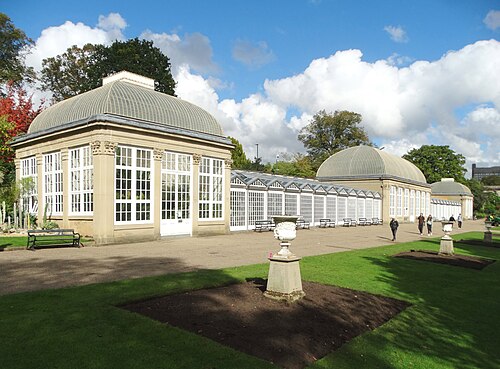
Founded in 1621 with £5,000 from Henry Danvers, Earl of Danby, the University of Oxford Botanic Garden lines its glasshouses along the outer face of its east wall, overlooking the lawn that runs down to the river. They follow the outline of those built in 1851 by the Professor of Botany Charles Daubeny, after a visit to Chatsworth where Joseph Paxton had succeeded in growing Victoria amazonica, and were rebuilt in 1893, 1949 and 1972. The 1851 tank is the oldest surviving part; six houses show giant water lilies, carnivorous plants, cloud forest, tropical crops, arid flora and citrus.
Affiliate links — booking through Verrière helps fund our research, at no extra cost to you.
History
1 min
In 1621 Henry Danvers, 1st Earl of Danby, gave £5,000 to create a physic garden in Oxford. The walls went up in the 1620s and the gateways in the early 1630s, built by Nicholas Stone, Inigo Jones's master mason, among them the Danby Gate of 1632-1633. The first gardener, Jacob Bobart, published a catalogue of the garden's plants in 1648.
The Oxford Almanac of 1766 shows the garden's first successful glasshouses, lean-to structures that lasted until the mid-nineteenth century. In 1851 Charles Daubeny, Professor of Botany and Keeper of the Garden from 1834 to 1867, had a water lily house built after a visit to Chatsworth, where Joseph Paxton had grown Victoria amazonica successfully for the first time in Britain. Visitors were charged a shilling to see the giant lily. A water lily first propagated at Oxford in 1874 bears the professor's name: Nymphaea × daubenyana.
The range of glasshouses built on the outline of Daubeny's was rebuilt in 1893, 1949 and 1972; the present Conservatory is an aluminium replica of the wooden house of 1893. The 1851 tank remains the oldest part of the complex. In the summer of 2018 Victoria amazonica flowered there again, alongside Victoria cruziana, the species the garden grows more regularly.
Architecture and engineering
1 min
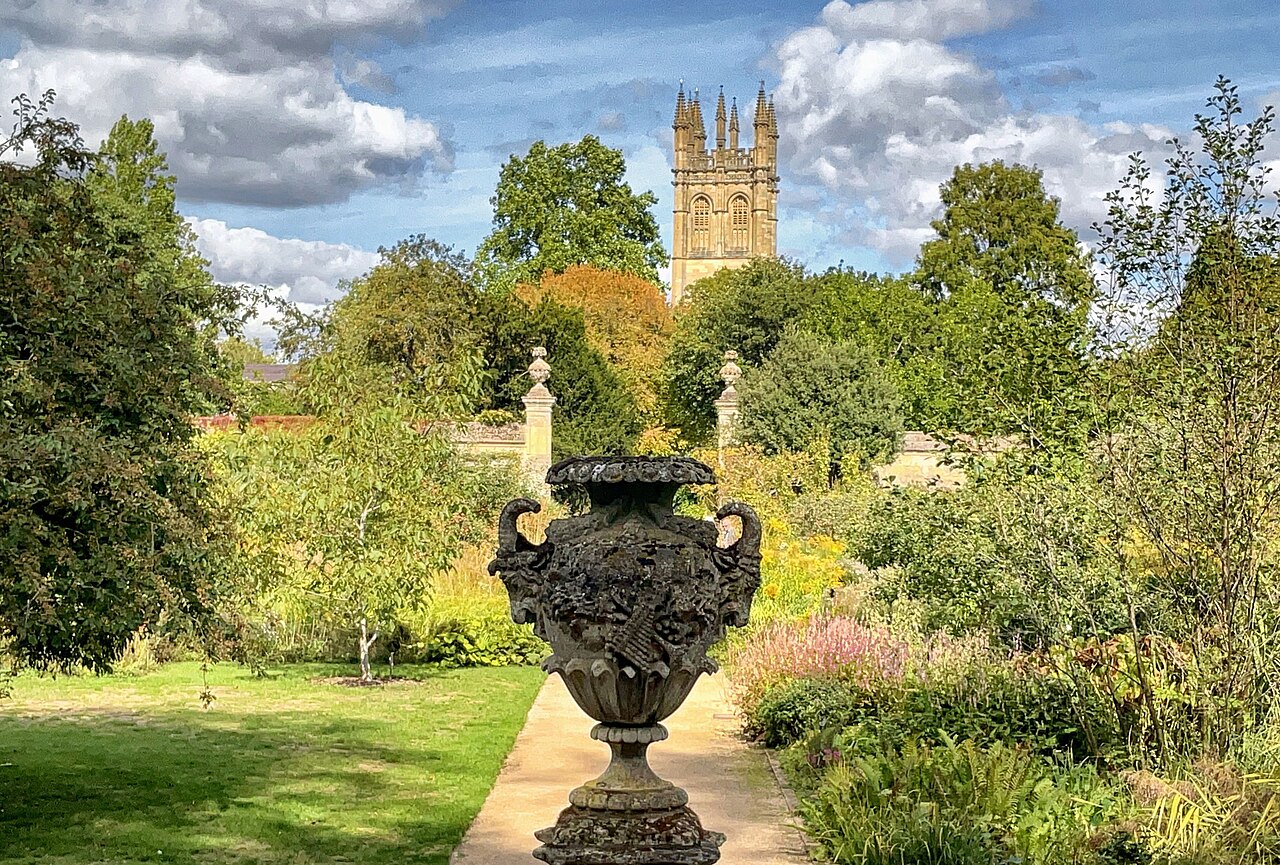
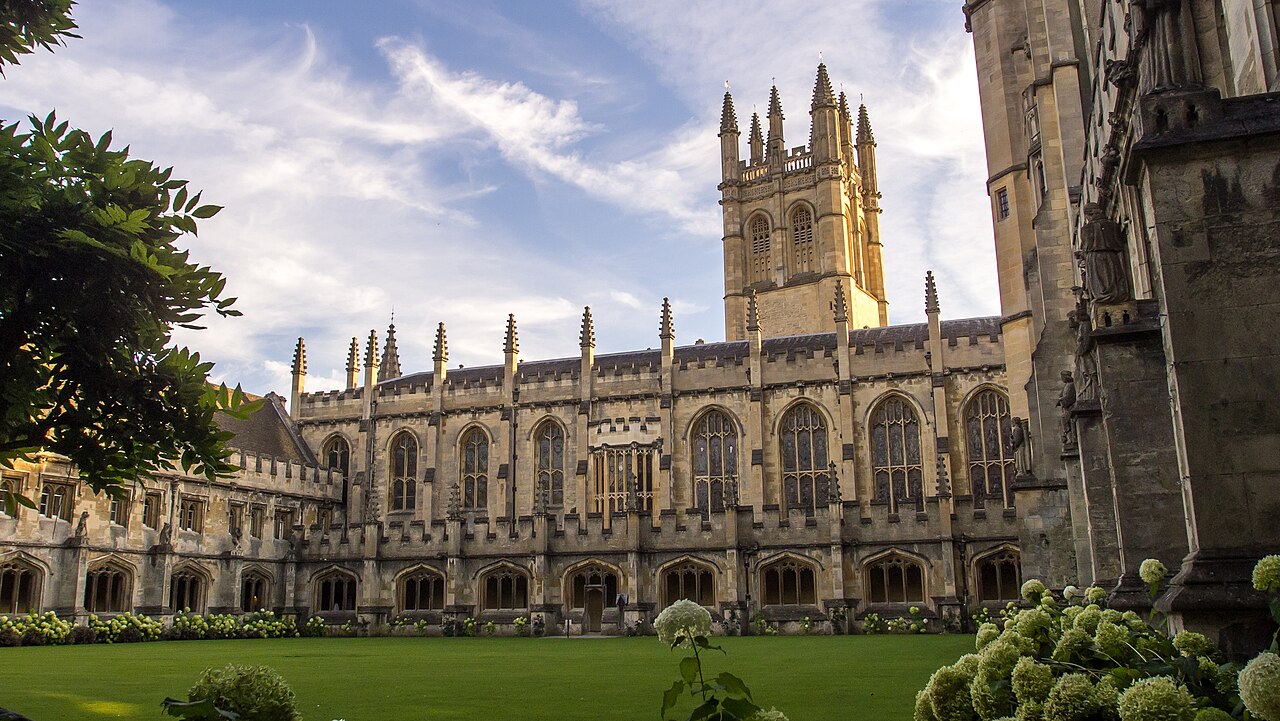
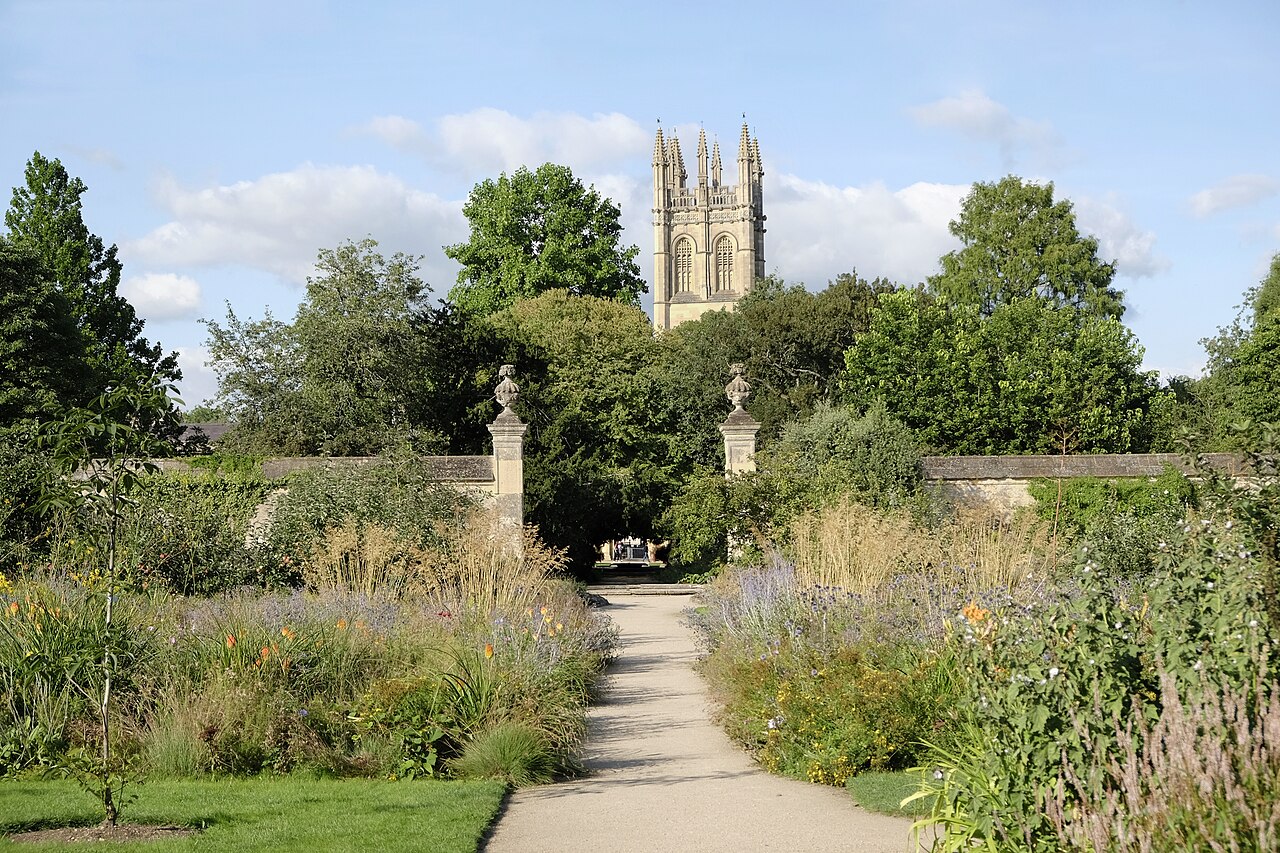
The glasshouses take up almost the whole outer face of the walled garden's east wall, overlooking the lawn that runs down to the river. The wall belongs to the seventeenth-century ashlar enclosure, 100 metres long and 5 metres high, begun by Nicholas Stone in 1623 and listed Grade I, like the Danby Gate, a two-storey Mannerist archway.
Built on the plan of the 1851 houses, the present range is the result of successive rebuildings, the latest in 1972. The register of historic parks and gardens describes a palm house, a tropical water lily house, a succulent house, service ranges and potting sheds; the palm house is the largest glasshouse in the garden. The Conservatory reproduces in aluminium the wooden house of 1893.
At the centre of the water lily house, the tropical tank built in 1851 is the oldest surviving part of the glasshouses. The garden now presents six spaces under glass: the Conservatory, the Cloud Forest, the Water Lily House, the Carnivorous Plant House, the Rainforest House and the Arid House, each devoted to a habitat or a group of plants.
Plant collections
1 min
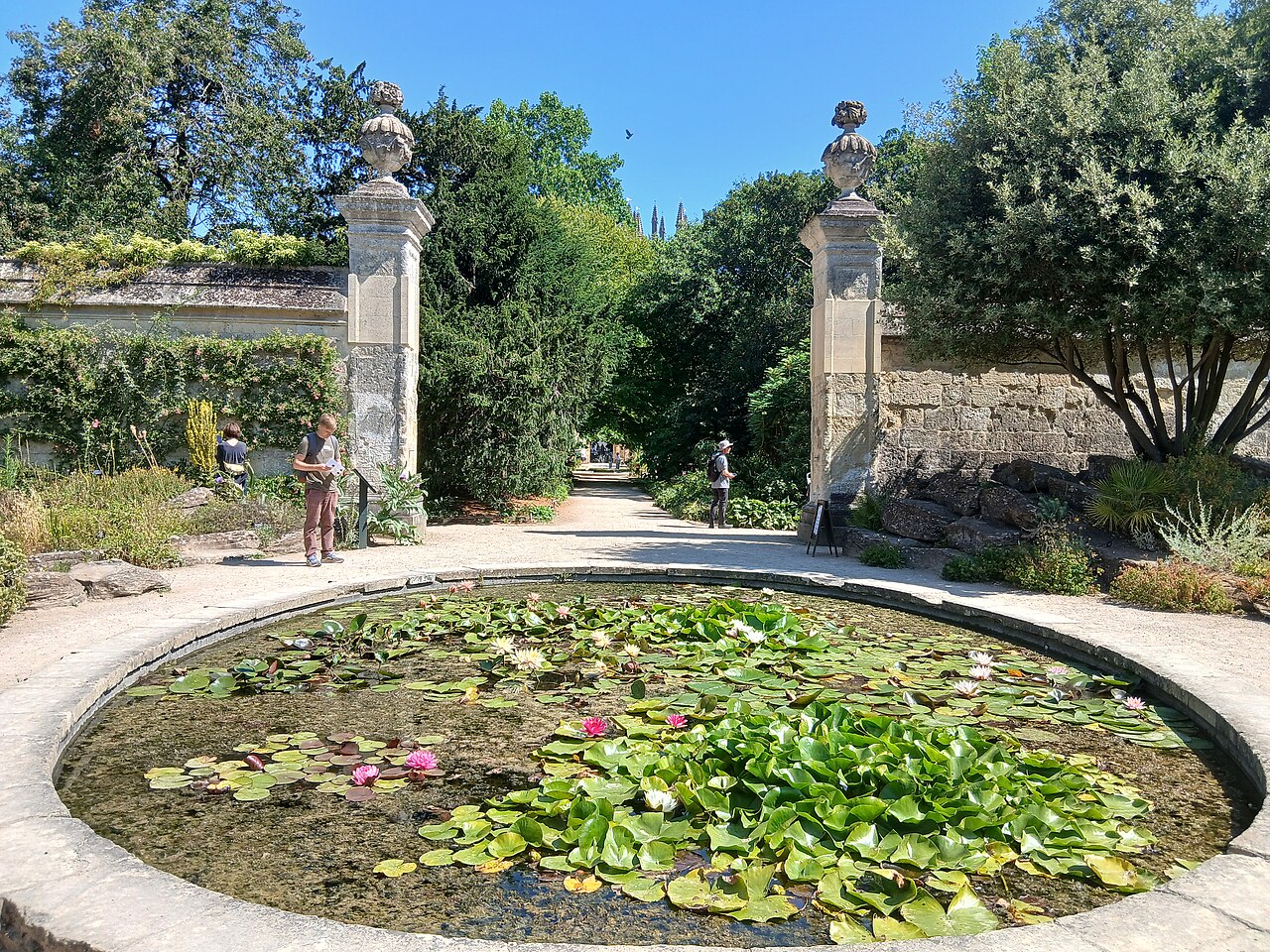
The Water Lily House, the garden's best-known glasshouse, surrounds a tropical pond growing Victoria cruziana, cultivated more regularly than V. amazonica, Nymphaea × daubenyana, sacred lotus, rice and bananas; since its pollinating beetles are not native to the UK, V. amazonica has to be pollinated by hand.
The Rainforest House gathers useful and medicinal plants: cocoa, coffee, rubber, avocado, cinnamon, sugarcane, pineapple, papaya, ginger, cardamom, plantain and vanilla. The Cloud Forest holds Nepenthes pitcher plants and ferns, including epiphytic Platycerium, and supports research with the University's Department of Biology. The Carnivorous Plant House shows butterworts, Sarracenia, Venus flytraps and bladderworts; the Arid House, giant euphorbias and cacti more than six metres tall, examples of convergent evolution. In the Conservatory, citrus, grown in the garden since the 1600s, shares the space with seasonal flowers.
Visiting
1 min
The Botanic Garden is entered through the Danby Gate. Its 1.8 hectares hold more than 5,000 species; the glasshouses line the east wall, between the walled garden and the lawn running down to the river, and can be visited one after another, from the Conservatory to the Arid House. The Conservatory hosts seasonal displays of primulas, abutilons, fuchsias or achimenes, and is also used for events. The same institution runs the Harcourt Arboretum, some six miles south of Oxford, which makes a natural complement to the visit.
51.75° N, 1.25° W
Greenhouses nearby
More greenhouses — United Kingdom
Do you have a good photo of this greenhouse? Suggest it for this page →