Tsukuba Botanical Garden Greenhouses (筑波実験植物園)
Tsukuba, Ibaraki Prefecture
Entry updated on October 3, 2026
- Style
- Contemporary research greenhouses
- Dimensions
- Aquatic plant house ≈550 m², 17.5 m high; 14 ha garden
- Status
- Open to the public
Founded in May 1976 by the National Museum of Nature and Science and opened to the public in October 1983, Tsukuba's experimental botanical garden gathers about 5,000 species from temperate to tropical regions on 14 hectares. Its greenhouses present semi-arid savanna, tropical rainforest, aquatic plants and useful tropical plants, as well as threatened species. The titan arum has flowered there six times since 2012, and hand pollination in 2023 produced the first fruits of the species obtained in Japan.
Affiliate links — booking through Verrière helps fund our research, at no extra cost to you.
History
1 min
Tsukuba Botanical Garden, whose Japanese name (筑波実験植物園) means 'Tsukuba experimental botanical garden', was founded in May 1976 by the National Museum of Nature and Science (国立科学博物館). It opened to the public in October 1983. Panels in the entrance building explain what plant diversity is, why it matters and what role a botanical garden plays; a glazed viewing space also gives a glimpse of the museum's natural history specimen stores and of the research carried out on them.
The greenhouses owe part of their fame to the titan arum (Amorphophallus titanum, ショクダイオオコンニャク), described as one of the largest 'flowers' in the world. The garden saw it flower for the first time in 2012, then roughly every two years, mostly in summer, for a total of six flowerings up to 2023. In May 2023 hand pollination succeeded: the plant produced 736 fruits and about 500 seeds, the first fruiting of the species achieved in Japan. The seeds were shared with other botanical gardens and research institutions, and young plants are on show in the tropical rainforest greenhouse.
Architecture and engineering
1 min
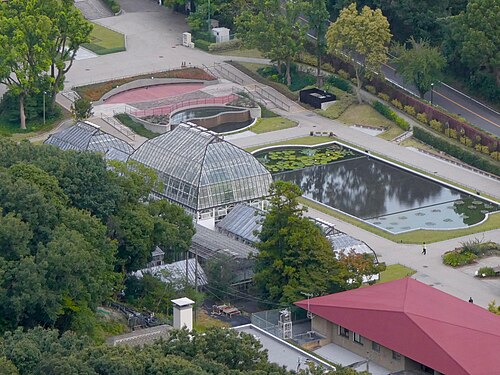
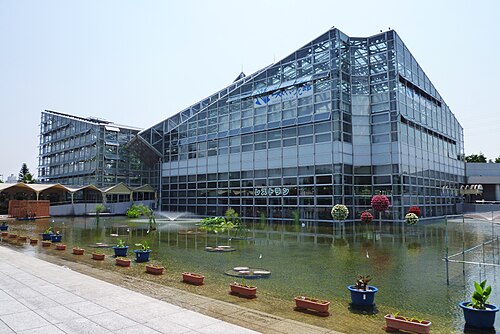
The garden, of about 14 hectares, is organised in themed zones, one of them devoted to the world's ecosystems; the greenhouse there has three sections. The Japanese Wikipedia describes three: the savanna house, showing the vegetation of the semi-arid regions of the Americas, Africa and Australia; the tropical rainforest house, of about 24 metres, divided between lowland and montane forests of the Asia-Pacific region; and an aquatic plant house of about 550 m² and 17.5 metres high, where useful tropical plants are grown.
Other greenhouses serve conservation and outreach: a house for useful tropical plants (熱帯資源植物温室), a multi-purpose house for topical plants and temporary exhibitions, and a house for threatened plants. An education building at the entrance and an exhibition hall on the links between plants and people complete the complex.
Plant collections
1 min
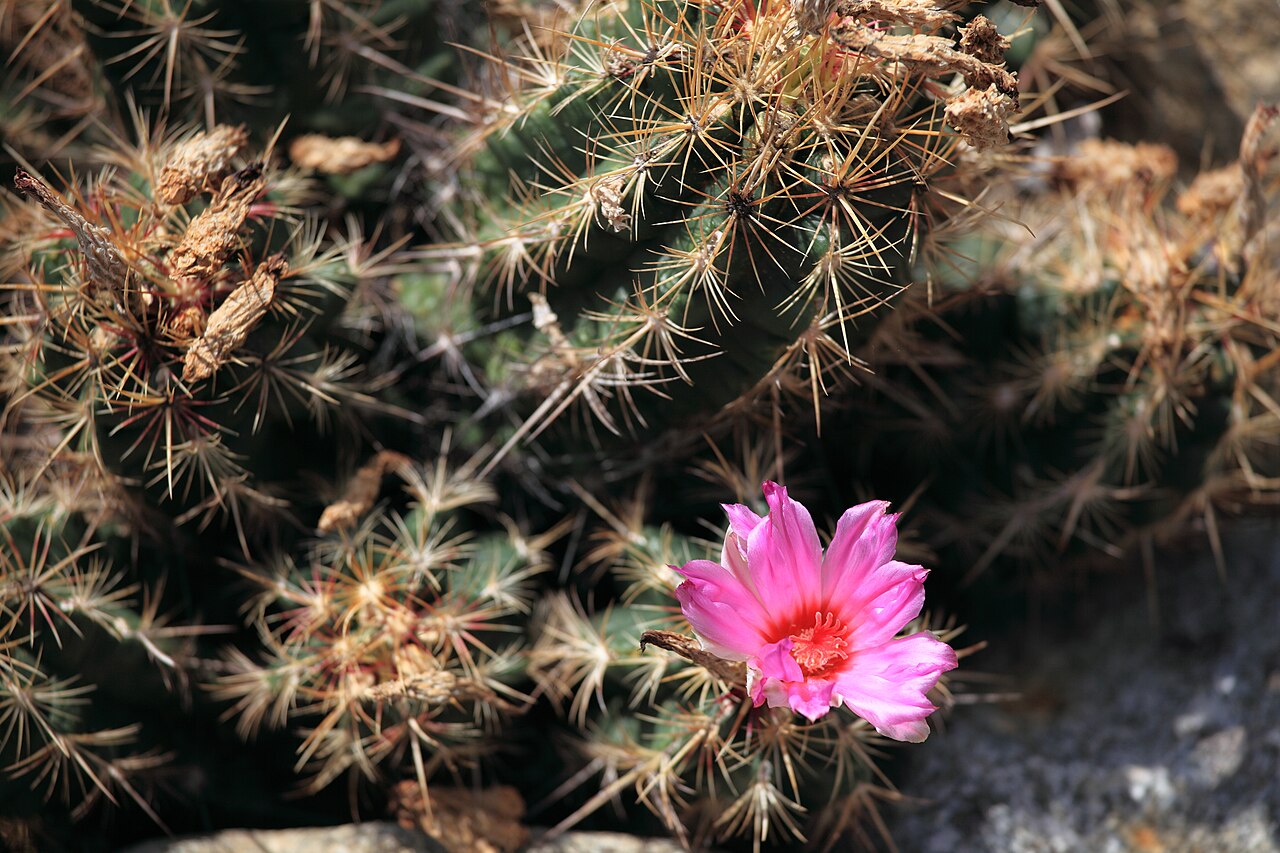
The garden grows about 5,000 species, from temperate regions to the tropics. It specialises in the vascular plants of central Japan, East Asian ferns, cycads, aroids and South American orchids. The tropical rainforest house holds ferns, members of the beech and heath families and orchids, as well as the titan arum and the young plants raised from the 2023 fruiting.
The savanna house gathers tropical and subtropical plants from the semi-arid regions of the Americas, Africa and Australia. The threatened plants house points out that about one plant species in four is listed as threatened in Japan, and it keeps several of these species in cultivation. Finally, the multi-purpose house shows plants in the news as the seasons change.
Visiting
1 min
The garden lies in Amakubo, in the city of Tsukuba, Ibaraki Prefecture. Half a day allows time for the greenhouses and the outdoor plantings, spread over 14 hectares. The garden's website lists the plants worth seeing each week and posts the flowering status of the titan arum, worth following closely since it blooms only about every two years. The multi-purpose house and the exhibition hall host temporary exhibitions and events such as the botanical garden festival (植物園フェスタ).
36.10° N, 140.11° E
Greenhouses nearby
More greenhouses — Japan
Do you have a good photo of this greenhouse? Suggest it for this page →