Glasshouses of the University of Potsdam Botanical Garden (Palmenhaus and Victoriahaus)
Potsdam, Brandenburg
Entry updated on October 5, 2026
- Year
- 1908–1912
- Style
- Former royal nursery glasshouses at Sanssouci, linked by a connecting gallery; listed palm house and Victoria house
- Dimensions
- ≈3,000 m² of glasshouses; cold house about 93 m long
- Status
- Open to the public daily
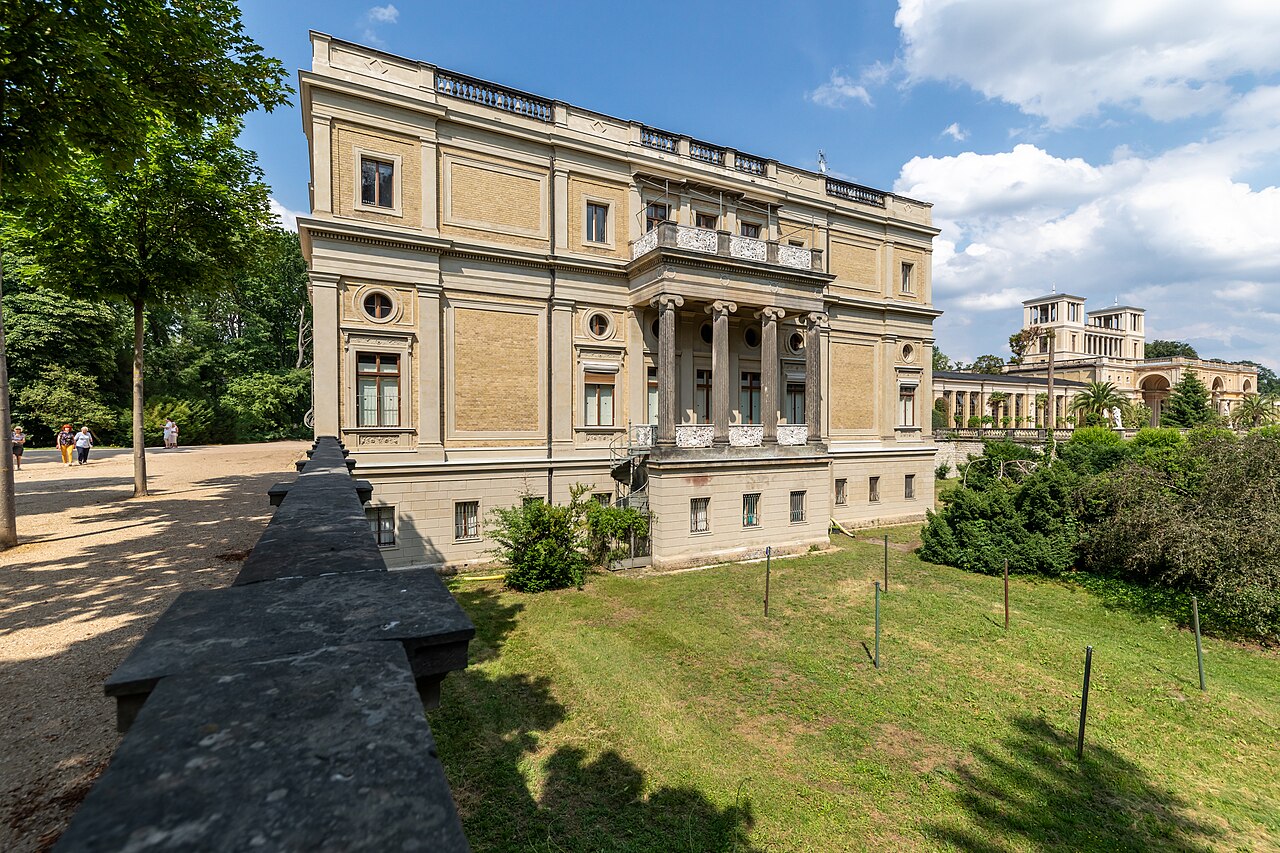
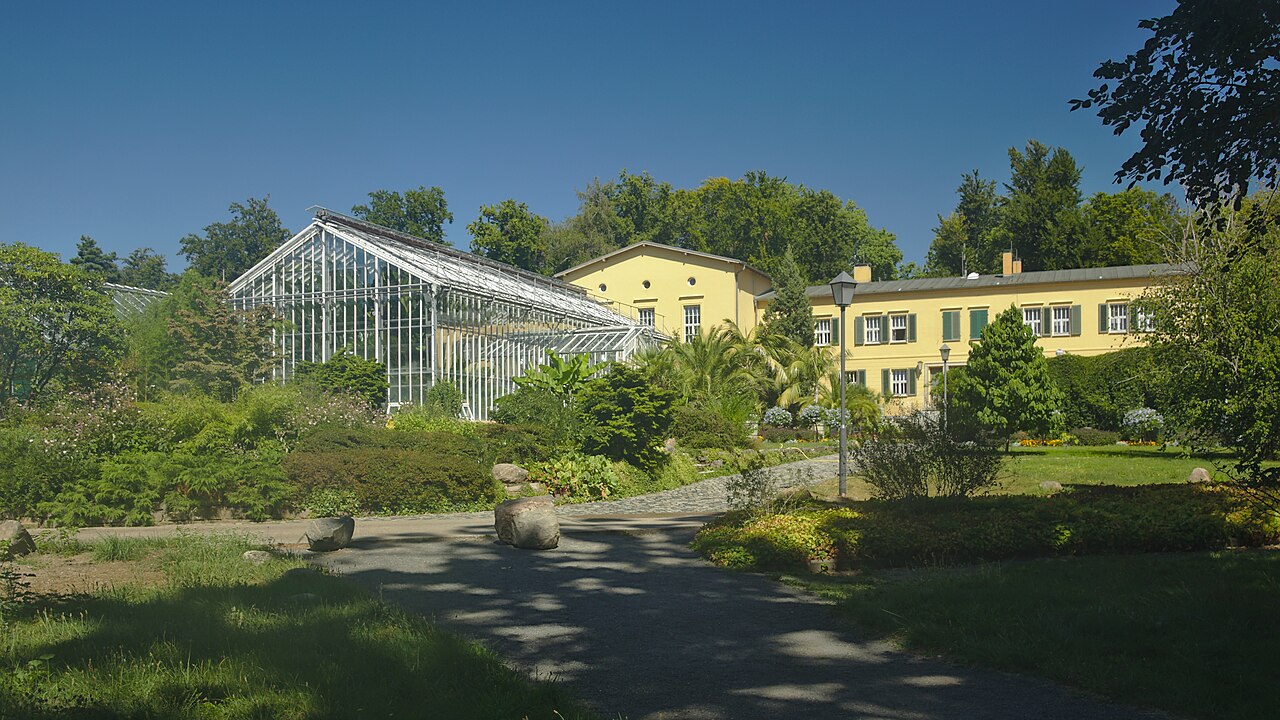
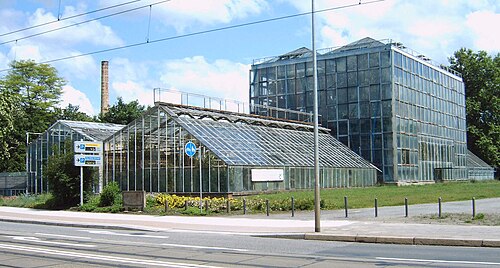
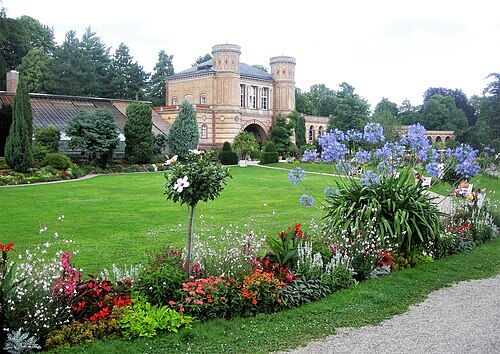
On the northern edge of Sanssouci Park, just south-west of the Orangery Palace, the University of Potsdam's botanical garden has occupied the former royal nursery on Maulbeerallee since 1950. Its glasshouses, built between 1908 and 1912 and still largely following their original footprints, are linked by a connecting gallery; the large palm house and the Victoria house, both listed, are original buildings. Nine display houses show almost 4,000 tropical and subtropical species, while a cold house about 93 metres long shelters container plants in winter.
Affiliate links — booking through Verrière helps fund our research, at no extra cost to you.
History
1 min
The site was worked by court gardeners long before the botanical garden existed. From the time of Frederick II, orangeries and forcing houses for cherries, vines, figs and apricots stood west of Sanssouci Palace, supplying the royal table. After 1840 the court gardener Hermann Sello enlarged this nursery and laid out, to plans by Peter Joseph Lenné, the Paradise Garden (Paradiesgarten) north of Maulbeerallee. Between 1908 and 1912, under the garden director Friedrich Kunert, a palm house and four further glasshouses were built; the footprints of this complex largely survive today.
In the first year after the war, part of the former nursery became an outpost of the Moscow Botanical Garden of the Soviet Academy of Sciences, set up by Wolfgang Müller-Stoll. In 1950 the site was handed over as a botanical garden to the new Brandenburg teacher-training college, which became the Pädagogische Hochschule Potsdam and, in 1991, the University of Potsdam. Müller-Stoll, the first professor of botany and garden director, was dismissed for political reasons in August 1961 and rehabilitated in 1991.
In 1953 the former carnation house was converted into a Victoria house. The listed palm house was completely renovated in 1998 following the original plans. Driven from 1969 to 2002 by the technical director Wolfgang Pifrement, the modernisation of the glasshouses reached a provisional conclusion in 2012 with the construction of a new propagation house.
Architecture and engineering
1 min
The glasshouses form a group served by a connecting gallery, the Gewächshausverbinder, which leads from one house to the next. Visitors enter on the east side of the large palm house. South of the gallery lie the epiphyte house, the house of useful plants, a house devoted to the variety of tropical foliage and the cactus house; to the north, from west to east, come the aquarium hall, the Victoria house, the orchid house and the fern house. Along the boundary wall facing Maulbeerallee runs a cold house about 93 metres long, where container plants overwinter at around 5 °C. Altogether the houses cover about 3,000 m².
The palm house and the Victoria house, original buildings of the royal nursery, are protected monuments, which is why the complete renovation of the palm house that became necessary in 1998 faithfully followed the original plans. More than a corridor, the connecting gallery holds climbing plants and regularly hosts concerts, readings and exhibitions, while the cold house, emptied of its plants in summer, is used for exhibitions and cultural events.
Plant collections
1 min
The garden grows almost 9,000 species; its nine display houses show almost 4,000 of them according to the garden, or about 4,600 according to Wikipedia. In the palm house, palms, giant bamboo (Dendrocalamus giganteus) and bananas illustrate the variety of tropical tree forms; two multi-stemmed dwarf palms (Chamaerops humilis), estimated at about 140 years old, come from the former court nursery. The palm house also holds a large part of the passion flower collection.
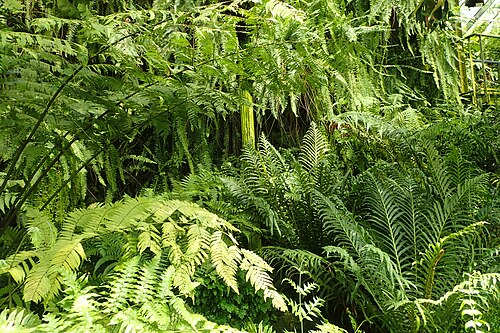
The Victoria house displays Victoria cruziana, a giant water lily from Paraguay and northern Argentina whose leaves reach 1.40 metres across and whose flowers, white and then pink, open for only two nights; ant trees of the genus Cecropia also grow there. The house of useful plants shows cassava, guava, coffee, cocoa, cotton and sugar cane, and in winter the cold house shelters container plants from Australia, the Mediterranean and Asia. The garden's collections also include some 320 orchid and 230 fern taxa.
Visiting
1 min
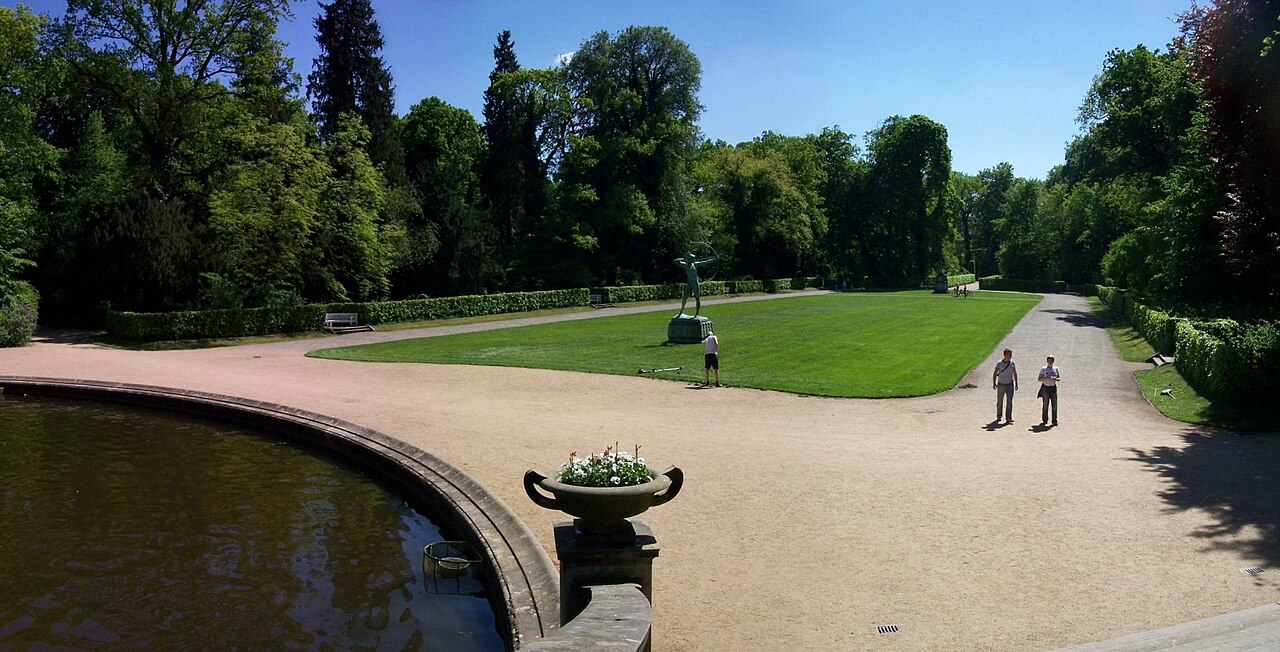
The garden lies on the northern edge of Sanssouci Park, at Maulbeerallee 2, just south-west of the Orangery Palace. Maulbeerallee divides it in two: to the south are the glasshouses, the institute and the outdoor beds; to the north is the Paradise Garden with its atrium designed by Ludwig Persius. The garden is open every day.
A tour of the glasshouses begins in the palm house, from which the connecting gallery leads to the other houses; a seating area is provided near the aquarium hall. The garden holds around fifty events a year, and a visit extends naturally to the Orangery Palace and the rest of Sanssouci Park.
52.40° N, 13.03° E
Greenhouses nearby
More greenhouses — Germany
Do you have a good photo of this greenhouse? Suggest it for this page →
Sources (7)
- uni-potsdam.de/de/botanischer-garten/unser-garten/gewaechshaeuser/palmenhaus
- uni-potsdam.de/de/botanischer-garten/unser-garten/gewaechshaeuser/victoriahaus
- uni-potsdam.de/de/botanischer-garten/unser-garten/gewaechshaeuser/gewaechshausverbinder
- uni-potsdam.de/de/botanischer-garten/unser-garten/gewaechshaeuser
- uni-potsdam.de/de/nachrichten/detail/2020-04-08-jubilaeumsfest-wird-nachgeholt-70-jahre-bo
- de.wikipedia.org/wiki/Botanischer_Garten_Potsdam
- en.wikipedia.org/wiki/Botanical_Garden,_Potsdam